
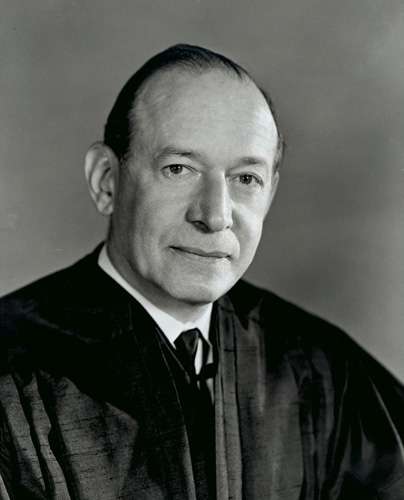
4/5/1982: Justice Abe Fortas dies.

Mostly law professors | Sometimes contrarian | Often libertarian | Always independent | Est. 2002
4/5/1982: Justice Abe Fortas dies.
This is Nunes' latest libel lawsuit, just filed yesterday in Florida state court; I'm too slammed to write about it in detail, but I thought I'd pass along the Complaint (Nunes v. Guardian News & Media Ltd.). Here's the start of the Statement of Material Facts:
11. On March 15, 2023, Guardian published an online article written by Hugo Lowell, entitled "Federal investigators examined Trump Media for possible money laundering, sources say". [https://www.theguardian.com/us-news/2023/mar/15/trump-media-investigated-possible-money-laundering (the "Article")].
12. The Article contains the following false statements and defamatory implications of or concerning Nunes:
● The headline falsely states that "Federal investigators examined Trump Media for possible money laundering";
● The subheading of the Article falsely states that "New York prosecutors expanded criminal inquiry of company last year and examined acceptance of $8m with suspected Russian ties";
From Judge Anthony Trenga's decision today in Fairfax v. N.Y. Public Radio (E.D. Va.):
On August 6, 2021, NYPR aired a radio show named "The Takeaway" on the topic of "Politics, Power and Abuse" that featured a conversation between Vanessa Tyson, a professor of political science, and the show's host, Melissa Harris-Perry ("the Broadcast"). The Broadcast discussed the reactions to women who make allegations of sexual misconduct against individuals with political power and centered in part on the then-recent allegations against former New York Governor Andrew Cuomo. In 2019, Tyson had alleged on a national television show, broadcast by CBS, that Fairfax had sexually assaulted her in 2004 at the Democratic National Convention. During the NYPR Broadcast, Harris-Perry referenced, and Tyson repeated her claim that Fairfax had sexually assaulted her at the 2004 Democratic National Convention, as context for a discussion about how such allegations are treated by the media and the political establishment. Also broadcast during that NYPR radio show was a short, recorded audio clip from Meredith Watson, another woman who accused Fairfax of sexual assault during the 2019 CBS broadcast, in which she expressed how she felt about Fairfax's alleged conduct.
Based on the August 6 NYPR Broadcast, Fairfax has filed a two-count complaint against NYPR alleging defamation and intentional infliction of emotional distress. In support of the defamation claim, the Complaint alleges that NYPR failed to investigate Tyson and Watson's allegations made on the Broadcast. More specifically, Fairfax alleges that NYPR did not speak with or mention a publicly identified witness who Fairfax claims observed his entire sexual encounter with Watson in 2000 and who would confirm that the encounter was consensual. Fairfax also alleges that NYPR should have discussed a Washington Post editorial piece that detailed the steps Fairfax has taken to attempt to clear his name, such as taking and passing polygraph tests, and that NYPR further failed to reach out to Fairfax in a "reasonable amount of time" prior to the broadcast of the radio show, although the Complaint also states that Fairfax was contacted one day before the show and did not take the opportunity to comment….
The court concluded that the statements weren't libelous because NYPR simply reported on the allegations, rather than endorsing them:
From a Justice Department press release last month (UPDATE: see the plea agreement for more details):
Andrew Gavin Wynne, 35, pleaded guilty in front of U.S. District Judge Sarah E. Pitlyk to five felony counts of identity theft.
Wynne admitted that while representing at least 30 clients, he created fictitious documents with forged signatures of judicial officers in St. Louis and St. Louis and St. Charles counties. Included among those were bogus court orders, judgments and emails authored by at least ten separate judges, Wynne's plea agreement says, some of which purportedly awarded money to his clients.
In one example in the plea agreement, Wynne sent an email to a client on Feb. 28, 2020 that included a fictitious judgment and decree of dissolution with a forged judge's signature. That divorce decree said Wynne's client's marriage was dissolved and the parties would have joint legal and physical custody of the minor children. The decree also said the client was owed $900 per month child support, $5,000, a vehicle and other assets.
The Appellate Court of Maryland just upheld the lower court's finding, and related protective order.
From C.M. v. J.M., decided Friday by the Appellate Court of Maryland, in an opinion by Justice Alexander Wright, Jr.:
The Circuit Court for Anne Arundel County entered a final protective order against C.M. ("Father") on grounds that he was mentally abusive to his 12-year-old son ("N.") regarding his son's sexual orientation….
Father and J.M. ("Mother") were married for about five years and had two children before divorcing in 2012. As part of the divorce settlement, the parties agreed to joint legal custody of their two children with Mother to have primary physical custody and Father to have visitation every other weekend from Friday to Sunday.
Roughly three years later, on June 15, 2022, Mother filed for a protective order for herself and her children, then aged 15 and 12, alleging that Father had caused her and the children mental injury based on abusive texts and emails he had sent to them….
As to their older child, "S.", Mother testified that about three years ago, S. told her that he believed he was transgender. {We shall refer to the parties' oldest child as "S." which is the first letter of the name the child prefers to be called rather than his given name. We shall also refer to S. with his preferred pronouns, he/him/his.} Mother denied steering S. toward identifying as transgender but has actively supported S. by arranging for therapy and attending meetings of Parents, Families, and Friends of Lesbians and Gays ("PFLAG"). When S. told Father that he identified as transgender, Father "opposed" his decision and refused to call him by his preferred name. S. subsequently engaged in the self-harming behavior of "cutting." On March 4, 2022, Father sent the following text messages to S.:
What is your email address? I'm sending you an email and I'm copying your mother and my lawyer. I'm t[ir]ed the BS manipulations. Your grandmother doesn't call you S[.] and neither does either one of your aunts and uncle up here and for some reason my Christian beliefs are being attacked, so the intent is for a trial, so that everyone can understand what your mother that has manipulated a wedge after you and I had already came to an agreement [to call you a shortened version of your given name]. Thanks[.]
Mother testified that S. is "scared" to be around Father because "he doesn't feel support; doesn't feel that S[.] can be himself, … his true self[.]"
As to their younger child, N., Mother testified that about five months ago N. told her that he believed he was gay. On June 11, 2022, Father sent N. the following text:
You can text me anytime. Just between us and call if you ever need to talk. I will tell you like I told you before—you are being heavily manipulated and influenced by your mother and sister. Son. Listen to your dad and our father who created us (God) in this matter. Please please do not allow these demons you are surrounded by influence you. Pray my son. For protection. I love you. Dad.
Last week and this, I've been serializing my Large Libel Models? Liability for AI Output draft. For some earlier posts on this (including § 230, disclaimers, publication, and more), see here; one particular significant point is at Communications Can Be Defamatory Even If Readers Realize There's a Considerable Risk of Error. Today, I turn to another argument against liability.
[* * *]
Perhaps the strongest argument for immunizing AI companies from libel liability is that AI program output can be a valuable first stab at the user's research. The AI provides a helpful tentative analysis—whether about a particular person, or about a broader subject—that can help guide the user in investigating further. AI companies shouldn't be chilled from providing such valuable initial information by the risk of liability.
This in some measure mirrors certain privileges, for instance the privilege for reports to law enforcement. If I think my neighbor is beating his children, I should be encouraged to convey my suspicions to the police, without fear of liability. Perhaps I might be carelessly misperceiving things. I might have not looked further into the matter to decide whether my initial perception was correct. I might well be wrong.
But that's fine, because it's the job of the police to investigate further. Better that they have as much input as possible (perhaps short of deliberate lies[1]), even if some of the input is mistaken, and mistaken in a way that could put an innocent neighbor in the uncomfortable position of being questioned by the police or even erroneously arrested. Indeed, some courts have recognized absolute privileges (precluding lawsuits even for deliberate lies) for complaints to certain kind of quasi-judicial bodies.[2]
Just as the police should have maximum input into their investigations, the argument would go, so each of us should be able to gather maximum information for own investigations of whatever interests us—not just through tools such as Google, which always point to real sources (and are immunized by § 230 for liability for falsehoods in those sources), but also through AI programs that might sometimes generate fictitious quotes and cite fictitious sources. Then we would have the responsibility to investigate the matter further before proceeding further, for instance by refusing to do business with someone because of what we've found.
4/4/1861: Justice John McLean dies.
Episode 451 of the Cyberlaw Podcast
Dmitri Alperovitch joins the Cyberlaw Podcast to discuss the state of semiconductor decoupling between China and the West. It's a broad movement, fed by both sides. China has announced that it's investigating Micron to see if its memory chips should still be allowed into China's supply chain (spoiler: almost certainly not). Japan has tightened up its chip-making export control rules, aligning them with U.S. and Dutch restrictions, all with the aim of slowing China's ability to make the most powerful chips. Meanwhile, South Korea is boosting its chipmakers with new tax breaks, and Huawei is reporting a profit squeeze.
The Biden administration spent much of last week on spyware policy, Winnona DeSombre Berners reports. How much it actually accomplished isn't clear. The spyware executive order restricts U.S. government purchases of surveillance tools that threaten U.S. security or that have been misused against civil society targets. And a group of like-minded nations have set forth the principles they think should govern sales of spyware. But it's not as though countries that want spyware are going to have a tough time finding it, I observe, despite all the virtue signaling. Case in point: Iran is getting plenty of new surveillance tech from Russia these days. And spyware campaigns continue to proliferate.
Winnona and Dmitri nominate North Korea for the title "Most Innovative Cyber Power," acknowledging its creative use of social engineering to steal cryptocurrency and gain access to U.S. policy influencers.
Dmitri covers the Tiktok beat, including the prospects of the Restricting the Emergence of Security Threats that Risk Information and Communications Technology (RESTRICT) Act., which he still rates high despite criticism from the right. Winnona and I debate the need for another piece of legislation given the breadth of CFIUS review and International Emergency Economic Powers Act sanctions.
Dmitri and I note the arrival of GPT-4 cybersecurity, as Microsoft introduces "Security Copilot." We question whether this will turn out to be a game changer, but it does suggest that bespoke AI tools could play a role in cybersecurity (and pretty much everything else).
In other AI news, Dmitri and I wonder at Italy's decision to cut itself off from access to ChatGPT by claiming that it violates Italian data protection law. That may turn out to be a hard case to prove, especially since the regulator has no clear jurisdiction over OpenAI, which is now selling nothing in Italy. In the same vein, there may be a safety reason to be worried by how fast AI is proceeding these days, but the letter proposing a six-month pause for more safety review is hardly persuasive – especially in a world where "safety" seems to mostly be about stamping out bad pronouns.
In news Nick Weaver will kick himself for missing, Binance is facing a bombshell complaint from the Commodities Futures Trading Commission (CFTC). (The Binance response is here.) The CFTC clearly had access to the suicidally candid messages exchanged among Binance's compliance team. I predict criminal indictments in the near future and wonder if the CFTC's taking the lead on the issue has given it a jurisdictional leg up on the SEC in the turf fight over who regulates cryptocurrency.
Finally, we close with a review of a book arguing that pretty much anyone who ever uttered the words "China's peaceful rise" was the victim of a well-planned and highly successful Chinese influence operation.
You can subscribe to The Cyberlaw Podcast using iTunes, Google Play, Spotify, Pocket Casts, or our RSS feed. As always, The Cyberlaw Podcast is open to feedback. Be sure to engage with @stewartbaker on Twitter. Send your questions, comments, and suggestions for topics or interviewees to CyberlawPodcast@steptoe.com. Remember: If your suggested guest appears on the show, we will send you a highly coveted Cyberlaw Podcast mug! The views expressed in this podcast are those of the speakers and do not reflect the opinions of their institutions, clients, friends, families, or pets.
Plaintiff "asserts that her published work and other accounts describing life as an escort were part of an effort to build a career in writing and were entirely fictional. As for the websites and other internet advertisements cited by defendants, she claims that they were produced for the purpose of satisfying Medium’s 'fact-checking' requirements and possibly promoting a future fictional web series on the topic."
No dice, said N.Y. Civil Court judge Shahabuddeen Ally on Friday, in Travis v. Daily Mail:
Defendants … are alleged by plaintiff to have defamed her in the course of its ongoing coverage of former Governor Eliot Spitzer. As has been highly publicized by numerous media publications over the course of the last several years, the former Governor became embroiled in a series of scandals arising from claims that he regularly engaged escort services, and later, allegations of sexual assault perpetrated against plaintiff.
Of relevance to this action is the description of plaintiff as a "prostitute" in an article published by the Daily Mail on January 24, 2022, entitled Former NY Governor Eliot Spitzer used alias, 'George Fox' at the hospital when he checked in on 25-year-old Russian prostitute lover he was accused of choking in $1,000-a-night Plaza hotel room in 2016. Plaintiff contends that contrary to the Daily Mail's coverage, she has never engaged in prostitution or similar occupation and that her involvement with former Governor Spitzer was limited to a legal dispute over the alleged sexual assault….
[D]efendants have provided an article published October 7, 2014 on the online outlet Medium. Entitled Sex is Sex, but Money is Money and under the byline "Svetlana Z.," the piece describes in detail the lifestyle and experiences of a high-end escort told from a first-person perspective. The author biography describes Svetlana Z. as "a 24-year-old former escort living in New York City," and also contend based upon the reporting of another media outlet and review of court records that plaintiff was evicted from her apartment on Lexington Avenue in 2015 for engaging in prostitution.
To better understand the debate about possible defamation liability for OpenAI, based on its Large Libel Models tendency to sometimes communicate entirely made-up quotes about people—supposedly (but not actually) drawn from leading media outlets— let's consider this hypothetical:
Say a company called OpenRecords creates and operates a program called CheckBKG, which does background checks on people. You go to CheckBKG.com, enter a name, and the program reviews a wide range of publicly available court records and provides a list of the criminal and civil cases in which the person has been found liable, including quotes from relevant court records. But unfortunately, some of the time the program errs, reporting information from an entirely wrong person's record, or even misquoting a record. CheckBKG acknowledges that the information may be erroneous, but also touts how good a job CheckBKG generally does compared to ordinary humans.
Someone goes to CheckBKG.com and searches for someone else's name (let's say the name Jack Schmack, to make it a bit unusual). Out comes a statement that Schmack has been convicted of child molestation and found liable in a civil case for sexual harassment, with quotes purportedly from the indictment and the trial court's findings of fact. The statement accurately notes Schmack's employer and place of residence, so readers will think this is about the right Schmack.
But it turns out that the statements about the court cases are wrong: The court records actually refer to someone entirely different (indeed, not someone named Schmack), or the software missummarized the court records and wrongly reported an acquittal as a conviction and a dismissal of the civil lawsuit as a finding of liability. The quotes are also entirely made up by CheckBKG. It also turns out that Schmack has informed OpenRecords that its software is communicating false results about him, but OpenRecords hasn't taken steps to stop CheckBKG from doing so.
It seems to me that Schmack would be able to sue OpenRecords for defamation (let's set aside whether there are any specialized statutory schemes governing background checks, since I just want to explore the common-law defamation tort here):
I thought I'd blog this week about the Florida libel law reform bills, the House version (which was favorably reported out of the Civil Justice Subcommittee to the Judiciary Committee) and the Senate version (which passed by an 8-3 vote in the Judiciary Committee and is now in the Rules Committee). There are many different parts to them, so I thought I'd take them one at a time. I also thought I'd start with the most ambitious changes.
Under current First Amendment law, articulated in New York Times v. Sullivan (1964) and follow-up cases, public officials or public figures suing over libels on matters of public concern must show "actual malice." But "actual malice" isn't actually malice; rather, it's a legal term of art that, in this context, means publishing with the knowledge that the statement was false or likely false. (Publishing with knowledge that the statement is likely false is often labeled "reckless disregard" in this context.) This is a subjective test, focused on what the speaker actually believed, rather than on what a reasonable person would have believed.
The New York Times standard has recently been quite controversial. Justice White (generally viewed as one of the Court's centrists) long led the charge against it; though he joined the New York Times decision at the outset, he "came to have increasing doubts about the soundness of the Court's approach and about some of the assumptions underlying it." He didn't persuade a majority back in his day, but in recent years Justices Thomas and Gorsuch have echoed Justice White's arguments. And while the issue has mostly broken down along conservative-liberal lines, that isn't entirely so (as Justice White's example also helps show): Early in her career then-Professor Kagan had expressed skepticism about the New York Times rule as well, at least in some measure; likewise, see, e.g., Prof. David McGowan's A Bipartisan Case Against New York Times v. Sullivan.
In any event, some critics of the "actual malice" requirement think that it's possible that there will be five votes on the Court to shift to, for instance, a negligence test, where a plaintiff could recover based on a jury finding that the defendant had acted unreasonably in investigating the facts, even if the defendant sincerely believed its statement was true. Section 6 of each of the Florida bills seems aimed at bringing the matter to the Court. In relevant part, it provides that a plaintiff (public official, public figure, or private figure) can prevail if
Last week and this, I've been serializing my Large Libel Models? Liability for AI Output draft. For some earlier posts on this (including § 230, disclaimers, publication, and more), see here; one particular significant point is at Communications Can Be Defamatory Even If Readers Realize There's a Considerable Risk of Error. Today, I turn to two arguments against liability.
[* * *]
[A.] Aggregate Costs of Liability
To be sure, once one allows any sorts of legal claims against AI companies based on their programs' output, this will lead to many more claims, sound or not. Even if the first victories happen where the claims seem strongest—for instance, as to fabricated quotes, or continued communication of fake quotes after the company has been alerted to them—later claims may be much more contestable and complicated. Yet each one will have to be defended, at great expense, even if the AI company prevails. Lay juries may err in deciding that some alternative design would be feasible, thus leading to some erroneous liability verdicts. And common-law courts may likewise extend plausible precedents for liability into much more radical and unjustified liability rules.[1]
As a result, AI companies that produce such software may find it impossible to get liability insurance. And while the richest companies may be able to self-insure, upstart competitors might not be able to. This might end up sharply chilling innovation, in an area where innovation may be especially important, particularly given the importance of AI to national security and international competitiveness.
These are, I think, serious concerns. I am not a cheerleader for the American tort liability system.[2] Perhaps, as the next Part discusses, these concerns can justify statutory immunity, or judicial decisions foreclosing common-law liability.
4/3/1962: Engel v. Vitale argued.
Mystery man "Nick" discusses the challenges of dating as a politically moderate Asian-American individual in our day and age
The twenty-sixth episode (Apple Podcasts link here and Spotify link here) of Strangers on the Internet with co-host and psychologist Michelle Lange has us talking to Nick (a pseudonym), a Jeopardy champion in his late 30s whose work has taken him from academia to the policy world.
Originally from NYC, he has tried his luck at dating all across the country and abroad. Nick talks about the difficulties with finding a significant other who shares his interests and values, as well as with staving off his family's old-fashioned requirements for his future partner.
Does Nick think that his identity as an Asian-American man has led to being stereotyped and devalued on dating apps (including via not receiving a right-swipe from even one woman during a stay in Denver)? Would he have an easier time if he earned more money, or if he didn't label himself politically moderate? Come hear about this brainy dater's quest for love!

4/2/1980: Justice Stanley Forman Reed dies.
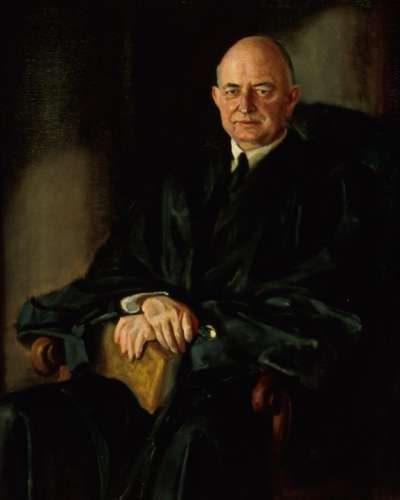
4/1/2003: Grutter v. Bollinger and Gratz v. Bollinger argued.
From Judge Pedro Delgado-Hernández's opinion today in Rodriguez-Cotto v. Perluisi-Urrutia (D.P.R.):
Article 5.14(a) criminalizes, after the Governor of Puerto Rico has decreed by executive order an emergency or disaster, to knowingly, purposely or recklessly: (1) give a warning or false alarm, knowing that the information is false, in relation to the imminent occurrence of a catastrophe in Puerto Rico; or (2) disseminate, publish, transmit, transfers or circulate through any means of communication, including the media, social networks, or any other means of dissemination, publication or distribution of information, a notice or a false alarm, knowing that the information is false, when as a result of that conduct it puts the life, health, bodily integrity or safety of one or more persons at imminent risk, or endangers public or private property. Properly read, Article 5.14(a) does not survive strict or intermediate scrutiny….
The court reasoned that the proper remedy was generally for the government to rebut false rumors, not to criminalize them:
On Feb. 28, I blogged about Doe v. U.N.C. Sys. (W.D.N.C.), a case challenging the expulsion of plaintiff Jacob Doe for alleged sexual assault; in the case, the court issued a quite remarkable TRO that, among other things, required defendants "to direct all individuals, including but not limited to employees and students, over whom they exercise control to refrain from publishing or disclosing any information concerning the Plaintiff, the disciplinary proceedings, or the outcomes of such proceedings" (emphasis added).
This struck me as likely unconstitutional, because of its substantive scope, because it was entered as an ex parte TRO with no opportunity for the defendants to be heard, and because it purports to restrict the free speech rights of third parties who also had no opportunity to be heard. But when I tried to figure out why the court entered such a broad restriction, I couldn't, because the motion for the TRO and the supporting memorandum were sealed. And when I tried to figure out the basis for the sealing, I couldn't, because there was no official sealing order authorizing and explaining the sealing (even though the W.D.N.C. local rules seem to require such sealing orders).
Celebrate your independence with a subscription to Reason magazine, your most trusted source of honest, insightful news and analysis.




