
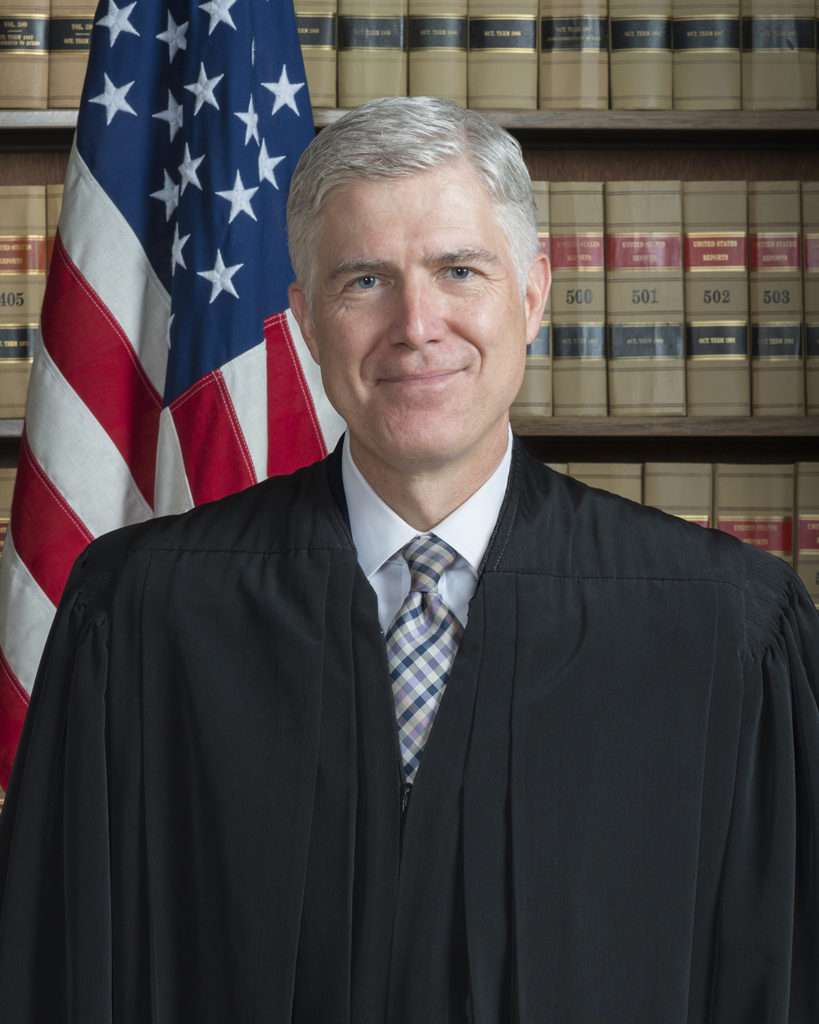
8/29/1967: Justice Neil Gorsuch's birthday.

Mostly law professors | Sometimes contrarian | Often libertarian | Always independent | Est. 2002

What's on your mnd?
"This appeal raises a question not yet addressed by any California court: whether a public official may be bribed with a promise to donate to the official's office."
From Friday's decision in People v. Moyer, written by Justice Bromberg and joined by Justices Grover and Lie:
According to the People, the Santa Clara County undersheriff requested—and defendant Thomas Moyer made—a promise to donate iPads to the Santa Clara County Sheriff's Office in exchange for releasing concealed carry weapon (CCW) licenses that the sheriff had signed. Consistent with the Ninth Circuit's interpretation of California law, federal law and the law in many states, we conclude that such a promise may constitute a bribe. We also conclude that the evidence presented to the grand jury was sufficient to raise a reasonable suspicion of such bribery. Accordingly, we reverse the trial court's order dismissing the bribery count against Moyer, reinstate that count, and remand for further proceedings….
The story of the San Jose CCW bribery scandal is long and complicated, and involves a good deal more than just this matter; here's just a brief excerpt from the court's summary of the facts:
During the relevant time frame, the Santa Clara County Sheriff's Office rarely issued CCW licenses. Indeed, the office's practice was to not even process an application for a CCW license absent a special instruction to do so. Only Sheriff Laurie Smith and a small number of others in the Sheriff's Office had the authority to give such instructions. One of those individuals was Rick Sung, who appears to have run Sheriff Smith's 2018 re-election campaign and after the election became the undersheriff, second in command to the sheriff. Undersheriff Sung also had authority to place license applications on hold even after licenses were signed by the sheriff.
Undersheriff Sung abused his authority over CCW applications to extract favors [in cases well beyond just this one -EV] ….
Thomas Moyer is Apple, Inc.'s head of global security. The company's executive protection team is under his supervision. In 2016 and early 2017 the team began receiving more serious threats against Tim Cook, Apple's CEO, and became concerned about its ability to respond to these threats. As a consequence, in early 2017, Apple decided its executive protection team should be armed and began taking steps to obtain CCW licenses for team members, many of them based in Santa Clara County….
In August 2017, after several initial approaches were rebuffed, two Apple officials—David Gullo, senior director of global security, and Eric Mueller, senior director of operations for the security team—met with Undersheriff Sung to discuss CCW licenses. In the meeting Sung said he would help Apple obtain licenses.
Only when necessary to protect five basic internet rights.
Thanks to Eugene for inviting me to guest-blog this week about my new article, The Five Internet Rights. The article endeavors to answer the (internet) age-old question: When, if ever, should the law intervene into how private entities moderate lawful online user content?
This question has taken center stage as debates rage over the proper role of social media companies in policing online speech. For example, Twitter's decision to suppress the Hunter Biden laptop story alarmed many people about the power large platforms exercise, or could exercise, over the dissemination of news and, thus, over electoral outcomes. It also spurred Florida to pass a law that attempts to prevent social media companies from discriminating against "journalistic enterprises."
Similarly, social media companies' decision to prevent users from discussing the COVID "lab leak" theory—a decision they later reversed after the theory achieved mainstream status—caused many to wonder if social media companies may be hamstringing the search for truth by arrogating to themselves the power to determine what constitutes valid scientific inquiry. It too generated a legislative response—this time, from Texas, which went even further by prohibiting social media companies from discriminating against any users based on their viewpoints.
A response to Porter v. North Carolina State University
I noted last month that a Fourth Circuit panel had handed down a divided decision in Porter v. North Carolina State University. The case involved a tenured statistics professor in the college of education who was removed from the program in higher education after a number of complaints he had made about the program becoming too focused on social justice. The Porter panel denied his claim that the speech for which he was being punished was constitutionally protected. Porter is a relatively rare case on "intramural speech," internal faculty speech about matters of university governance and policy, and the decision is an important one in concluding that such speech does not merit constitutional protection.
I have now posted an article-length paper examining the competing arguments in Porter and contending that neither the majority nor the dissent approached the question in the right way. I offer an alternative approach to extending the Supreme Court's doctrine on government employee speech to the particular context of intramural speech by state university professors. From the abstract:
Since the early twentieth century, advocates of academic freedom in the United States have urged universities to tolerate internal dissent and refrain from sanctioning professors for their comments on university affairs. Despite this long history of advocacy, the status of intramural speech within traditional theories and policies regarding academic freedom and within First Amendment doctrine relating to academic freedom remains uncertain at best. Controversies regarding intramural speech are recurring, but there is no clear conceptual framework for how those controversies should be resolved. University officials and judges are often inclined to give little weight to academic freedom interests associated with intramural speech.
This article offers a theoretical and doctrinal approach to integrating intramural speech within the broader logic of academic freedom. Deploying government employee speech doctrine as a useful paradigm for thinking about intramural speech generally, the article argues intramural speech should be viewed as a generally protected form of speech by university professors. The relative weight of the faculty's interest in such speech and of the university's interest in regulating such speech varies, however, depending on how closely associated the speech in question is to academic functions of the university. The weight that should be given to intramural speech is at its zenith when professors engage in campus speech directly related to scholarly and educational enterprise, but it is at its nadir when professors comment on university affairs that are not distinctive to or closely related to the academic mission of the university.
New York City and New York state are locked in a battle over sale of the fatty liver delicacy.
This past term the Supreme Court upheld a California law barring the sale of animal products that are not produced in conformity with the state's animal welfare laws, even if the products are produced out of state. A majority of the justices rejected the claim that such a law violated the Dormant Commerce Clause because of its extraterritorial effect.
Politico reports on a similar battle in New York, where New York City is seeking to ban the sale of foie gras, largely because of the manner in which it is produced. (Foie gras involves force feeding ducks or geese so as to increase the fat content in their livers.) Although the conflict arises under state law, some of the underlying questions are similar, as it pits producers from elsewhere (in this case, upstate New York) against a local jurisdiction.
New York City's anti-foie-gras ordinance was set to take effect last year, but it was blocked by the state. That order, in turn, was rejected by a state court, and litigation is ongoing.
One of the central issues is whether, under New York law, a city may adopt regulations that unduly interfere with agricultural practices in other parts of the state. Two farms in upstate New York are the nation's dominant foie gras producers, and New York City is responsible for a disproportionate share of their sales.
From the Politico story:
The New York City Council passed, and then-Mayor Bill de Blasio signed into law, a bill banning the sale and serving of foie gras in November 2019. It was set to take effect three years later, in November 2022, but the New York State Department of Agriculture and Markets ordered the city to foie greddaboudit. The city couldn't implement the ban since it "unreasonably restricts" two foie gras farms' "operations and on-farm practices" under state law, the agency ruled.
The Adams administration sued, and got a taste of victory Aug. 3 when an Albany County judge struck down the state's order blocking the city ban as "arbitrary and capricious." . . .
But the waterfowl war is far from over. La Belle and Hudson Valley Foie Gras, the two duck farms party to the case, filed a notice of appeal Aug. 18.
The state could get another shot at the duck issue too. Albany Judge Richard Platkin's ruling was based on the state's failure to comprehensively review the legislative history of the bill. Instead, he wrote, the agriculture department relied on "two brief quotations drawn from a multi-thousand page record." But he gave the state a second chance by allowing the agency to review the farms' complaints about the law again, and issue a new order based on a more thorough review.
Accoridng to Politico, the conflict is also pitting New York City mayor Eric Adams (who follows a near-vegan diet) against New York Governor Kathy Holchul. It also presents rather common questions about when state law should preempt local ordinances.
For now, foie gras remains on the menu at several New York restaurants. Foie gras cannot be sold commercially in California, however. Under California law, individuals can mail-order foie gras from out of state, but retailers and restaurants may not sell it.
"[T]he Government argue[d] that when considering that the charged offenses occurred after the acquittal, the [appellant's] tactics were emboldened and this factor weighs in favor of admissibility."
In U.S. v. Henderson, decided by the Army Court of Criminal Appeals on Thursday, in an opinion by Judge R. Tideman Penland, Jr., joined by Judges LaJohnne Morris and James Arguelles, the court reversed defendant's conviction for rape of a 15-year-old; it's a long opinion, but here's a particularly interesting excerpt:
Before trial, the defense filed a motion to exclude Military Rule of Evidence (Mil. R. Evid.) 413 ["Similar crimes in sexual offense cases"] evidence of alleged sexual misconduct against MP (hereinafter referred to as "413 victim"), allegations that resulted in acquittal at an earlier general court-martial…. [T]he military judge denied the defense motion regarding the 413 victim, writing:
Other than the fact of acquittal and an assertion that the [appellant]['s] sworn statement to the police was in contradiction to [the 413 victim]'s report, no exculpatory evidence was presented to this Court for consideration of this matter. Despite the obvious reasons that this factor [intervening circumstances] may weigh against admissibility as asserted by the Defense, the Government argues that when considering that the charged offenses occurred after the acquittal, the [appellant's] tactics were emboldened and this factor weighs in favor of admissibility. The Court finds this factor to be neutral.…
"Federal Rule of Criminal Procedure 32(i) ... commands that the court must address the defendant personally to afford him the chance to speak or present evidence in mitigation."
From U.S. v. Johnson, decided Thursday by Judge Paula Xinis (D. Md.):
On March 27, 2021, Johnson was involved in a car accident on the Suitland Parkway. Johnson was taken to the hospital where blood tests confirmed the presence of PCP and marijuana in his system. On December 21, 2021, Johnson pleaded guilty to driving under the influence of alcohol or controlled substances, in violation of 36 C.F.R. § 4.23(a)(1) (the "DUI offense"), and driving on a suspended license, in violation of 36 C.F.R. § 4.2….
Sentencing took place on March 23, 2022. ECF No. 15-3 at 1. Before the proceedings were underway, the United States Magistrate Judge … took a brief recess to review the PSR [Pre-Sentence Report], the emergency room report from the night of the accident, and a letter reflecting Johnson's participation in substance abuse treatment. The magistrate judge next heard from the government, who requested that he sentence Johnson to 60 days' incarceration on the DUI offense and 18 months' probation on the suspended license charge. As grounds, the government cited Johnson's prior suspended license offenses and the seriousness of the accident to which his intoxication contributed.
The magistrate judge then turned to Johnson's counsel who highlighted that Johnson was voluntarily participating in outpatient drug treatment, that he is the primary breadwinner for his family, and that his prior driving offenses were relatively minor. Counsel also urged the magistrate judge to adhere to the PSR's recommended sentence of probation for both the DUI and the suspended license offenses. Counsel also put direct questions to Johnson about his job, his current treatment program, and his family financial obligations to which Johnson responded but did not elaborate.
When counsel had concluded her remarks, the magistrate judge announced that he was sentencing Johnson to the statutory maximum of six months' imprisonment on each offense, to run concurrently. As grounds, the magistrate judge noted that the offense "ranks as one of the most troubling cases I have ever heard." The magistrate judge further advised Johnson of his right to appeal and that he must report to the United States Marshal to begin his sentence on April 20, 2022.
At this point, defense counsel stated that Johnson wanted to address the court, adding, "I don't think you really asked." The magistrate judge responded, "[g]o ahead," although the record is not clear on whether he was addressing counsel or Johnson. Johnson briefly stated that "this drug program really woke me up. I haven't been using PCP, no nothing. I mean, my mind is focused. You know what I am saying? And I just – if anything, can you just give me like house arrest or anything? I mean, I support my whole family…[n]obody here to help me." The magistrate judge interrupted Johnson to explain that he had already reached his decision, taking into consideration "not only your status financially, but your environment and where you live and who you live with."
Johnson timely noted his appeal in which he raises one argument: that the magistrate judge erred in denying him his right of allocution under Federal Rule of Criminal Procedure 32(i) prior to imposing sentence….
8/28/1958: Cooper v. Aaron is argued.
Court finds parent's right to comment on their interactions with their child's coaches or teachers is cleartly established.
Qualified immunity is not reserved for police officers. Other government officials invoke QI as well. A reasonable number of QI cases actually arise in the educational context. A recent example is McElhaney v. Williams from the U.S. Court of Appeals for the Sixth Circuit, in which school officials allegedly retaliated against a parent who criticized his daughter's softball coach.
Judge Readler summarized the issues as follows:
Youth sports are as much about instilling life lessons as they are winning and losing. Child athletes can be forgiven for occasionally losing sight of this bigger picture. But we expect more from their parents.
As this case demonstrates, those expectations are not always met. Randall McElhaney is an enthusiastic supporter of his daughter, who, when this dispute arose, was an infielder on her high school softball team. His passion, however, sometimes gets the best of him. When his daughter was benched, McElhaney sent text messages to her coach criticizing his managerial decisions. In response, school officials banned McElhaney from attending games for the next week.
A dispute over the team's starting infield soon became much more. McElhaney filed this suit, alleging that school officials retaliated against him for criticizing his daughter's coach, speech that McElhaney believed was shielded by the First Amendment. Defendants moved for summary judgment on qualified immunity grounds. In their minds, McElhaney was not denied a constitutional right, let alone one that was clearly established. Reaching only the clearly established prong of qualified immunity, the district court granted defendants' motion and entered judgment in their favor.
As we see things, it is clearly established at a low level of generality that when a school employee interacts with a student, speech by the student's parent about those interactions enjoys First Amendment protection. On that basis, we must reverse the district court. We remand the case to resolve whether retaliation occurred in the first instance.
And from later in the opinion:
In this day and age, one need not look (or scroll) far to find speech she deems disrespectful. Many of us might share her sentiment. But that does not mean the disrespectful speech opens one up to government retaliation. The First Amendment muscularly protects most types of speech. For today's purposes, it is enough to say that those protections encompass a parent's criticism of the ways in which school employees treat the parent's child at school. See Jenkins, 513 F.3d at 588. In that situation, it is clearly established at a low level of generality that a school official may not retaliate against the parent for the content of his speech. See id.
Accordingly, McElhaney has satisfied the clearly established prong of the qualified immunity inquiry. That leaves the threshold question of whether a constitutional violation in fact occurred, a determination best made by the district court on remand. Cf. Novak, 932 F.3d at 430 (remanding a First Amendment retaliation qualified immunity claim). Back in the district court, the evidence might show that none (or only some) of defendants' actions were motivated by McElhaney's speech, rather than the time, place, or manner of that speech. Or it might show that the ban was not a sufficiently adverse action. Rudd v. City of Norton Shores, 977 F.3d 503, 51415 (6th Cir. 2020) (collecting cases on instances of "adverse action"). Either way, these questions are best answered by the district court in the first instance.
I'm delighted to report that Prof. Nicholas Nugent (Univ. of Tennessee) will be guest-blogging this week about his new Washington Law Review article, The Five Internet Rights. The Abstract:
Since the dawn of the commercial internet, content moderation has operated under an implicit social contract that website operators could accept or reject users and content as they saw fit, but users in turn could self-publish their views on their own websites if no one else would have them. However, as online service providers and activists have become ever more innovative and aggressive in their efforts to deplatform controversial speakers, content moderation has progressively moved down into the core infrastructure of the internet, targeting critical resources, such as networks, domain names, and IP addresses, on which all websites depend. These innovations point to a world in which it may soon be possible for private gatekeepers to exclude unpopular users, groups, or viewpoints from the internet altogether, a phenomenon I call viewpoint foreclosure.
For more than three decades, internet scholars have searched, in vain, for a unifying theory of interventionism—a set of principles to guide when the law should intervene in the private moderation of lawful online content and what that intervention should look like. These efforts have failed precisely because they have focused on the wrong gatekeepers, scrutinizing the actions of social media companies, search engines, and other third-party websites—entities that directly publish, block, or link to user-generated content—while ignoring the core resources and providers that make internet speech possible in the first place. This Article is the first to articulate a workable theory of interventionism by focusing on the far more fundamental question of whether users should have any right to express themselves on the now fully privatized internet. By articulating a new theory premised on viewpoint access—the right to express one's views on the internet itself (rather than on any individual website)—I argue that the law need take account of only five basic non-discrimination rights to protect online expression from private interference—namely, the rights of connectivity, addressability, nameability, routability, and accessibility. Looking to property theory, internet architecture, and economic concepts around market entry barriers, it becomes clear that as long as these five fundamental internet rights are respected, users are never truly prevented from competing in the online marketplace of ideas, no matter the actions of any would-be deplatformer.
I much look forward to Prof. Nugent's posts.
An interesting empirical study looks at whether better briefs lead to better outcomes.
Does writing a better brief increase an advocate's odds of prevailing before the Supreme Court? A new empirical study suggests that the quality of the writing (as opposed to oral argument, the substance of the arguments, and the overall quality of representation) may not matter as much as some might have thought.
Adam Feldman of EmpiricalSCOTUS and Professor Pamela Corley, a political scientist at SMU, have a new paper in The Journal of Appellate Advocacy and Practice, "Does Quality Matter? The Influence of Party Briefs and Oral Arguments on the U.S. Supreme Court," looking at whether the quality of brief writing, as measured by BriefCatch, appears to affect the likelihood a party prevailed before the Supreme Court. The study builds on prior research showing some correlation between party success and how Justice Blackmun rated the quality of the oral argument. (Justice Blackmun kept copious notes about such things.)
Here, from the study, is a summary of their conclusions:
This article applies tools from a piece of software called BriefCatch to provide writing quality scores to the same set of cases analyzed in Johnson et al.'s 2006 article. In doing so we examine the comparative role of briefs and oral argument quality in Supreme Court decision making. While BriefCatch grades are not a perfect companion to Justice Blackmun's grades for oral arguments, especially because they are calculated exogenously from the justices, as opposed to Blackmun's grades, it provides us a measure for brief quality and in doing so allows us to extend the study of the mechanisms affecting Supreme Court decision making beyond what was previously possible. In addition to measuring the writing quality of briefs, we also include another measure of brief quality—the number of Supreme Court precedents cited—in order to capture the legal authority relied on in the brief.
We find that, after controlling for elite attorneys and the quality of oral argument, a higher BriefCatch grade is not associated with the final vote on the merits; however, there is an association between how well-grounded the brief is in precedent and the final vote on the merits. Furthermore, our study provides continued support for Johnson et al.'s finding that the probability of a justice voting for a litigant increases dramatically if that litigant's lawyer presents better oral arguments than does the competing counsel, a result that holds even after controlling for the quality of the brief. These results are important for three reasons. First, given that the workings of the Court are often shrouded in mystery and the Court was designed as the primary body of the federal government with responsibility to interpret the Constitution, it is important to understand the different components of its decision-making process. Second, the findings inform our understanding of judicial behavior by helping us better gauge the importance of briefs and oral arguments in the decision-making process. The fact that judicial decisions are associated with quality lawyering before the Court suggests the value of looking beyond ideology and strategy to explain Supreme Court decision-making. By showing an association between winning and quality lawyering, we offer practical guidance to practitioners. Our findings suggest important implications for the role of persuasion in politics more generally. For example, recent research suggests that political persuasion in social media is most likely to occur when people are presented with well-reasoned arguments. Thus, it is important to understand whether quality argumentation matters, both orally and in writing.
The study's method necessarily has some limitations, but it is quite interesting nonetheless.
The Wind
Andrey Makarevich is an influential and pioneering Russian singer and songwriter. He founded what is apparently the oldest continuing Russian rock band, Time Machine, in 1969, and has continued to record and perform to this day. He has emerged as a prominent critic of Russian's invasion of Ukraine, and moved from Russia to Israel in 2022.
This song was released in late 2019; though by then, Makarevich had already criticized Russia's aggression against the Ukraine since 2014, I doubt the song was seen at the time as focused on that. But I heard it in the recording of a 2023 concert, where Makarevich was mostly singing about the war, so I think he views it now as connected to current events. You can read the Russian lyrics here, but here's a translation (starting with ChatGPT-4 and then with some revisions on my part):
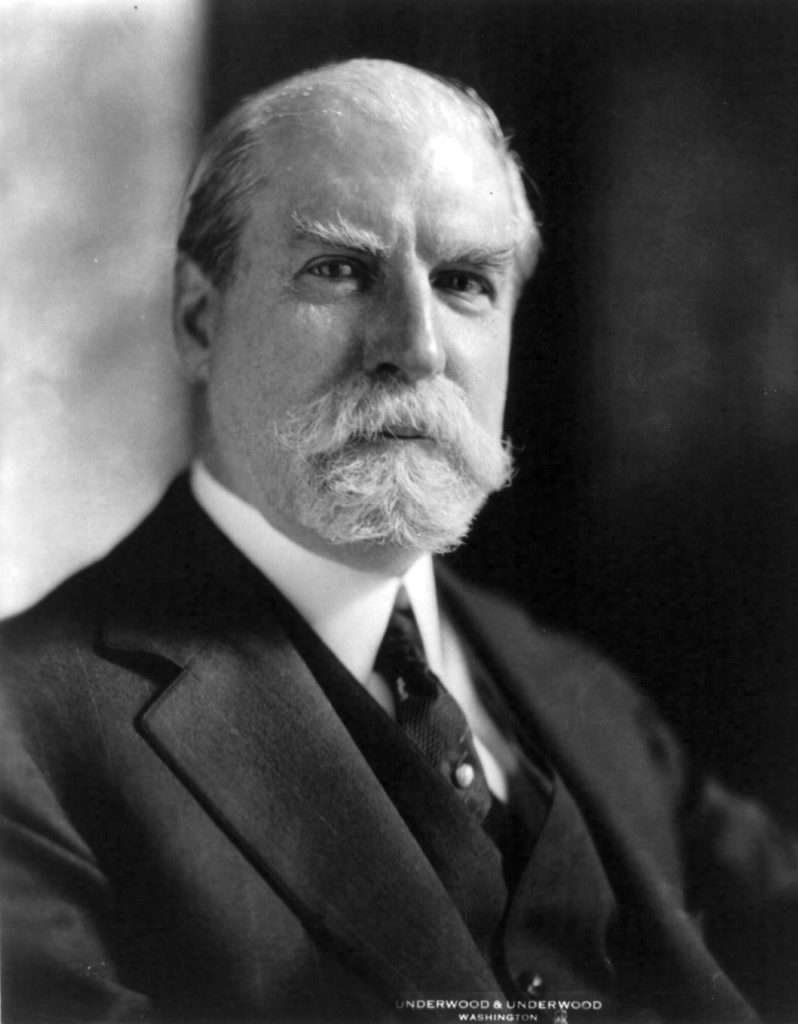
8/27/1948: Chief Justice Charles Evans Hughes dies.
GMU adjunct law professor Brandy Wagstaff tells her own story and some of her students'
The 40th episode (Apple Podcasts link here and Spotify link here) of "Strangers on the Internet" features George Mason University adjunct law professor and DOJ attorney Brandy Wagstaff.
Following up on our last episode in which Prof. Christa Laser discussed her sexual misconduct allegations against ex-George Mason University law professor and former FTC Commissioner Joshua Wright, a second alleged victim of his speaks out in full for the first time. GMU adjunct professor Brandy Wagstaff opens up in this exclusive interview about her alleged sexual relationship with Josh during her time as his student and research assistant. She also narrates the allegations made against Josh to her by her students over the years and her efforts to motivate the law school to act.
Brandy and I discuss the culture of GMU Law and the reforms that she would like to see. Furthermore, Brandy responds to Josh's defamation lawsuit against two other alleged victims that became public shortly before recording, and she explains her own decision to come forward despite the possible risks.
Note: According to a statement printed in the media by Lindsay McKasson, counsel to Joshua Wright at Binall Law Group "all allegations of sexual misconduct are false," "These false allegations are being made public after unsuccessfully demanding millions of dollars behind closed doors," and "We look forward to total vindication in court." According to a tweet by Prof. Christa Laser, "I don't appreciate that his attorney falsely suggests we are all lying (1/2 was in writing!) & want $ (this is a lie–I only want him gone)."
From Livesay Law Office v. Ricartea, decided Thursday by the Texas Court of Appeals (Corpus Christi-Edinburg), in an opinion by Chief Justice Dori Contreras, joined by Justices Gina Benavides and Nora Longoria, reversing an order by Judge Fernando Mancias:
The underlying case is a divorce proceeding in which appellant … filed a motion for sanctions against … one of the attorneys representing respondent (appellee herein) …. At the final divorce hearing on January 20, 2023, appellee's co-counsel asked "that any motions for sanctions not only be withdrawn but stricken from the court's file completely and sealed." The trial court replied, "They will be." Appellant's co-counsel replied, "I think you were going to do that anyway, Judge." The trial court signed an order on March 23, 2023, granting the oral motion for sanctions, but the order itself was "sealed by the court." {The order states appellant's co-counsel agreed "to seal [the subject] motion for sanctions, all exhibits and all proposed and signed orders associated with [the] motion."} On May 22, 2023, appellant filed a notice of appeal challenging "the order sealing record[s] entered on March 23, 2023." …
On June 15, 2023, we … remanded the case with instructions for the trial court to "determine whether any party has filed a written motion requesting sealing of the subject records." Our order stated, among other things, that "if no party has filed a written motion to seal records, the trial court shall certify that fact in a written order" and shall "cause its written order to be included in a supplemental clerk's record, which shall be filed with the Clerk of this Court within thirty (30) days from the date of this order." On the other hand, if the trial court determined that a party had filed such a motion, we ordered the trial court to conduct proceedings in accordance with Texas Rule of Civil Procedure 76a.
On July 18, 2023, appellant filed a "Notice of Trial Court's Refusal to Comply With This Court's Order," observing that the deadline for the trial court to file its order had passed. On July 26, 2023, appellant filed a "Notice of Trial Court's Continuing Refusal to Comply With This Court's Order," observing that the trial court had still not filed its order pursuant to our directions…. We ordered appellee to file a response to the requests made in appellant's notice on or before 5:00 p.m. on Thursday, August 3, 2023. Appellee did not file a response.
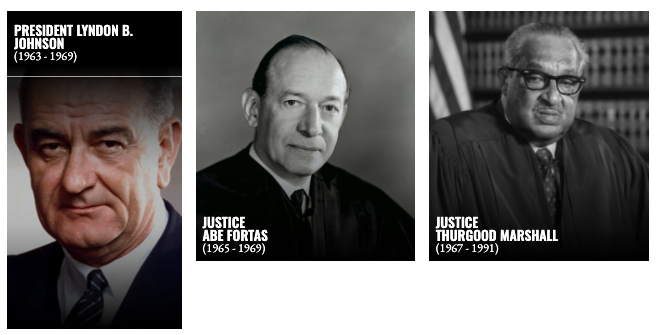
8/26/1964: Lyndon B. Johnson nominated as Democratic candidate for president. He would make two appointments to the Supreme Court: Justices Abe Fortas and Thurgood Marshall.
The sorority, the court held, had a First Amendment freedom of expressive association right to choose which students to admit (logic that suggests that a sorority would equally be free to exclude transgender members).
From Westenbroek v. Kappa Kappa Gamma Fraternity, decided today by Judge Alan Johnson (D. Wyo.) (the defendant is, for historical reasons, labeled a "fraternity," but today it would be described as a sorority):
Embittered by their chapter's admission of Artemis Langford, a transgender woman, six KKG sisters at the University of Wyoming sue their national sorority and its president. Plaintiffs, framing the case as one of first impression, ask the Court to, inter alia, void their sorority sister's admission, find that KKG's President violated her fiduciary obligations by betraying KKG's bylaws, and prevent other transgender women from joining KKG nationwide. A "woman", say Plaintiffs, is not a transgender woman.
Unadorned, this case condenses to this: who decides whether Langford is a Kappa Kappa Gamma sister? Though given the opportunity to vote this past fall, not the six Plaintiffs. Not KKG's Fraternity Council. Not even this federal Court. The University of Wyoming chapter voted to admit—and, more broadly, a sorority of hundreds of thousands approved—Langford. With its inquiry beginning and ending there, the Court will not define "woman" today. The delegate of a private, voluntary organization interpreted "woman", otherwise undefined in the non-profit's bylaws, expansively; this Judge may not invade Kappa Kappa Gamma's freedom of expressive association and inject the circumscribed definition Plaintiffs urge. Holding that Plaintiffs fail to plausibly allege their derivative, breach of contract, tortious interference, and direct claims, the Court dismisses, without prejudice, Plaintiffs' causes of action….
[Plaintiffs'] derivative claim condenses to this: from 1870 to 2018, KKG defined "woman" to exclude transgender women; any new definition may not be enacted, ultra vires, without a KKG bylaw amendment. Expectedly, Defendants counter: private organizations may interpret their own governing documents and define "woman" as including transgender women.
Defendants are correct. Defining "woman" is Kappa Kappa Gamma's bedrock right as a private, voluntary organization—and one this Court may not invade….
First, Ohio law is highly deferential to associational interpretation. "As a general rule, Ohio courts are unwilling to interfere with the management and internal affairs of a voluntary association." More specifically:
Celebrate your independence with a subscription to Reason magazine, your most trusted source of honest, insightful news and analysis.




