The Volokh Conspiracy

Mostly law professors | Sometimes contrarian | Often libertarian | Always independent | Est. 2002

The Volokh Conspiracy

Cyberwar continues to underperform

Episode 487 of the Cyberlaw Podcast

|

Matthew Heiman kicks off this episode of the podcast with a breakdown of Russia's attack on Ukraine's largest mobile operator. The attack was strikingly effective in destroying much of Kyivstar's infrastructure, and strikingly ineffective in achieving any meaningful Russian objectives, since service was quickly restored. Perhaps to even up the score, Ukraine supporters launched an even less effective cyberattack on an Iranian medical software company, presumably as retribution for Iran's supplying drones to Russia.

Hacking as an act of war may turn out to be more important in court than on the battlefield, at least when the victims file insurance claims, Jim Dempsey tells us. Merck's effort to get insurance coverage for its NotPetya losses despite an act of war exclusion has been settled. Which means that, if you want to know what cyberwar means for your insurance coverage, you need to review your current policy, which has almost certainly changed since the Merck case began.

Moving to the world of cybersecurity regulation, Cristin Flynn Goodwin recommends digging into the output of the reigning American champion for prescriptive cybersecurity rules, New York's Department of Financial Services, which recently sanctioned a cryptocurrency firm for a host of violations, including insufficient cybersecurity.

In Washington, meanwhile, the administration is promising to impose new cybersecurity requirements on hospitals, many of whom have been crippled by ransomware attacks. The hospitals aren't taking it well, but Jim thinks the legal basis for regulation can be found in the Golden Rule: The feds are supplying the gold, so they will make the rules.

It's "dogpile on the SEC" week, and no one is feeling sorry for the agency. Cristin reminds us that the SEC's X/ Twitter account was hacked and a market-moving tweet released last week, apparently because the SEC failed to abide by its own regulatory guidance about securing accounts with multi-factor authentication. That's also the subject of a recent Cybertoon, which asks whether the SEC should pay Elon Musk a whistleblower award for outing the agency's security failings.

The FTC's war on location data brokers continues to heat up. Jim reports on the FTC's settlement with one geolocation broker and its sweeping complaint against another. We also return to the FTC's settlement with Rite Aid over use of facial recognition, and its transformation of the settlement into a caution for users and makers of artificial intelligence products.

Speaking of AI, Cristin and I debate what should be done about the use of AI to create fake nudes of real people and other harassing tactics.

I argue that AI has bigger problems to deal with, citing Anthropic's recent report on just how hard it is to counteract malicious AI training.

Matthew and I marvel over the way that a longstanding insurgency in northern Myanmar has turned into a cybersecurity problem.

Finally, I pass on some listener feedback about an earlier episode that asked whether Apple knew about the highly sophisticated Triangulation exploit used against Kaspersky and the Russian government. It turns out that plenty of security pros find it plausible that Apple would not have been aware of the attack. 

Download 487th Episode (mp3)

You can subscribe to The Cyberlaw Podcast using iTunes, Google Play, Spotify, Pocket Casts, or our RSS feed. As always, The Cyberlaw Podcast is open to feedback. Be sure to engage with @stewartbaker on Twitter. Send your questions, comments, and suggestions for topics or interviewees to CyberlawPodcast@gmail.com. Remember: If your suggested guest appears on the show, we will send you a highly coveted Cyberlaw Podcast mug! The views expressed in this podcast are those of the speakers and do not reflect the opinions of their institutions, clients, friends, families, or pets.
Free Speech

Court Lets First AI Libel Case Go Forward

|

Georgia Gwinnett County Superior Court Judge Tracie Cason's decision last week in Walters v. OpenAI, LLC simply says that it denies OpenAI's motion to dismiss, and (as is common in many state courts) doesn't offer a detailed explanation. But here's an excerpt from Walters' response to OpenAI's motion to dismiss; presumably the judge agreed with much of the response (for more on this sort of question, see my Large Libel Models article):

The following facts are alleged in the Amended Complaint and must be taken to be true:

Fred Riehl is a third party who works for a media outlet as a journalist and who is a subscriber of ChatGPT. On May 4, 2023, Riehl interacted with ChatGPT about a lawsuit (the "Lawsuit") that Riehl was reporting on.

The Lawsuit is in federal court in the Western District of Washington, case No. 2- 23-cv-00647, with short caption of The Second Amendment Foundation v. Robert Ferguson. The two defendants in the Lawsuit are Robert Ferguson, the Washington Attorney General, and Joshua Studor, the Washington Assistant Attorney General. The plaintiffs in the Lawsuit are the Second Amendment Foundation and others, including Alan Gottlieb. Walters is neither a plaintiff nor a defendant in the Lawsuit.

In the interaction with ChatGPT, Riehl provided a (correct) URL of a link to the complaint on the Second Amendment Foundation's web site, https://www.saf.org/wp-content/uploads/2023/05/Dkt-1-Complaint.pdf. Riehl asked ChatGPT to provide a summary of the accusations in the complaint.

ChatGPT responded that the document "[I]s a legal complaint filed by Alan Gottlieb, the founder and executive vice president of the Second Amendment Foundation (SAF), against Mark Walters, who is accused of defrauding and embezzling funds from the SAF. The complaint alleges that Walters, who served as the organization's treasurer and chief financial officer, misappropriated funds for personal expenses without authorization or reimbursement, manipulated financial records and bank statements to conceal his activities, and failed to provide accurate and timely financial reports and disclosures to the SAF's leadership. The plaintiff seeks various forms of relief, including the recovery of misappropriated funds, damages for breach of fiduciary duty and fraud, and removal of Walters from his position as a member of the SAF's board of directors."

Every statement of fact in the summary pertaining to Walters is false.

Read More

Free Speech

Police Officer's Libel Case Against Newsweek May Proceed

|

From Wolinski v. Newsweek Digital, LLC, decided yesterday by Judge Jeremy Daniel (N.D. Ill.):

According to the amended complaint, in February 2019, Plaintiff Alex Wolinski, a sergeant in the Chicago Police Department, supervised a tactical team of twelve Chicago Police Department officers in the execution of a search warrant at the home of Ms. Anjanette Young. Upon entering her home, the officers encountered Ms. Young, naked, and handcuffed her. One of the officers covered Ms. Young's naked body with a large blanket that was located in her home.

It was ultimately determined that neither Ms. Young nor her residence had any connection to the target of the search warrant. The incident, which was captured on video by the officers' body-worn cameras ("BWC"), led to a Civilian Office of Police Accountability ("COPA") investigation and a lawsuit between Ms. Young and the City of Chicago.

In January 2022, Defendant Newsweek Digital, LLC published an article regarding the search and the resulting settlement that Ms. Young received from the City. In the article, Newsweek cited COPA's recommendation that Wolinski be suspended for a year with the possibility of "separation from the department." The article also purported to describe the BWC footage of the incident, stating:

Body camera footage from that night shows police breaking down Young's door while she was in the middle of undressing. She is seen handcuffed naked for about 17 minutes and is heard repeatedly telling officers they were at the wrong address.

Wolinski filed the instant defamation suit against Newsweek for statements made in the above publication. Wolinski alleges that the statement that Ms. Young was "seen handcuffed naked for about 17 minutes" is a substantial deviation from what is actually portrayed in the officers' BWC footage and gives rise to the inference that he lacked integrity in performing his duties as a police officer and consciously disregarded Ms. Young's dignity….

Read More

Takings

Oral Argument in Devillier v. Texas Suggests Victory for Property Rights Likely

Both conservative and liberal justices seem to oppose letting states get away with violating the Takings Clause merely because Congress hasn't enacted a specific law enforcing it against them.

|

NA

Today the Supreme Court heard oral argument in Devillier v. Texas, an important Takings Clause property rights case. Based on what was said, I think it very likely that the property owner will win, and that the outcome will be a significant victory for property rights generally. I previously wrote about this case here, and in an amicus brief I filed along with the Cato Institute.

The main issue at stake is whether state governments can evade liability for violating the Takings Clause of the Fifth Amendment merely because Congress has not enacted a statute specifically giving property owners the right to sue over such issues in federal court. In this case, the state of Texas flooded Mr. Devillier's ranch as a result of a highway project. When he filed a takings claim in state court, Texas removed the case to federal court under 28 U.S. Code Section 1441, which allows defendants to remove to federal court "any civil action brought in a State court of which the district courts of the United States have original jurisdiction." They then persuaded the US Court of Appeals for the Fifth Circuit to dismiss the case on the ground that it could not be brought in federal court because Congress hadn't enacted a statute allowing property owners to do so. If allowed to stand, this maneuver creates a Catch-22 under which states can evade takings liability by removing cases to federal court and then having them dismissed. Alternatively, a "rogue" state can simply choose not to allow such claims to be brought in its state courts in the first place.

As explained in our amicus brief and my first post about this case, the Supreme Court had already signaled such a Catch-22 barring takings claims from federal court is impermissible in its 2019 ruling in Knick v. Township of Scott. If today's oral argument is any indication, the justices are not going to allow Texas to bring back the Catch-22 in even more egregious form than the one it abolished in Knick.

Multiple justices suggested that they are not willing to accept the approach taken by the brief and cursory Fifth Circuit ruling. Chief Justice Roberts noted that Texas' position creates "a Catch-22… you say they have to proceed in -- in state court. They can't proceed in federal court. And as soon as they do, you remove it to federal court under 1983, where you say they can't proceed?" He added that sort of reasoning was "rejected in Knick."

Liberal Justice Elena Kagan asked Texas Solicitor General Aaron Neilson whether there is "an ongoing violation of the Constitution" in a case where the state has taken private property and refused to compensate the owner. Neilson had to concede there was, to which Kagan followed up by asking: "[s]o aren't courts supposed to do something about that?" Neilson didn't have a good answer.

Even Justice Sotomayor, usually the justice least sympathetic to Takings Clause rights,  seemed frustrated by Texas' tactics, telling Neilson that "This seems to me like a totally made-up case because they [the property owners] did exactly what they had to do under Texas law. It's you who are telling me -- it's almost a bait and switch [because Texas removed the case to federal court and then claimed it had to be dismissed]."

Various justices raised the issue of "rogue states," which do not grant state court remedies for at least some Takings Clause violations. Under Texas' and the Fifth Circuit's reasoning, there would be no compensation available for property owners in such cases. And, as Devillier's counsel Robert McNamara noted, "the rogue state example is not a hypothetical. It's a real example because state after state has looked to federal law… as the thing that prevents the state from denying compensation. That's true in Oregon, as I mentioned, but also New Mexico, South Carolina, Nebraska, the list goes on of states that provide compensation under the Fifth Amendment because they understand the Fifth Amendment to require compensation."

As noted in our amicus brief, that the state of Louisiana - which, like Texas, is also in the Fifth Circuit - is another such "rogue" state. More generally, lots of state governments would be happy to avoid takings liability in many cases, if they could do so.

Both Texas and the federal government (represented by experienced Justice Department takings expert Edwin Kneedler) argued that even if compensation is not available, property owners could still seek relief by injunction. But, as Justice Kagan pointed out, the Takings Clause is different from many other constitutional rights because the text of the Fifth Amendment specifically mandates "just compensation." And the Supreme Court has repeatedly ruled that monetary compensation is the standard remedy for Takings Clause violations.

In many cases, compensation is the only possible remedy for the violation of the property owner's  Takings Clause rights, as there is no way to address it by an injunction. For example, Justice Amy Coney Barrett noted that an injunction couldn't fix a "temporary taking" where the government has temporarily taken an owner's property, but then stopped. I would add the same is true of cases where the government has destroyed or damaged the owner's property - as in Devillier itself. Short of inventing a time travel device and going back in time, Texas cannot undo the flooding of Devillier's land. The only possible remedy for that violation of his rights is the payment of compensation.

Looking at the oral argument, I think it highly likely the Supreme Court will reverse the Fifth Circuit. At the very least, they will forbid the Catch-22 under which Texas' removed the case from state court and then got it dismissed in federal court. It is less clear whether they will go further than that and rule that takings claims can be brought directly in federal court, regardless of whether there is also a state court remedy available. But requiring property owners to go to state court first (if possible) would replicate for claims against states the regime the Court rejected in Knick, when it comes to local government. I think, but cannot be certain, that a majority of justices won't want to do that. And they shouldn't!

It's also not clear what the vote in the Supreme Court will be. Based on their comments at oral argument and votes in previous takings cases, I think all or nearly all the conservative justices will vote to reverse the Fifth Circuit (I am not fully certain about Justice Alito). Among the liberal justices, Kagan also seems likely to vote to reverse. Justice Sotomayor at least seems unwilling to accept the Catch-22 Texas is trying to exploit. But she may prefer a reversal on as narrow grounds as possible. It's not clear to me where Justice Ketanji Brown Jackson will end up. But she may be the justice most likely to vote to just affirm the Fifth Circuit.

Ultimately, the key issue in this case should be an easy one. As Justice Kagan put it, an uncompensated taking of private property is an "ongoing violation of the Constitution." And when that happens, the courts are "supposed to do something about that."

Devillier v. Texas--and the Declaratory Judgment Is Not Equitable

|

I am listening to the oral argument in Devillier v. Texas, and one attorney just said the declaratory judgment is an equitable remedy. It is not. Here is a note from the manuscript for the next edition of Ames, Chafee, and Re on Remedies:

Note on Equity and the Declaratory Judgment

Modern declaratory judgment acts have largely, but not entirely, superseded a variety of equitable remedies that were once quite important in solving procedural difficulties and providing effective protection for rights. Among these were quia timet ("because he fears") relief, bills of peace, cancellation of documents, and decrees quieting title to property. In their original forms, these remedies all relied on the power of equity courts to issue in personam orders. Indeed, equity decrees are typically coercive: the court orders the defendant to do or not to do some act. This is one application of the maxim that equity acts in personam.

Even so, the ultimate goal of some equity proceedings is a declaration of the plaintiff's rights vis-à-vis the defendant. Actions to rescind or reform a contract are examples. A request for an injunction may also have as its primary motive a declaration of rights between the parties. For example, in Huntworth v. Tanner, 87 Wash. 670 (1915), the plaintiff sued to restrain a threatened arrest and prosecution for violation of a penal statute, but the real relief at stake was a declaration that the plaintiff's activities did not violate the law. Such injunctions are often called "anti-suit injunctions": the plaintiff sues for an injunction to protect herself against a suit the defendant might bring in the future. Thus, a plaintiff would seek what was in effect a declaration, but using one of the traditional equitable forms of relief, because equity had no freestanding power to give declaratory judgments.

There are similarities between these equitable remedies and the modern declaratory judgment. For example, like an "anti-suit injunction," the declaratory judgment can be seen as an "anti-suit" remedy. But there are even more differences. The declaratory judgment was created by statute, rather than being developed from equity. A plaintiff seeking a declaratory judgment does not have to meet basic equitable requirements, such as showing there is no adequate remedy at law. A declaratory judgment is not an in personam order, and it is not directly enforceable by contempt. Moreover, in some jurisdictions, a declaratory judgment action can be given by a jury. See generally Samuel L. Bray, The System of Equitable Remedies, 63 U.C.L.A. L. Rev. 530, 561–562 (2016); cf. Aetna Life Insurance Co. v. Haworth, 300 U.S. 227, 241 (1937) (upholding the federal Declaratory Judgment Act, and noting that "as it is not essential to the exercise of the judicial power that an injunction be sought, allegations that irreparable injury is threatened are not required").

Perhaps it is best to see the declaratory judgment not as an equitable remedy, but as a legal prerogative writ, like mandamus or habeas. Because it lacks a traditional common law basis, the declaratory judgment had to be adopted by statute. Cf. Sir J.H. Baker, An Introduction to English Legal History 161 (5th ed. 2019).

Common Good Constitutionalism

According to Law

A keynote address to the Symposium on Common Good Constitutionalism.

|

In October 2022, a symposium was held at Harvard on my colleague Adrian Vermeule's book Common Good Constitutionalism. Though I have many disagreements with the project, I was honored to present the keynote address, "According to Law," which is now among the papers published in the latest issue of the Harvard Journal of Law & Public Policy. Here's the abstract:

What we ought to do, according to law, isn't always what we ought to do, given the existence of law. Sometimes we need to know what a legal system says we should do, under rules prevailing in a certain time and place. And sometimes we need to know what we should actually do, in the moral circumstances this legal system presents.

Many fights between positivists and natural lawyers result from muddying these two inquiries. But we have good reasons, intellectual and moral, to keep them distinct. Even if prevailing social rules have no moral force of their own, those who make claims about them still owe their audiences a moral duty of candor. And the stronger our moral commitments, the more we ought to approach existing legal systems warily.

Insisting that the law already reflects good morals can blind us to some very real flaws in our prevailing rules—and to the need for some very hard work in reforming them. To this extent, common-good-constitutionalist claims too often have all "the advantages of theft over honest toil": they can lead us to wish away precisely those disagreements and failings that make social and political institutions so necessary.

And from the introduction:

As a legal positivist—indeed, an originalist—asked to address a symposium on common good constitutionalism, I feel somewhat like a giraffe being asked to address a meeting of the American Chemical Society. Despite a keen sense of being somewhat out of place, I hope I can nevertheless be useful here, offering a view from the sidelines.

For more, read the whole thing!

Free Speech

Amicus Brief Related to the Mackey "Vote-by-Text" Meme Prosecution

|

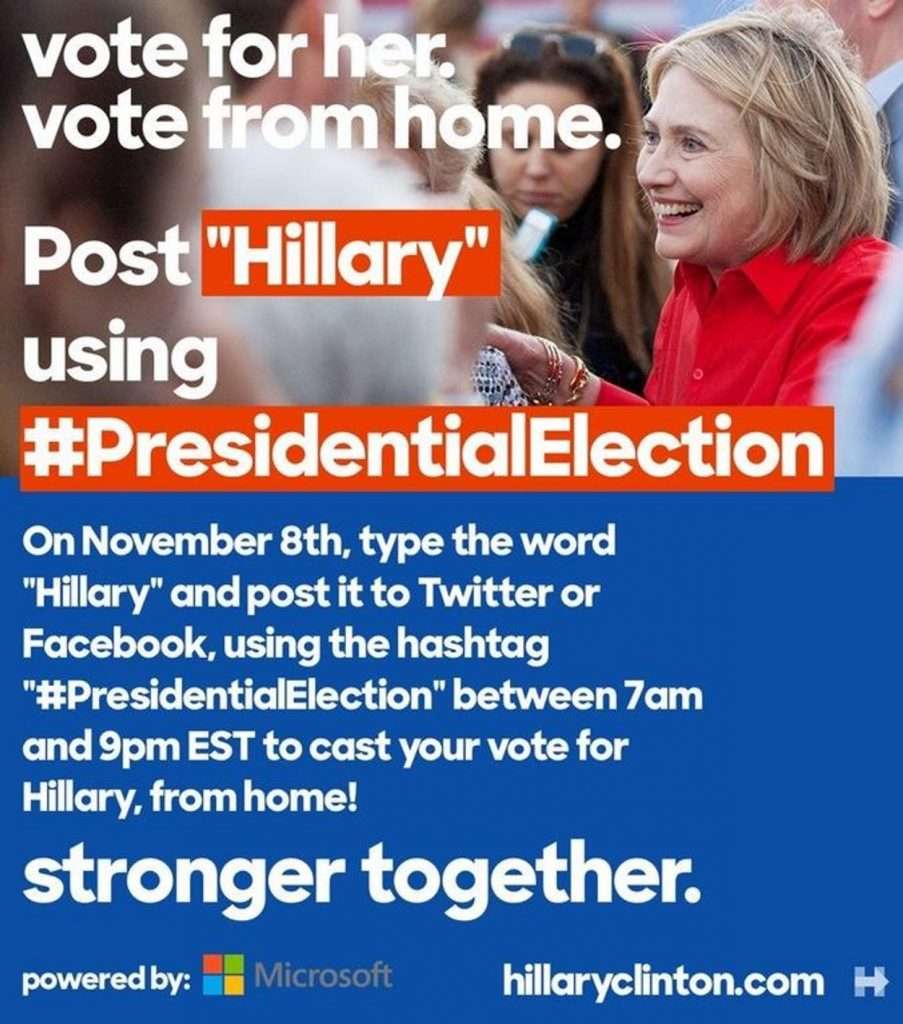
Russell B. Balikian & Cody M. Poplin (Gibson, Dunn & Crutcher LLP) just filed this brief [UPDATE: link added] on my behalf Friday; they drafted it based generally on some thoughts that I'd expressed in this 2021 Tablet article. Here's the substance of the brief, in case any of you folks are interested:

INTRODUCTION

The First Amendment likely tolerates narrow and clearly defined bans on disseminating knowing lies regarding election procedures—that is, false statements of fact (not opinion, humor, parody, hyperbole, or the like) made with actual malice regarding the time or place of an election, or the procedures one must follow to lawfully cast a valid vote. But Congress has not enacted any federal law that clearly criminalizes such conduct. While some states have passed legislation that comes close to the mark, Congress has debated and repeatedly failed to enact similar statutes. See infra, at 12-13.

Despite the absence of a federal statute specifically on point, the government prosecuted Douglass Mackey for posting messages on Twitter relating to the 2016 presidential election. To achieve that result, the government repurposed 18 U.S.C. § 241, a statute enacted in 1870 to target violence and intimidation by the Ku Klux Klan during Reconstruction. United States v. Price, 383 U.S. 787, 800-05 (1966). Section 241 does not specifically address false factual statements about the mechanics of voting, or even speech about elections. Instead, it broadly prohibits "conspir[ing] to injure, oppress, threaten, or intimidate any person … in the free exercise or enjoyment of any right or privilege secured to him by the Constitution or laws of the United States." The district court nonetheless construed the term "injure" to encompass any "conduct that makes exercising the right to vote more difficult, or in some way prevents voters from exercising their right to vote." United States v. Mackey, 652 F. Supp. 3d 309, 337 (E.D.N.Y. 2023). It held that Mackey had "fair warning" that this 1870 statute prohibited posting tweets suggesting that people could "vote by text." Id. at 338, 346.

Whatever one thinks of Mackey's tweets, the district court's broad reading of Section 241 brings the statute into conflict with the First Amendment and risks chilling protected political speech. Courts are rightfully loath to let the government regulate the rough and tumble of speech surrounding elections as a general matter, preferring counterspeech as the appropriate remedy. Consistent with that principle, courts in recent years have invalidated broad election-lie statutes in North Carolina, Ohio, Minnesota, and Massachusetts, holding that they are insufficiently clear and narrow to survive First Amendment scrutiny. See Grimmett v. Freeman, 59 F.4th 689, 692 (4th Cir. 2023); Susan B. Anthony List v. Driehaus, 814 F.3d 466, 476 (6th Cir. 2016); 281 Care Comm. v. Arneson, 766 F.3d 774, 796 (8th Cir. 2014); see also Commonwealth v. Lucas, 34 N.E.3d 1242, 1257 (Mass. 2015). These decisions, read together with the Supreme Court's false-speech jurisprudence in cases such as United States v. Alvarez, 567 U.S. 709 (2012), make clear that a statute prohibiting election misinformation will not survive First Amendment scrutiny unless it is narrowly and clearly limited only to knowing (or perhaps reckless) lies made to confuse voters about easily verifiable facts such as the time or place of voting.

Section 241 does not fit that description. Nothing in its text nor in earlier precedents suggests that it forbids lies while protecting other speech; certainly it is not a narrow, clearly defined statute targeting knowing lies about election mechanics. Accepting the district court's view would dramatically expand Section 241's scope and transform it into a boundless, indeterminate criminal prohibition on any speech that the government (later) deems injurious to constitutional rights. Because the district court's interpretation of Section 241 would render it overbroad and impermissibly vague, the best reading of Section 241—and the one compelled by the First Amendment—is that Section 241 does not reach false speech regarding elections. If Congress desires to regulate knowing lies about election mechanics, it must enact a narrow, clear statute targeting such lies.

ARGUMENT

[I.] The First Amendment Permits Narrow and Clearly Defined Prohibitions on Knowing Lies Regarding the Mechanics of Voting.

[See here for more on this. -EV]

[II.] Section 241 Is Not a Narrow and Clearly Defined Prohibition on Knowing Lies Regarding the Mechanics of Voting.

Read More

Free Speech

"When Someone Loses His Livelihood as a Result of Government Action,

he has a right to know how and why the government took that action.”

|

From last week's opinion by Judge Stephen Vaden (U.S. Ct. of Int'l Trade) in CVB, Inc. v. U.S.:

The underlying case involves a challenge to the [U.S. International Trade] Commission's final affirmative injury determination in its investigation of mattresses from Cambodia, China, Indonesia, Malaysia, Serbia, Thailand, Turkey, and Vietnam. The Slip Opinion outlined numerous errors by the Commission but found the errors were ultimately harmless and sustained the Commission's final determination. To explain what the Court characterized as the Commission's "mathematical obfuscation and statistical chicanery[,]" the Court illustrated how responses to various questionnaires contained in the record and a chart from the Commission's final determination showed the opposite of what the Commission claimed they did.

After the Court released its opinion [link added -EV], the Commission contacted the Court … to express concerns that the opinion revealed confidential business proprietary information….

The court went in considerable detail through various procedural and substantive reasons why the Commission's request to conceal the confidential information was improper (read the opinion for more on this), and then offered this policy discussion:

The American tradition of public access to judicial proceedings dates back not merely to the founding, or even to the English common law, but all the way back to Ancient Rome. Legal arguments and judicial decisions are meant to be public because "American courts are not private tribunals summoned to resolve disputes confidentially at taxpayer expense." This is especially true when the courts resolve disputes to which the Government is a party, affecting the entire citizenry. Like a student taking a math test, courts are expected to show their work. The public does not and should not accept final answers to complicated questions on faith alone.

Read More

Civil Liberties

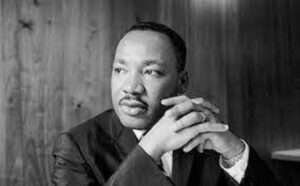
Martin Luther King on Civil Disobedience and Ethics of Resistance to State Authority

Contrary to a widespread misconception, King did not favor absolute nonviolence, nor does his reasoning always require practitioners of civil disobedience to accept punishment. But he also strongly opposed rioting.

|

Martin Luther King, Jr. (NA)


Today is Martin Luther King Day. One of King's most important legacies was his advocacy of civil disobedience as a strategy for resisting injustice. In 2022, I wrote a Martin Luther King Day post addressing some common misperceptions about King's views on this topic. I built, in part, on a piece on King by Georgetown Prof. Jason Brennan, author of an important book on the morality of resistance to government power.

Contrary to popular perception, King did not categorically oppose all violent resistance to injustice. His views also don't imply that practitioners of civil disobedience have a categorical obligation to accept punishment. In the case of the US civil rights movement, he advocated both nonviolence and acceptance of punishment for primarily tactical reasons. But the reasons for doing so don't always hold true in other cases. On the other hand, King did strongly oppose rioting, on both moral and pragmatic grounds. And his reasoning does imply a strong presumption against violence, even if not a categorical bar.

A few excerpts from the 2022 post:

As Brennan points out, King believed that disobedience to unjust laws is often entirely justified, even when the laws in question were enacted by democratic governments…

I think King was right about this, and that, for many unjust laws, we have no obligation to obey. I outlined some of the reasons why in this 2014 piece about why most undocumented immigrants have no moral obligation to obey laws denying them the right to move to another country (see also follow-up post here). The same reasoning applies to many other unjust laws, at least those that inflict great harm on their victims….

Brennan is also right to note that, on King's view, justified disobedience to unjust laws may not always require accepting punishment. He favored such acceptance, in some cases, for largely tactical reasons….

Sometimes, the goal of disobedience is not to effect a change in law (which, may, for political reasons, be impossible at the time), but simply to prevent injustice in that particular case. For example, many of the people who violated the Fugitive Slave Acts in the 19th century did not turn themselves into the authorities and accept punishment. And they were entirely justified in so doing. Accepting punishment would, among other things, have impeded their efforts to help escaped slaves. At least for a long time, they had little hope of getting Congress to repeal the Fugitive Slave Acts. But they could and did help individual slaves escape their reach…..

At times, King seems to have endorsed a more categorical duty to accept punishment, as when he wrote that "One who breaks an unjust law must do so openly, lovingly, and with a willingness to accept the penalty." But that was in the context of writing about civil disobedience intended  "to arouse the conscience of the community over its injustice" and thereby facilitate reform….

Brennan also points out, contrary to much conventional wisdom, that King was not an advocate of absolute non-violence, but merely supported it as a strategy for the civil rights movement on tactical grounds….

While King was not, on principle, opposed to all violent resistance to injustice, it is important to emphasize that he did oppose violence targeting innocent civilians, including that caused by rioting. In 1968, he warned that "riots are socially destructive and self-defeating" and that, "[e]very time a riot develops, it helps George Wallace." He opposed the riots of his own time on both moral and instrumental grounds. While we cannot know for sure, it seems likely he would have felt the same way about the 2020 riots in the wake of the brutal killing of George Floyd by Minneapolis police….

The obvious criticism of views like King's is that many people may have poor judgment about which laws are unjust. For example, those who stormed the Capitol on January 6, 2021 likely believed that enforcement of the laws against doing so would be unjust, because (in their view) Donald Trump had a right to stay in power. Similarly, both left and right-wing terrorists often believe they are justified in violating laws against murder and assault.

But the risk that individual citizens may be mistaken about matters of justice has to be balanced against the danger that government can be wrong about such things, as well. Even in democratic societies, there is a long and awful history of the latter…..

Even when governments are acting unjustly, there should nonetheless—for reasons well-articulated by King's critique of riots—be a very strong presumption against violent action that might harm innocents. But the threshold for defensible peaceful disobedience is much lower.

King's pragmatic arguments for nonviolence and acceptance of punishment apply largely in the context of swaying public opinion in democratic societies. In such cases, peaceful moral suasion is often more likely to be effective than violence, and less likely to cause harm to innocent people.

This reasoning applies with much lesser force in authoritarian states. Dissidents living under brutal dictatorships, like those of China, Russia, or Iran, surely have no moral duty to accept punishment. And, if they have a good opportunity to overthrow the regime by force and replace it with a significantly better government, they may well be justified in seizing it.

As noted in my 2022 post, King's views don't definitively resolve these issues. He wasn't infallible, and even a great hero can sometimes go wrong. Some might also argue that King's views were sound in his time, but for some reason don't translate well to our own. But I think King's positions on these questions were in fact largely right. At the very least, they are more than worthy of our careful attention and consideration.

Free Speech

"Don't Cut the Rattle Off of the Rattlesnake—the Silence Is More Dangerous to You than to the Snake"

|

Image by Robert F. Graboyes / Midjourney


I actually follow Justice Holmes in recognizing the potential benefits of speech restrictions. Among other things, while it's hard to estimate the likely consequences of any particular statement going forward, looking backward we can see that virtually every ideological crime (whether committed by a solo offender, a group, or a government) stemmed in part from some sort of political or religious speech. If only we could prevent that, without causing all sorts of other problems ….

My view, though, is that on balance attempts to restrict the expression of bad views generally do more harm than good; and the quote in the title expresses well one of the many forms of such harm. (The earliest use of the quote I found is from 2018, by Robert Graboyes, though I noticed it because of this more recent post of his.)

Remedies Casebook Revision: Behind the Scenes

|

The next edition of Ames, Chafee, and Re on Remedies is off to the publisher (Foundation) for next fall, and I'm going to write a series of posts about the revision. Who is the audience for these posts? Well, I expect law students will be very interested in what goes into a casebook revision, especially given the cost of casebooks. Law professors who teach Remedies will be interested, as well as those who might teach Remedies soon. If you're a practicing lawyer and want to know what is on the cutting edge of remedies thinking, this will be of interest for you. (Think of it as CLE that's to the point but, alas, without credit.) If you're just interested in some of the philosophical choices behind casebooks--the tradeoffs between different models--then this may interest you as well. And if you wish you'd taken Remedies in law school, this is a plate of hors d'oeuvres that might whet your appetite to study it for yourself.

Let me start with a word or two about this casebook. It started in 1902 as Cases on Equity Jurisdiction by James Barr Ames, dean of Harvard Law School. It's had some illustrious authors, including Zechariah Chafee, Sidney Post Simpson, Edward Re, Ted Eisenberg, and Emily Sherwin. It was an equity book until 1982, when damages and restitution materials were added by Judge Re. Its current title--Ames, Chafee, and Re on Remedies--dates to 2012, when Professors Eisenberg and Sherwin became the editors. The upcoming edition will be the fourth edition under this name. And it's the third edition that I've been on.

There are lots of good remedies casebooks, with a number of different approaches. Instead of doing head-to-head comparisons, I'll highlight three things that distinguish this book. This will set the stage for the discussion of the revisions in the next post.

First, Ames, Chafee, and Re on Remedies is built on the premise that the law of equity matters today. That was an easy point to make when Dean Ames first published his equity book in 1902. Yet there were premature announcements of equity's demise in the late twentieth century. But now, in 2024, it is becoming increasingly difficult to deny the importance of equity to the work of the federal and state courts.

This point is abundantly clear from the U.S. Supreme Court's docket--about once a year for the last two decades there has been a case in which the Supreme Court has reaffirmed the importance of traditional equitable principles. Equity is relevant in many of the Supreme Court's standing cases (a point Ernie Young makes here). It's at the heart of the debate about the national injunction. And the Court just granted cert in another equity case, Starbucks Corp. v. McKinney. The law of equity is critical to Delaware's Court of Chancery, and thus to corporate law generally. And the explosion of scholarship on equity in the last five years--including the publication of Henry Smith's Equity as Meta-Law and the Notre Dame Law Review Symposium on federal equity--show that the trend is not abating.

So this casebook makes equity central to the subject of remedies. In chapter 1 there are notes and cases introducing equity. Then, after the sections of the book on damages and legal restitution, there are ten chapters on equitable remedies:

CHAPTER 9     The History of Equity

CHAPTER 10   General Principles Governing Equity

CHAPTER 11   Injunctions

CHAPTER 12   Measuring Injunctive Relief

CHAPTER 13   Accounting for Profits

CHAPTER 14   Constructive Trust and Other Proprietary Equitable Remedies

CHAPTER 15   Specific Performance of Contracts

CHAPTER 16   Equitable Rescission, Reformation, and Cancellation

CHAPTER 17   Equitable Compensation

CHAPTER 18   Equitable Defenses

Second, this book is 100% focused on teaching and learning. It is not a reference book, and will not be a good substitute for a treatise. This especially affects the choices about notes. They don't describe lots of permutations and qualifications for the doctrine. And you won't find citations to most of the great new remedies scholarship (to all who are writing that scholarship, sorry!). The center of attention is cases that are great for teaching and learning, with the notes as supporting cast that never steal the limelight.

Third, this book has a stronger private law orientation than many remedies casebooks. This can be seen in how the book starts--the chapters on damages come first, then the chapters on legal restitution, then the chapters on equity. That fits the conceptual primacy of damages, as well as their central role in contract and tort. This private law emphasis also shows up in how many of the doctrines are taught. Often a contract case is paired with a tort case, so students can see the same doctrine from two different angles, and get to see how the tort or contract setting makes a difference. There is a chapter called "Remedies Against the Government," including Bivens and desegregation. But this is a different approach from books that start with public law remedies.

I think both approaches are sound. But in my view public law remedies are built on what we might call "private law microfoundations." So it makes more sense to put the private law settings front and center. Remedies were first developed by courts of law and equity for cases in what we would now call tort and contract, and then those remedies were redeployed in public law settings. A student whose pedagogic progression tracks the doctrinal progression is going to be more attuned to how the translation of private law remedies to public law remedies brings new stress points and questions. And it's great preparation for vast swathes of litigation practice, from corporate law to personal injury to ERISA.

So what's in this revision? Stay tuned.

Free Speech

"Most Litigants Would Prefer Not to Have Their Medical Problems Published in the Public Records"

But that’s not adequate reason to allow them to litigate pseudonymously, a district court rules.

|

From Friday's decision by Judge William Shubb (E.D. Cal.) in Beitzel & K.K. v. Becerra:

Plaintiff K.K. has filed a Motion to Proceed with Partial Anonymity. Plaintiff K.K. requests that she be able to proceed by her initials in all public filings in this case because the filing "will contain sensitive and personal information about her rare and severe medical conditions that she has disclosed to very few people, as well as the mental distress and suffering she has experienced relating to her medical conditions and the events underlying this case." Specifically, she does not want to disclose to the public her medical history of severe psoriasis, psoriatic arthritis, and arthritis mutilans, which would cause her "emotional distress, anxiety, embarrassment, and potential harassment." {Plaintiff K.K. also wishes to avoid disclosing details of her finances to the public.} She notes that her identity has already been disclosed to defendant and she only wishes to remain anonymous to the general public.

Allowing a party to proceed anonymously runs counter to the public's right of access to judicial proceedings. However, the Ninth Circuit has allowed parties to use pseudonyms "in the unusual case when nondisclosure of the party's identity is necessary to protect a person from harassment, injury, ridicule or personal embarrassment." In determining whether to allow a party to proceed anonymously, the court looks to whether "the party's need for anonymity outweighs prejudice to the opposing party and the public's interest in knowing the party's identity.

Read More

Free Speech

Unsealed Arguments for Pseudonymity in Challenge to NYU Law Review's Race/Sex/Etc. Preferences

|

I wrote in November about the court decision allowing the challenge to NYU Law Review's race, sex, sexual orientation, and gender identity preferences to proceed pseudonymously; Judge Victor Marrero allowed Doe to proceed pseudonymously, though "without prejudice to New York University's right to move the Court to direct Plaintiff to disclose his identity, or any other appropriate relief, once the Clerk of Court assigns this case to a District Judge." But the judge's order didn't give any reasons; and Doe's memorandum, which must have provided various reasons that did sway the judge (whether or not he endorsed them all), had been filed under seal.

With the help of UCLA law student Maria Cafferata, I filed a motion to unseal that memorandum, and on Thursday the judge granted it. It's an interesting and forceful argument, which I think some of our readers will agree with and still more will find interesting—it's signed by, among other lawyers, conservative star lawyer Jonathan Mitchell (as well as Gene Hamilton of America First Legal Foundation, Ronald Berutti of Murray-Nolan Berutti LLC, and Christopher Mills of Spero Law LLC) [UPDATE: just to be clear, as my comments following the long block quote below indicate, I disagree with much of the argument, but just thought it was well-crafted and worth passing along]:

Plaintiff John Doe, a first-year law student at New York University, should be permitted to proceed under pseudonym. This lawsuit pertains to his personal beliefs and characteristics, and he risks significant retaliation from the NYU Law Review, his peers, his professors, NYU administrators, and potential employers if his identity is exposed. NYU faces no prejudice from Doe's proceeding under a pseudonym, particularly at this early stage of litigation involving legal claims that do not focus on Doe's own facts or credibility. Likewise, the public has little interest in knowing which specific student challenged the NYU Law Review's generally applicable practices. Because the plaintiff's interest in remaining anonymous significantly outweighs any competing interests, the Court should grant the motion and permit Doe to proceed under pseudonym….

[1.] First, this litigation involves matters that are highly sensitive and of a personal nature. They pertain to Doe's personal characteristics — his race, sex, gender identity, and sexual orientation. See Doe #1 v. Syracuse University, No. 18-cv-0496, 2018 WL 7079489, at *4 (N.D.N.Y. Sept. 10, 2018), adopted, 2020 WL 2028285 (N.D.N.Y. Apr. 28, 2020) ("[C]laims involving sexual orientation … are examples of matters that qualify as being highly sensitive and of a personal nature.").

The claims also implicate Doe's personal beliefs in a matter of great controversy, particularly his belief that academic honors such as law-review members be awarded based on merit without any regard to an applicant's race, sex, gender identity, or sexual orientation. Cf. Doe v. Porter, 370 F.3d 558, 560 (6th Cir. 2004) ("This suit … forces Plaintiffs to reveal their beliefs about a particularly sensitive topic that could subject them to considerable harassment."); Doe v. Stegall, 653 F.2d 180, 185–86 (5th Cir. 1981) (permitting plaintiffs to proceed pseudonymously because the lawsuit revealed their unpopular personal beliefs); Choice, Inc. of Tex. v. Graham, 226 F.R.D. 545, 548 (E.D. La. 2005) (granting plaintiffs' motion to proceed pseudonymously after finding that they "made revelations about their personal beliefs").

Most people at NYU and at NYU Law School do not share Doe's beliefs. And there is no question how the University—including its professors and administrators—will respond to the plaintiff's lawsuit.

Read More

More