The Volokh Conspiracy

Mostly law professors | Sometimes contrarian | Often libertarian | Always independent | Est. 2002

The Volokh Conspiracy

Due Process

Maine Constitution Forbids Revival of Civil Claims for Which Statute of Limitations Had Already Lapsed

|

[UPDATE 1/31/2025, 5:29 pm: As it happens, just today the North Carolina Supreme Court handed down a decision interpreting the North Carolina Constitution, McKinney v. Goins, and reached the opposite result from the Maine high court's decision below.]

An interesting (though very long) majority and dissent handed down Tuesday, in Dupuis v. Roman Catholic Bishop [UPDATE: link added]. The opinions well illustrate how many state courts interpret their state constitutions. Some very brief excerpts from the majority

Legislation reviving claims that have expired under the statutes of limitations applicable at the time of the operative events was not deemed by the framers to be a "law" within the power of the Legislature to enact…. This constitutional hostility to legislative efforts to retroactively impair rights, privileges, and/or property, viewing such efforts as beyond the Legislature's function, is reflected in the earliest of our case law [citing a case from 1823, three years after Maine became a state]….

Contemporaneous common law principles can inform the meaning of constitutional provisions because many constitutional concepts originated in the common law. Post-enactment common law and statutes can also illuminate timeless social understandings and values embedded in the Constitution. Long before the adoption of the Maine Constitution, the common law condemned the concept of retroactive liability….

In terms of sheer numbers, at the time of the adoption of our Constitution and for a lengthy period thereafter, the great majority of jurisdictions precluded the revival of claims after their statutes of limitations had expired. After the Supreme Court's decision in Campbell v. Holt (1885), in which the majority held that revival was permitted, some courts deviated from this position. If one includes jurisdictions with
constitutions that contain express anti-retroactivity provisions … then, despite the Supreme Court's view, the majority of state courts of last resort continue to adhere to the view that revival is precluded.

Read More

Free Speech

Another Nevada S. Ct. Decision as to #TheyLied Sexual Assault Defamation Claim Brought by Nickolas Carter (Backstreet Boys)

|

From Tuesday's Nevada Supreme Court decision in Schuman Henschel v. Carter (for more on an earlier decision in Ruth v. Carter, see here):

This appeal arises out of a defamation countersuit brought by respondent Nickolas Carter against appellants Melissa and Jerome Schuman (collectively, the Schumans). Over the span of several years, the Schumans made statements about Carter's alleged sexual assault of Melissa and other women. One of the other women, Shannon Ruth, sued Carter for sexual battery, and Carter countersued for defamation and related torts and joined the Schumans as counter-defendants. The Schumans filed an anti-SLAPP special motion to dismiss Carter's claims against them….

[Under the Nevada anti-SLAPP statute, once a court determines that] "… the claim is based upon a good faith communication in furtherance of the right to petition or the right to free speech in direct connection with an issue of public concern[,]" … [the person making the claim must] show "with prima facie evidence a probability of prevailing on the claim." …

"To prevail on a defamation claim, [a public figure] must show (1) a false and defamatory statement; (2) unprivileged publication to a third person; (3) fault; (4) damages, presumed or actual; and … (5) actual malice." Actual malice is demonstrated when a statement "is published with knowledge that it was false or with reckless disregard for its veracity." … "[T]o demonstrate by prima facie evidence a probability of success on the merits of a public figure defamation claim, the [non-moving party's] evidence must be sufficient for a jury, by clear and convincing evidence, to reasonably infer that the publication was made with actual malice." …

Read More

AP Asked Justice Jackson About Her Inauguration Attire

There was not exactly a denial.

|

Justice Jackson gave an interview to the Associated Press at the Supreme Court. The biggest reveal is that she takes boxing lessons to get out her frustrations from the conservative justices. Lovely.

Buried deep in the story is a brief discussion about her attire at the inauguration.

Jackson, along with the other eight justices, also was part of the pomp and circumstance at President Donald Trump's inauguration, attracting attention for the white cowrie-shell necklace she wore over her judicial robe.

"It happened to coincide with Martin Luther King Day, and I thought I should wear something of cultural significance for that circumstance as well, to honor my heritage on this important day and this important occasion," she said.

The large necklace and earrings had special resonance because the shells have long been associated with African American culture and African heritage.

Um, the lede is buried. These shells didn't simply have resonance with African heritage. They are talismans to ward off evil. Jackson didn't quite deny that fact.

Carry on.

Politics

Ban on Town Employees' Displaying Thin Blue Line American Flag Imagery on Town Property Violates First Amendment

|

From Tuesday's decision in Fraternal Order of Police v. Township of Springfield, decided by Judge Paul Matey, joined by Judge Anthony Scirica, concluding that the policy was unconstitutional:

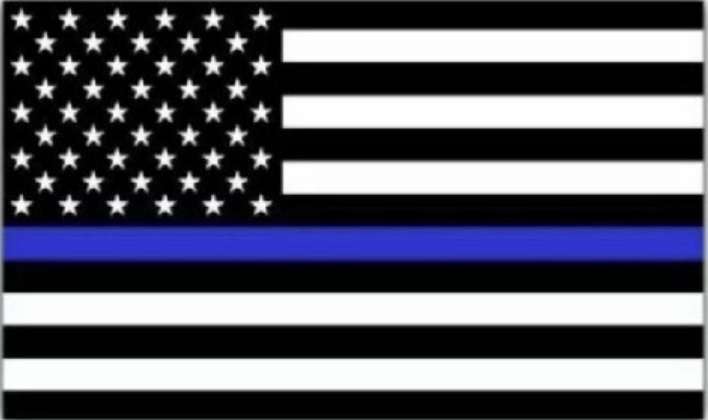
The "Thin Blue Line American Flag" ("the Flag") is "a black and white American flag." "All of the horizontal stripes are black and white with the exception of one horizontal stripe that is blue." For Plaintiffs it "represents a show of support for [and] a solidarity with member[s] of law enforcement, which includes, police officers." In March 2020, the PBA {Springfield Township Police Benevolent Association} incorporated the Flag into its logo, which it uses at fundraisers, some of which occur on Township property. Individual Plaintiffs wish to continue to display the Flag on both personal and Township property. And the PBA wants to continue hosting events on Township property, displaying its logo and the Flag.

In 2021, Township Commissioners met with the PBA and asked them to remove the Flag from their logo. The PBA declined, and in response, the Township passed Resolution No. 1592 "prohibit[ing] the publicly visible display or use of any image which depicts the Thin Blue Line American Flag symbol by any Township employee, agent or consultant." The Resolution contains three specific prohibitions:

Read More

Free Speech

Trump "Global Gag Rule" as to Abortion Likely Doesn't Violate the First Amendment

That's because it apparently covers only grants to foreign organizations operating abroad, and a 2020 Supreme Court decision generally held that the First Amendment doesn't apply in such situations.

|

Friday, President Trump reinstated his 2017 reinstatement of the 2001 President G.W. Bush reinstatement of President Reagan's "Mexico City Policy" (also called by some the "Global Gag Rule") which provides, in relevant part:

The Mexico City Policy announced by President Reagan in 1984 required foreign nongovernmental organizations to agree as a condition of their receipt of Federal funds for family planning activities that such organizations would neither perform nor actively promote abortion as a method of family planning in other nations. This policy was in effect until it was rescinded on January 22, 1993.

It is my conviction that taxpayer funds appropriated pursuant to the Foreign Assistance Act should not be given to foreign nongovernmental organizations that perform abortions or actively promote abortion as a method of family planning in other nations….

The policy restricts the foreign grantees' speech (actively promoting abortion, which includes public advocacy and lobbying of foreign governments) as well as their conduct. Does this violate the First Amendment?

No, the Second Circuit federal court of appeals held in 1990; and it then followed that decision in 2002, in an opinion by then-Judge Sonia Sotomayor:

Read More

Free Speech

Harvard Crimson Was Entitled to Ban Commenter for What He Claims Were "Anti-Zionist" Comments

|

From today's decision by Judge Angel Kelley (D. Mass.) in Affleck v. Harvard Crimson Inc.:

Plaintiff Jonathan Affleck [who has also at times litigated as Joachim Martillo -EV] brings this action against Defendant The Harvard Crimson, Inc…. According to the Complaint, the Crimson … deleted Affleck's comments on three articles on the Crimson's website and then suspended Affleck's ability to post. Affleck claims that the Crimson's actions violated the First Amendment …, [the Massachusetts Constitution's free expression provision], and finally, federal and state laws related to common carriage discrimination and public accommodation discrimination….

According to the Complaint, from February 7 to February 10, 2024, Affleck commented, under two different names, 38 times across three articles on the Crimson's website. The three articles focused on Palestine and the Palestinian people…. [In an earlier case, Affleck] "… represent[ed] that each defendant disabled or suspended his account on their respective platforms because he posted content that each defendant deemed to be anti-Zionist."

The court concluded that 47 U.S.C. § 230 precludes all of Affleck's claims:

Read More

Free Speech

Settlement in Heartbeat of Miami v. Jane's Revenge Pro-Life Pregnancy Center Vandalism Lawsuit

The settlement of the civil case follows guilty pleas or convictions in related criminal cases.

|

The judgment was just entered today, and it provides, in relevant part:

All four Defendants—Caleb Freestone, Amber Marie Smith-Stewart, Annarella Rivera, and Gabriella Victoria Oropesa—are ENJOINED for a period of ten years from coming within 100 feet of the facilities that Plaintiff alleges were victimized in this case: South Broward Pregnancy Help Center in Hollywood, Florida; the Life Choice Pregnancy Center in Winter Haven, Florida; and any of the five facilities owned by Plaintiff. The parties agree to mutual general releases of any claims they may have against any opposing party arising from the same transaction or occurrence as the claims in the operative complaint. Each party shall bear their respective fees and costs.

The clerk must enter a JUDGMENT for the plaintiff and against Defendant Gabriella Victoria Oropesa for $13,000. Defendant Oropesa will pay $1,000 to each of the three facilities (South Broward Pregnancy Help Center, Life Choice Pregnancy Center, and Plaintiff) for a total of $3,000. Defendant Oropesa will pay a $10,000 civil penalty directly to the State of Florida. Defendant Oropesa's $13,000 payment of the civil judgment in the related civil action, No. 8:23-cv-701-SDM-AAS (Related Civil Action), satisfies the judgment in this action. Defendant Oropesa will also, within 30 days of sentencing in her related criminal case, No. 8:23-cr-25-VMC-AEP (Related Criminal Action), send a letter of apology to each facility similar to the apology the other three Defendants made at their sentencing hearing.

Read More

Spending Clause

White House Rescinds Memo Freezing Federal Grants

This will, for the moment, avert what could have been a major legal battle over the spending power.

|

Yesterday, I wrote about the Trump Administration Office of Management and Budget memo ordering a "temporary" freeze of a wide range of federal grants, and how it was a major attempt to usurp Congress' power of the purse. Today, after widespread criticism, and a federal court ruling temporarily blocking the order, the White House has rescinded the  OMB memo.

At least for the moment, this move averts a major constitutional confrontation over the spending power. It is also an indication that Trump can be forced to back down if he meets sufficiently strong resistance.

But, as noted in my previous post, this order was not the only way in which Trump is trying to infringe on congressional control over spending, even though it was the broadest and most sweeping. So the struggle over the spending power is likely to continue. The exact details of how and when remain to be seen.

Executive Power

Is Humphrey's Executor in the Crosshairs?

Firing members of "independent" agencies would seem to set up a direct challenge to a longstanding precedent.

|

President Trump's decision to fire over a dozen agency inspectors general may be legal, but he has made other moves that are almost certainly unlawful under existing Supreme Court precedent, Humphrey's Executor in particular.

On Monday, Trump purported to fire two Democratic members of the Equal Employment Opportunity Commission and the Chair and General Counsel of the National Labor Relations Board. Any one of these dismissals could result in litigation, and one in particular could set up a direct challenge to the Humphrey's Executor precedent.

Under Humphrey's Executor, decided in 1935, Congress may prevent the President from removing members of multi-member independent agencies (such as the Federal Trade Commission) without cause. A more recent decision, Seila Law (which I unpacked here) held that this does not apply to agencies exercising substantial authority headed by a single individual (such as the Consumer Financial Protection Bureau). While Seila Law did not purport to modify Humphrey's Executor, the two decisions are clearly in tension.

That brings us to President Trump's latest moves. The firing of NLRB general counsel Jennifer Abruzzo would seem to be the most easily legally defensible action under existing law. President Biden fired the Trump-appointed NLRB GC at the start of his term, and that action was upheld by the U.S. Courts of Appeals for the Ninth and Fifth Circuits. The rationale is that the GC may have a set term of office, but no express removal protections, so the President's removal power is unconstrained. That holding is technically consistent with Humphrey's.

A similar argument may insulate President Trump's decision to fire two EEOC commissioners. While I am not aware of clear precedent for this move, the relevant statutory provisions do not appear to have express removal protections, so a court could reject any challenge to the firings on grounds similar to that considered in the NLRB GC cases, again without confronting Humphrey's Executor.

The decision to remove NLRB Chair Gwynne Wilcox, on the other hand, would seem to put Humphrey's Executor in the crosshairs. The relevant statutory provisions provide that members of the NLRB are appointed for set terms and (as is particularly relevant here) can be removed "upon notice and hearing, for neglect of duty or malfeasance in office, but for no other cause." Thus a President cannot remove a member merely because of anticipated policy differences or because the President wants the ability to make his own appointment.

There may be a clever way to try and distinguish the removal of an NLRB member from the removal of a Federal Trade Commission member (which is what was at issue in Humphrey's), but no serious argument for such an outcome comes to mind. This would suggest that if Wilcox contests her removal, the Administration will argue that Humphrey's Executor should be overruled, and courts will be forced to confront the question. Chief Justice Roberts may be a pro at manipulating statutory text to prevent disruptive outcomes, but this would seem to be beyond even his expertise.

The one exit ramp would be to deny certiorari if a lower court rejects the removal on precedential grounds (which most lower courts are likely to do), but that path would only be viable if there are six justices willing to leave Humphrey's be.

[Note: As initially posted, I mixed up the names of the EEOC and NLRB general counsels. The post has been fixed.]

Donald Trump

Was It Legal for Trump to Fire Seventeen Inspectors General Without Notice?

Jack Goldsmith offers his analysis.

|

At the tail end of last week, President Trump fired seventeen inspectors general across a number of agencies (including some IGs that he himself had appointed during his first term). Of note, Trump did not provide Congress with the thirty-days notice that is required by federal law.

Some, such as the Washington Post's Ruth Marcus, believe this act was "blatantly illegal." Others, such as Harvard Law's Jack Goldsmith, are not so sure. Goldsmith offered a nuanced analysis for the Lawfare Blog that begins:

On Friday night, President Trump removed at least 17 inspectors general, the executive branch watchdogs who conduct audits and investigations of executive branch actions. The removals are probably lawful even though Trump defied a 2022 law that required congressional notice of the terminations, which Trump did not give. Trump probably acted lawfully, I think, because the notice requirement is probably unconstitutional.

The real bite in the 2022 law, however, comes in the limitations it places on Trump's power to replace the terminated IGs—limitations that I believe are constitutional. This aspect of the law will make it hard, but not impossible, for Trump to put loyalists atop the dozens of vacant IG offices around the executive branch. The ultimate fate of IG independence during Trump 2.0, however, depends less on legal protections than on whether Congress, which traditionally protects IGs, stands up for them now. Don't hold your breath.

That sounds about right to me. Here, as in many areas, the real question is whether Congress will defend its own prerogatives and power as a coordinate branch--and there is ample reason to doubt whether (m)any congressional Republicans have such fortitude.

In any event, Goldsmith's entire analysis is worth a read for those interested in the subject.


More