
Susan Collins, Joe Manchin Say They'll Vote 'Yes' on Kavanaugh Confirmation
Judge Kavanaugh appears to have enough votes to be confirmed.

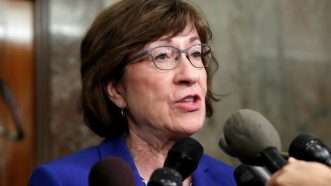
Judge Kavanaugh appears to have enough votes to be confirmed.

While the Supreme Court nominee's anger and frustration last week were understandable, his tactics were troubling.
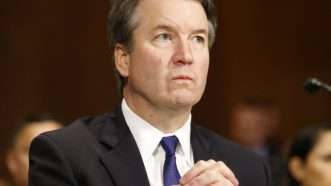
The final vote is likely to take place this weekend.

Plus: millennial men are more socialist than millennial women and changes to juvenile justice programs
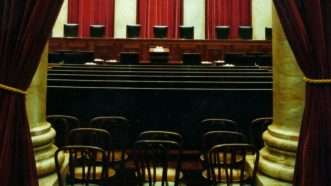
But they might be worth trying anyway.

"This is such an absurd contortion of Title IX that I suspect even those filing the complaint know it's unlikely to succeed as a matter of law."

Plus: more transparency among California cops and less transparency among Instagram "influencers."
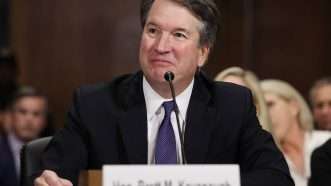
Michael Avenatti's client contradicted her previous claims, can't say the judge was actually involved.

Opposition to Kavanaugh stems from a case that was decided the year Kavanaugh was born and was argued by professors from the law school from which he graduated.

Lying about the Devil's Triangle may or may not be disqualifying for the Supreme Court, but this whole process is a reminder that the federal government's power makes politics too important.
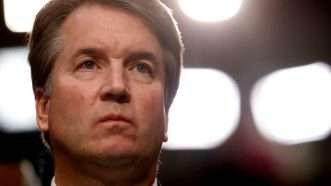
"We oppose him in light of the credible allegations of sexual assault against him."
A libertarian-leaning federal judge and a liberal Supreme Court justice both make the case against qualified immunity.

Plus: The Justice Department goes after "net neutrality" in California and SNL takes on Brett Kavanaugh.

One of the points at issue in the debate over the sexual assault accusations against Brett Kavanaugh is whether the standards of proof used by the Senate should be those appropriate to a criminal trial or those of a job interview. The latter is the superior approach.

Temperamental centrism and case-by-case decision-making, on Brett Kavanaugh and other issues, irritates nearly everyone-and is necessary.
The symposium includes contributions by various legal commentators, including Bruce Ackerman, Mari Matsuda, Deborah Rhode, and myself.

If you want to show your support for the accused or the accuser, stay away from these.

Sen. Lindsey Graham had the quote of the day: "I think I know what happened."
An index of recurring topics
The Supreme Court confirmation fight is a preview of things to come.

We didn't get another Anita Hill hearing. Let's consider that a small silver lining.
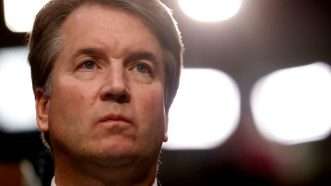
This isn't due process-this isn't even an honest attempt to determine what actually happened.
It's a given that many senators are acting in bad faith. But what about the rest of us?
Plus: Is postmodernism bad?

Unlike most of us, he's in a position to do something about it.
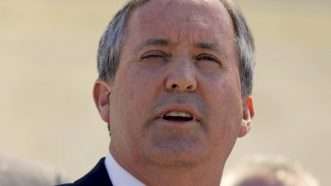
The irony is that she's protesting authoritarian police behavior.

The allegations were released on Twitter this morning by lawyer Michael Avenatti, who is asking for an FBI investigation.
The debate over the sexual assault accusations against Brett Kavanaugh is a striking example of partisan bias at work.
Here's the full Fox News interview with the SCOTUS nominee and his wife Ashley.
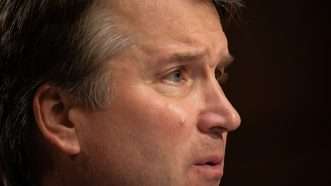
Reason's editors discuss the latest Brett Kavanaugh revelations, Rod Rosentein's fate, and how to recover basic norms of political discourse.

Claim that Kavanaugh exposed himself at a Yale party 35 years ago is less convincing than Ford's alleged rape, but suggests a pattern.

Leftist partisans say he's guilty, conservative partisans are convinced he's innocent. How convenient.
My amicus brief with Stephen Sachs in Franchise Tax Board v. Hyatt
Understanding what happens next if the Kavanaugh nomination falls apart.

Florida prisons completely ban Prison Legal News magazine. Now the publication is asking the Supreme Court to "vindicate the First Amendment."
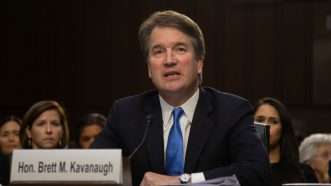
Reason's editors debate whether a single-source allegation from 35 years ago should be enough to derail a Supreme Court pick.
It includes contributions by a variety of legal scholars and commentators, including myself.

The situation is a mess-and it's Dianne Feinstein's fault-but the public needs to take this accusation seriously.

Anonymous officials claim the accusation involves a high school sexual misconduct case.
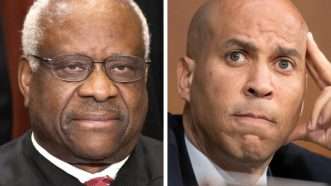
"If you can't debate hard issues honestly, with honor, with integrity, how do we keep a civil society?" Thomas said.
The Supreme Court nominee talks warrantless government surveillance with Sen. Patrick Leahy.

Clinton runs with a Kamala Harris whopper that's already been debunked.

This time the Libertarian Party seems to be hurting the Democrat, who's trying to run out the clock on confirming Brett Kavanaugh.
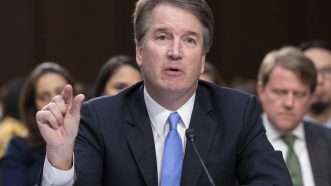
"Brett Kavanaugh said he would kill Roe v. Wade last week." Except he didn't.
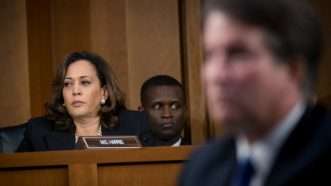
Harris and other Democrats distorted Kavanaugh's comments on birth control to portray him as a religious extremist.
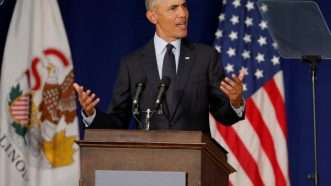
Critiquing an ex-president's warnings about anti-media rhetoric, non-voting, and unelected bureaucrats
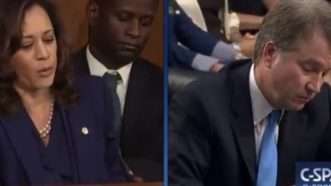
Fun fact: All laws give government control of the decisions that everybody of any gender can do with their bodies.
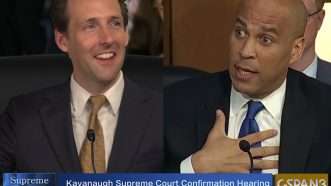
Pretty much what everyone expected. Unfortunately.
Celebrate your independence with a subscription to Reason magazine, your most trusted source of honest, insightful news and analysis.




