
The Tornado Cash Crackdown Is an Attack on Speech and Privacy
For the first time ever, the Treasury Department has sanctioned not a person or a group but a digital tool and all who would use it.


For the first time ever, the Treasury Department has sanctioned not a person or a group but a digital tool and all who would use it.

Senior Producer Zach Weissmueller explores how the crackdown on cryptocurrency tools has implications for free speech and financial privacy.
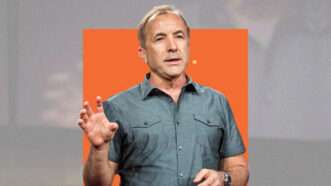
The best-selling author of Why People Believe Weird Things sees a fundamental clash between wokeness and scientific inquiry.

The science writer and journalist talks identity politics, wokeness, trans athletes, and why his goal is to find out what is true rather than to "be right."

Monetary Metals CEO Keith Weiner defends the future of gold against bitcoin podcaster Pierre Rochard.

A mother-daughter arrest in Nebraska was fueled in part by unencrypted Facebook messages police accessed through a warrant.

The innocuously-titled Online Safety Bill threatens citizens' rights to privacy and to speak freely.

A robust market of monitoring technology already exists. There's no need to boost it further by government fiat.

The U.S. is missing out on necessary high-skilled workers by faltering on immigration reform.

Monetary Metals CEO Keith Weiner defends the future of gold against bitcoin podcaster Pierre Rochard.


Jamie Bartlett's gripping look at the schematics and psychology of a scam
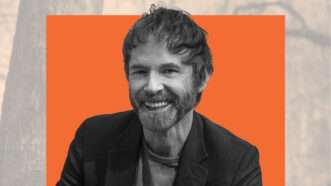
The creator of The Moth talks about why the past is never dead, especially in his new novel The Kingdoms of Savannah.

All of these advances are in mice for now, but maybe these breakthroughs can one day be adapted as human therapies.

The metaverse platform Somnium Space plans to let its users' personas live on.

Wherever markets are free, new wealth gets created. Then almost everyone wins.
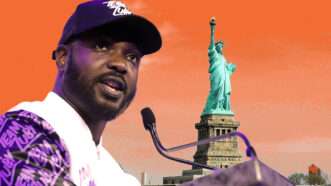
The rapper, podcaster, and author talks about "freedom, liberty, and all of that good stuff."

"The fact-checking industry has become a partisan arbiter of political disputes," notes Phil Magness.

Deplatforming controversial content is perfectly legal—and often counterproductive.

Plus: A rebranded "Build Back Better," the two-party system creates "a disconnect between elites and non-elites," and more...

If you believe that moving most of our chip production onshore is good for national security, you should labor for regulatory reforms rather than subsidies.

One Medical and Amazon are going to provide a much-needed alternative to consumers who are already frustrated by the health care system.

Making the U.S. semiconductor industry dependent on subsidies is not the way to stick it to China.

Plus: Arizona prisons censor The Nation, Facebook's feed changes, and more...

The White House's coronavirus adviser answered questions about mask mandates, gain of function research, and more.

It's none of their business.

Government often proves to be biased against large, successful companies that legislators don't understand well but customers love.

For the officer's excessive force, the protester was later awarded a $175,000 settlement over the 2016 incident.

''The kind of values I've always embraced are heard more on Fox than on CNN and MSNBC," says the Pulitzer Prize–winning progressive journalist.

Bitcoin's creator designed it to be radically transparent, but the tools exist to make it as hard to trace as cash.

“Without full briefing and argument,” Kagan objects, the Court is quietly resolving major disputes.

A lawsuit alleges that the social media giant "tries to conceal the dangerous and addictive nature of its product, lulling users and parents into a false sense of security."

The feds now admit there was "no need" for such a thing.

Plus: The Respect for Marriage Act, the Farm Workforce Modernization Act, and more...
The bill makes little note of parents' ability to control their own children's social media access.



Dedication to free speech is in short supply around the world, with Britain and Canada previously considering similar bills.

Associate Editor Liz Wolfe discusses the political and economic fortunes of both Austin and Miami, plus potential reasons these pastures might not always be greener.

Social media platforms may marginally support free speech. Government censors are trying to stop that.

Time for a new Operation Warp Speed?

A recent college grad from the Midwest landed in the Bronx and was confused by bodega culture. This led to a social media mob, a digging up of old videos, and a firing.

Alcohol facilitates human cooperation and creativity on a grand scale, says Edward Slingerland, a philosophy professor at the University of British Columbia.

Plus: Facebook censors information on abortion pills, TikTok provokes the ire of the FCC, and more...

Anti-discrimination law was pioneered by the political left. But, in recent years, conservatives have increasingly tried to use it for their own purposes.


Miami and Austin lured people away from California. But the new tech hubs could end up repeating San Francisco’s mistakes.
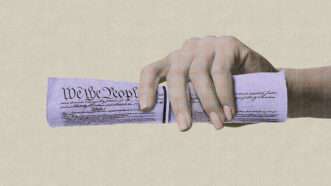
Looking back at how abortion advertising bans played out last century may give us some idea what the future holds for speech about abortion.


New from Reason: a look into what Javier Milei has accomplished and what it will take to make the most of Argentina’s window for real change. Out now for subscribers.

