
Police Drug Tests Are Notoriously Unreliable. They Got This Man Wrongly Charged With Trafficking Fentanyl.
Roughly 30,000 people every year may be getting wrongfully arrested because of unreliable field drug tests, according to one estimate.
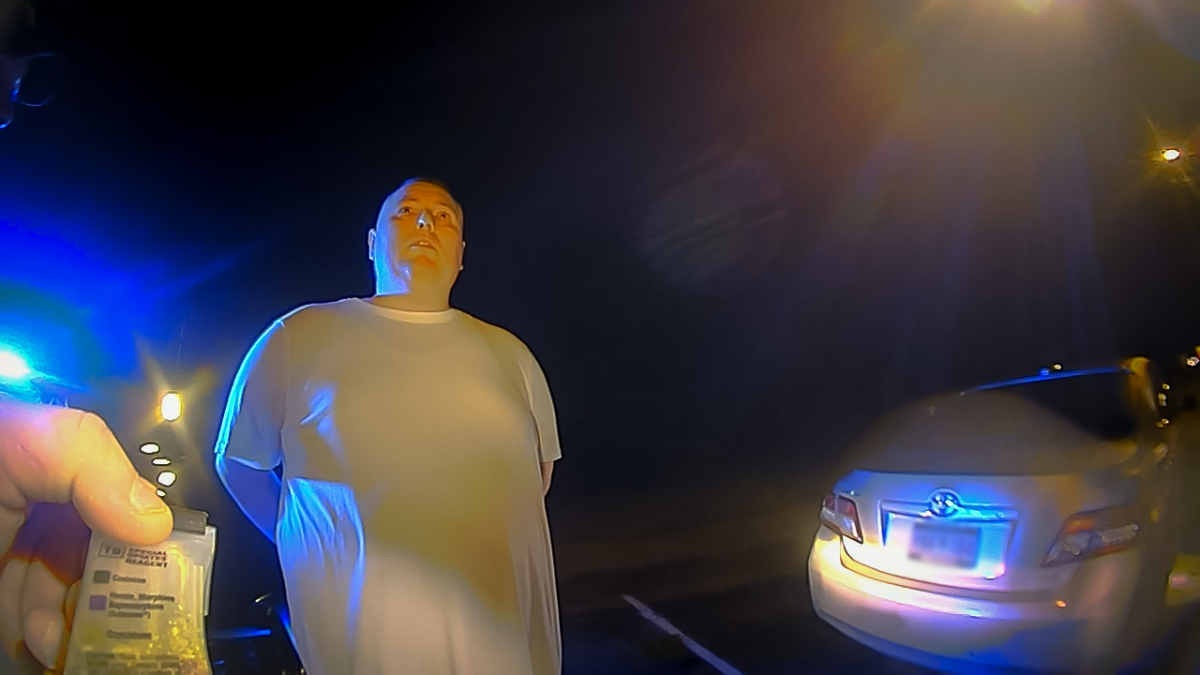
On paper, Bryan Getchius fit the profile of a drug mule.
When sheriff's deputies pulled him over in Greenwood County, South Carolina, on a spring night in 2024, Getchius, 41, was driving a car with out-of-state plates on a suspended driver's license. He was so nervous that he was shaking, and his story was confusing. The deputies asked if they could search his car.
Getchius would have normally said no, but he was hoping the deputies would give him a break on his license if he cooperated. Besides, he knew something important: He and his car were clean. For the first time since he was 19, Getchius says, he had achieved long-term sobriety.
"When they got me, I was a little over a year sober," Getchius recalls. "I want to say about 14 and a half months."
Then everything went wrong.
The deputies found a prescription pill bottle in Getchius' luggage and tested its contents using a notoriously unreliable kind of field kit. After they concluded that the test results were positive for the possible presence of fentanyl, Getchius spent 15 days in jail, seven months on house arrest, and tens of thousands of dollars in lawyer fees clearing his name.
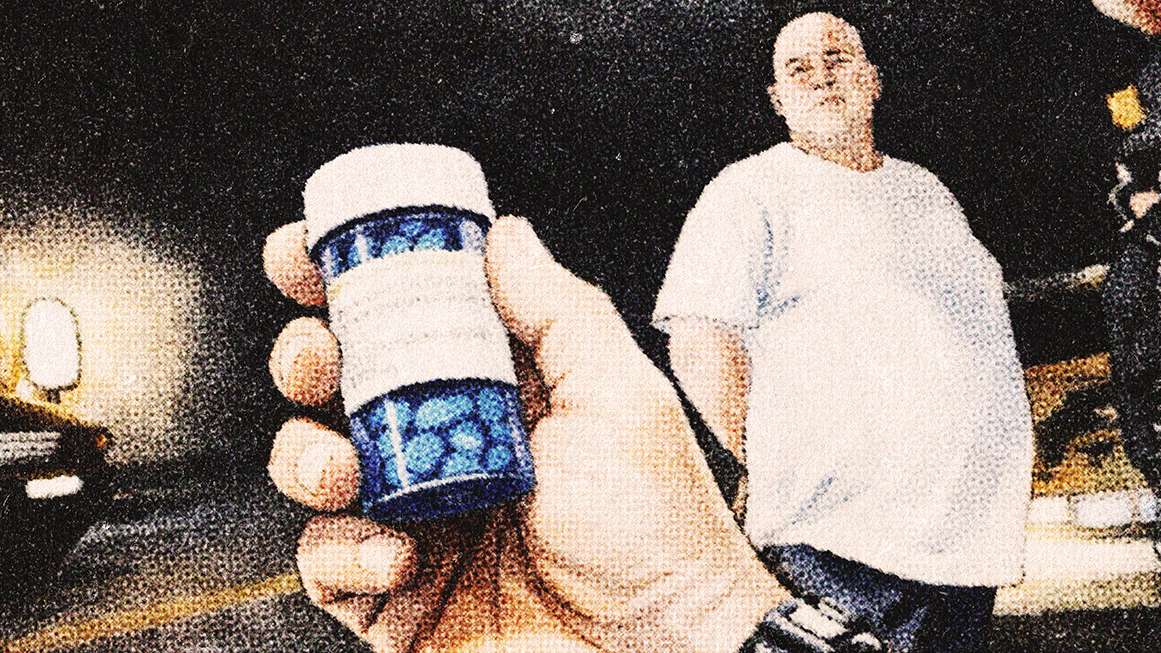
In the end, it took Getchius one year, four months, and 28 days to prove to Greenwood County prosecutors that the suspicious blue pills in that bottle were exactly what the label said: prescription medication for irritable bowel syndrome (IBS).
Getchius' odyssey through the South Carolina justice system is not unusual. Due to long wait times for verified test results from the state forensics lab, defendants and prosecutors regularly wait more than a year before they know whether the drugs in the case are actually drugs. In the meantime, defendants face jail time, restrictive bail conditions, harsh financial impositions, and the collateral social costs of a pending drug charge.
Reason obtained data through a public records request showing that the average turnaround time for test results from the state drug lab while Getchius' case was pending was more than a year. There was a backlog of roughly 18,000 other cases while he waited for his results.
When combined with the roadside test kits that police use in cases like Getchius', this means people in South Carolina can have their lives turned upside down for more than a year over completely legal substances.
"Not only did they put me in jail, but they took me away from the people who helped me get sober, my sponsorship family," Getchius says. "I couldn't meet with my sponsor. I couldn't meet with my sponsoree—because I was through my steps. I'm sure you've seen the TED Talks and shit. The opposite of addiction is connection, right? They took connection away from me because I was locked in my mom's house."
Getchius' case is a nightmare that could happen to anyone—and does in fact happen to quite a lot of people. Although no one knows the exact number, a 2024 study by the Quattrone Center for the Fair Administration of Justice at the University of Pennsylvania estimated that roughly 30,000 people every year may be getting wrongfully arrested and jailed because of police departments' widespread use of these kinds of field tests.
'What You So Worked Up About, Man?'
On the night of May 15, 2024, Getchius was driving from Greenwood back to Florida. Following the death of his father, Getchius had been splitting his time between Greenwood, where his mother lived, and Florida, where he had a job doing social media management and business development for an addiction treatment center. He also started two large Facebook groups to connect others in addiction recovery with resources and support.
Around 11 p.m., Greenwood County Sheriff's deputies David Keener and Wesley McClinton pulled up behind Getchius' Toyota Camry. According to McClinton's incident report, the deputies observed Getchius "swerving between the #1 and #2 lanes; at one point, straddling the center line."
Keener turned on his emergency lights, and Getchius pulled over in the parking lot of an all-you-can-eat buffet.
When Getchius rolled down his window, McClinton and Keener immediately noticed that he was sweaty and shaking. "What you so worked up about, man?" Keener asked him.
Getchius admitted his driver's license was suspended and said he couldn't afford the penalties. Keener asked him to step out of the car.
"The reason I stopped you, just so you're aware, was your window tint," Keener said, "but then secondly, you were all over the road, man. You drove all the way into the other lane and then came back across."
Keener asked Getchius repeatedly if he had drugs in his car or on his person. Getchius admitted to the officers that he was an addict in recovery, but he swore up and down that he didn't have drugs on him.
Keener then asked if they could search the car. Getchius looked back at his Camry and paused. It had been a while since he'd had nothing to hide from the police.
Getchius was raised in New Jersey in Section 8 housing, which he says gave him an early distaste for substance abuse.
"I grew up around nothing but drug addicts and alcoholics, and I hated that shit," Getchius says. "I never even smoked weed or drank beer, believe it or not, and then it was like a couple days before I turned 19, I got prescribed Percocet for an injury and immediately had something just—I don't know, man. I thought I found the missing link to life."
For roughly 20 years after that, Getchius says, he went through a recurring cycle of recovery and relapse, until something finally clicked in mid-2023.
"I've been to rehab over 30 times," Getchius says. "This is the first time I ever was able to get sober and stay sober."
So he consented to the search, and the deputies started digging through his car. Before long, McClinton pulled a prescription pill bottle out of one of Getchius' bags. Inside the bottle were two types of pills: crumbly blue tablets and blue capsules. There was also blue powder at the bottom of the bottle.
"The pills appeared to be poorly made and broke apart with a very small amount of force," McClinton later wrote in his incident report. "A large amount of light blue powder was also located in the bottom of the pill bottle and had an approximate weight of 3.26 grams."
As soon as McClinton saw the contents of the bottle, he yelled "Miranda" to Keener, who then started reading Getchius his Miranda rights.
"It's dicyclomine," Getchius tried to explain when McClinton came back to ask him about the pills. "It's for my stomach."
"I understand, but most pills don't look like that," McClinton replied, "so we're going to test them, OK, because these look very worn and honestly not real, and they're in the wrong pill bottle."
The Problem With 'Presumptively Positive'
Around the country, officers who find suspected drugs during traffic stops pop open their trunks to retrieve a small, inexpensive test kit to help determine if they're looking at Colombian nose candy or something mundane—say, drywall dust.
The user puts a sample of the test substance in a plastic pouch that also contains small glass ampoules filled with chemical reagents. The user then cracks the ampoules and shakes the bag. The reagents create color reactions if they encounter compounds found in certain narcotics. It's basic chemistry. Several different companies manufacture the kits, and there are different ones for different types of drugs, but they all rely on the same method.
McClinton headed back to the trunk of a squad car to start testing Getchius' pills, but he wasn't sure which drug to test for.
"I need another test kit, a different kind," McClinton told Deputy Brandon Burnett, who had also arrived on the scene. "Give me something else."
"Codeine?" Burnett replied.
"Give me something for all of 'em, hell," McClinton said. "MDMA/ecstasy is what I'm looking at here. This doesn't make any fuckin' sense."
Burnett came back with a buffet of test kits. "There's codeine," he said, tossing test kits onto the makeshift work station. "That's ephedrine. Heroin. Methamphetamine one right there."
The well-documented problem with these kits is that the compounds they test for are not exclusive to illicit drugs and are, in fact, found in dozens of legal substances. That is to say, they're better at telling if something isn't a drug than if it is one. This is why they're used in laboratory settings as preliminary screeners. But in the criminal justice system, they're considered probable cause to make an arrest.
As a result, many people have been arrested for absurd items. Over the years, officers have jailed innocent people after drug field kits returned "presumptive positive" results on bird poop, donut glaze, cotton candy, and sand from inside a stress ball. Remember that example about drywall dust? That was a real case. In 2017, a Florida handyman spent 90 days in jail after a police officer tested drywall dust in the man's car and claimed the results were positive for cocaine. A 2018 investigation by a Georgia news station found that one brand of test kit produced 145 false positives in the state in one year.
Reason reported in 2021 on how prisons use these tests to punish inmates. In 2020, the New York Department of Corrections and Community Supervision suspended the use of NARK II test kits for contraband because of reliability concerns. A New York State Inspector General report found that unverified test kits had led 2,000 innocent inmates to be unfairly punished—in some cases by throwing them into solitary confinement, suspending their visitation rights, or canceling their parole hearings.
Because unverified test results are considered only "presumptively positive," they're not admissible courtroom evidence in most U.S. jurisdictions. Instead, samples are sent to forensic labs for verification. The manufacturers also print clear warnings that the results should be confirmed by labs.
Despite appearing easy to use, the tests can still be performed incorrectly or produce muddy results, which leaves suspects' fates to the subjective opinions of police officers.
As the battery of tests proceeded, Burnett handed McClinton one of the oxycodone kits, which appeared to show a positive yellow reaction.
"Is that not turning?" Burnett asked.
"Looks pretty fuckin' yellow to me," McClinton said.
Strangely, the other test kits also started turning yellow, even in kits where yellow wasn't one of the result colors.
"It's even turning yellow in this thing, but I mean, yellow's not an indicator," Burnett said. "But see there, how it's got that brownish thing in the bottom corner? Does the same thing in this one."
While the deputies were considering the results, McClinton used his phone to look up the markings on the pills. A quick search matched Getchius' claim that they were dicyclomine.
But McClinton was convinced the pills looked fake. "Something ain't right," he told Burnett. "They ain't supposed to break like that, Bubba. When I was making fake pills with a pill press, that's what they did." (McClinton referenced his experience with illegal pill presses several times during the traffic stop. In his incident report, he described it as "having prior knowledge of pills consistent with these being clandestinely made and containing Fentanyl.")
McClinton returned to Getchius with the incriminating test in hand. "What color is this?" he asked Getchius, holding up the plastic baggie.
Getchius leaned in to see. "Yellow," he said.
"Well, yellow says it's oxycodone, brah," McClinton responded.
Getchius was flummoxed: "Sir, I promise you. Please, I'm begging you," he said. "Look at the pill imprints, anything. It's not oxycodone. Can you test it one more time?"
The tests continued while the deputies searched Getchius' car. Body camera footage shows they were convinced he was trafficking drugs. After the obvious spots turned up empty, they started searching the undercarriage of his car, the gas cap, and underneath the hood.
"Something doesn't seem right," McClinton sang under his breath as he inspected the engine bay.
"He says he's living in Florida, and it's like, OK, well, is he transporting?" Keener mused as he pawed through loose items in Getchius' back seat.
They didn't find any drugs in his car, but things still got worse for Getchius. After another round of tests, the deputies decided they now had several positive results for fentanyl.
McClinton returned to Getchius with a kit and asked him to name the color again.
"Sir, that's gold, but that's not oxycodone," Getchius said.
"Now it says fentanyl," McClinton said. "Why would it be testing positive for fentanyl?"
"I don't know," Getchius said. "Did you retest it?"
"Tested it three times, man," Keener called from back where the deputies were shaking and flicking the test pouches.
"Listen to me, they don't look like manufactured pills from a pharmaceutical company, OK?" McClinton told Getchius. "I know what pressed pills look like. I made 'em myself. They look like you or somebody didn't have the die set tight enough because they ain't pressed right."
"I didn't do nothing!" Getchius said, growing increasingly distraught. "Can you imagine this?"
Getchius kept trying to explain the pills to the deputies, but by that point, they had run multiple tests that all appeared to be presumptive positive for the presence of fentanyl. (The oxycodone test was never mentioned again.)
"It's not fentanyl," Getchius insisted. "I don't understand this."
"I don't either, because I wanted to give you the benefit of the doubt," McClinton said.
Of course, the body camera footage shows that the deputies doubted Getchius from the start. And the tests they used worked in favor of their suspicions, not against them. Although the deputies puzzled over why their tests had appeared to produce positive results for multiple types of drugs, one was all they needed, legally speaking, to satisfy their suspicion that Getchius was a trafficker.
Getchius begged the deputies to let him take a urine test, or call his mom to bring proof of the prescription, or to let him off with a summons to appear in court. But as far as the deputies were concerned, their investigation was closed.
"No, this is Greenwood, Bubba, not Florida," McClinton said. "We don't do summons."
Getchius was loaded into the back of a police SUV and driven to the Greenwood County Jail. McClinton's incident report mentioned the "positive reaction for the presence of Fentanyl" but never noted the conflicting test results for other drugs.
After Getchius was gone, the Greenwood deputies, unsatisfied, returned to his Camry to search it again. "Man, something ain't right still," Keener said. "I feel like he's transporting." They popped the hood again and checked the battery box, tapped the tires for dead spots, and even started prying the interior panels and trim loose.
"I feel like he's moving something large," McClinton said.
They found nothing.
15 Days in the Greenwood County Jail
"It was the shittiest fucking jail I've seen in my entire life," Getchius says of the Greenwood County lockup.
He says he was first put in a claustrophobic holding cell so tiny that the mattress pad he was given fit in the room only diagonally. Luckily for him, he was quickly moved into the regular unit.
"Some people were being held in those things for like seven, eight days because they had no place else to put 'em," he said.
It wasn't Getchius' first run-in with the criminal justice system, although he had no felony record. He'd been arrested three times in New Jersey for drug possession more than a decade ago, according to his criminal history sheet, but the charges were dismissed. In New Jersey, there are also far more generous pretrial diversion programs, drug courts, and bail policies for low-level drug offenders. He figured he would see the judge in the morning and get released on recognizance for a misdemeanor possession charge.
Unknown to Getchius, the Greenwood deputies performed more tests back at the station on the pills and powder, which according to McClinton's incident report also gave a positive reaction for the presence of cocaine.
When Getchius appeared before a judge the next morning for his initial appearance, he discovered that instead of a minor drug charge, he was facing three felony charges of trafficking fentanyl, possession with intent to distribute fentanyl, and possession of cocaine. The fentanyl offenses alone each carried up to 15 years in prison.
Based on Getchius' New Jersey address and the weight of the alleged drugs he was carrying, the county judge ordered that he be held without bail.
Getchius spent the next 15 days in jail. He says the dormitory-style unit had only 40 bunks for roughly 55 inmates. "For the first four days I was there, I had a mattress on the floor in the day room with like eight other people that also had their mattress on the floor," he says.
There was just one toilet for all the inmates in the unit. Remember that Getchius' IBS medication had been confiscated as presumed narcotics. The results did not make him popular with his new roommates.
From inside jail, Getchius managed to hire a lawyer who got him another bond hearing before a judge.
A day after Getchius' May 28, 2024, bond hearing, a judge ruled that he was a low flight risk. But when it came to the second factor in setting bond—risk to public safety—the severity of the charges still weighed heavily against him.
"Mr. Getchius has family in the area, and he has no criminal history," the general sessions judge wrote in Getchius' bond order. "However, the amount of the drugs seized in this case is rather substantial."
The judge set Getchius' bond at $25,000 and placed him on house arrest at his mother's home. He would be subject to electronic monitoring, supervised by a private company that he paid $77 a week.
Then the wait began.
South Carolina's Cold War on Drugs
Samples of the suspected narcotics taken from Getchius' car were sent to the forensic lab of the South Carolina Law Enforcement Division (SLED), the agency that handles the bulk of the state's forensic tests in criminal cases.
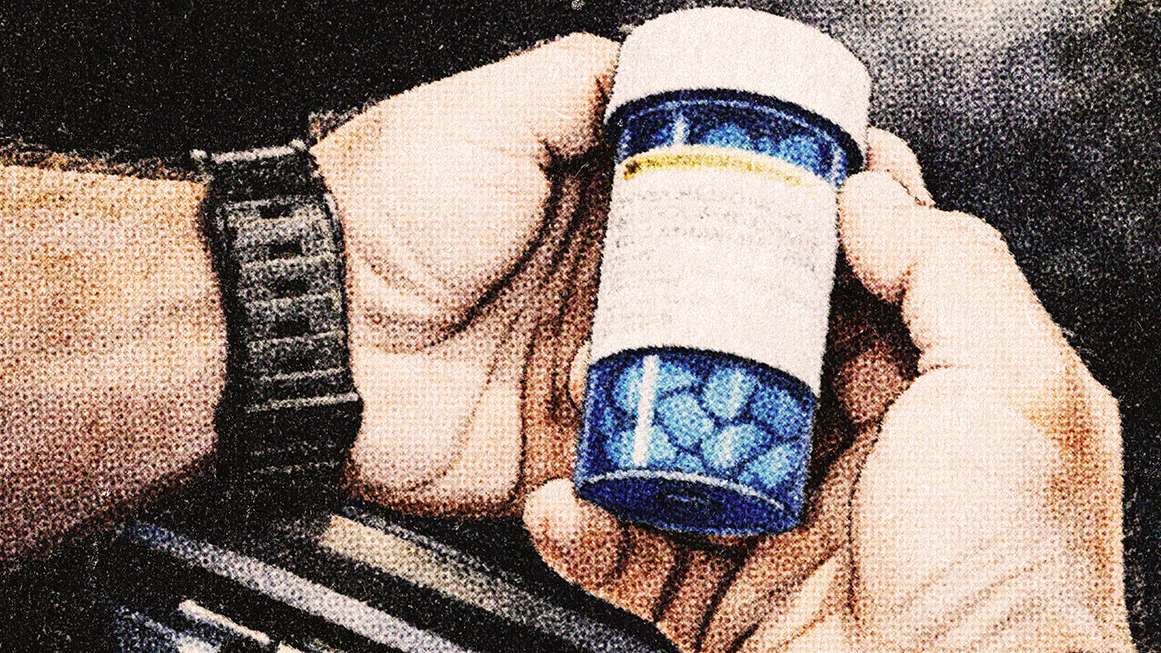
Getting results back from SLED can take months, even more than a year, all while defendants face pretrial restrictions on their liberty and live with the threat of criminal prosecution hanging over their heads.
"Absolutely, we have many outstanding drug analysis cases waiting well over a year for results," De Grant Gibbons, the public defender for South Carolina's 2nd Judicial Circuit, told Reason in 2025. "The worst ones are marijuana cases."
Reason obtained public records showing these long wait times. Drug analysis metrics from SLED show that from January 2022 through December 2024, the average turnaround time for results was 379 days. The backlog of pending tests rose from roughly 13,000 in 2022 to about 23,000 in the first quarter of 2023. It began declining after that, but the total number of cases in the backlog as of December 2024 was still 18,356.
A spokesperson for SLED says its drug analysis department has been reducing its backlog. As of the end of FY 2025, the department had 16,445 pending assignments, a 29 percent decrease from the peak backlog. According to the spokesperson, the current average turnaround time for drug analysis is 206 days.
Paul Bowers, communications director for the South Carolina chapter of the American Civil Liberties Union, says it's good that SLED is chipping away at its backlog, but he adds that thousands of lives are still being derailed while the state does its work.
"In the big picture," Bowers says, "this enormous case backlog is one of the many failure points in South Carolina's so-called war on drugs."
Somewhere in that 18,000-case backlog was Getchius' sample. South Carolina's war on drugs became a cold war for him. He waited, paid his fees, and tried to not violate the terms of his supervised release. He says he was let go from his job, since it obviously wasn't appropriate for someone with pending drug trafficking charges to work for an addiction treatment center. His mother needed to be driven to cancer treatments, but she had to rely on neighbors and Ubers since Getchius was under house arrest. And since he was stuck in South Carolina, he was cut off from his sobriety support group.
"Mentally, I was going crazy," Getchius says. "They say the worst thing for an addict is isolation, for them to sit with themselves, and I had so much time to do that."
After seven months, a judge allowed Getchius to start traveling with a GPS monitor.
As obnoxious as these restrictions were, consider what it would have been like if the judge had denied Getchius' bond motion, or if Getchius hadn't been able to afford bail. He says his boss helped pay for his attorney; otherwise, he would have been stuck in jail for months.
"A lot of people were facing very similar charges," Getchius says of the other inmates in the Greenwood County Jail. "And some of them, it was their 13th month or 14th month in there, you know? Not everybody had money to hire fancy lawyers."
In such a situation, a prosecutor might see an opportunity to clear a case and offer to drop the more serious drug trafficking charges in exchange for a guilty plea to possession. Facing months in jail and years in state prison if they turn down a deal, even innocent defendants will start rationalizing a guilty plea.
This isn't a hypothetical scenario. A 2016 ProPublica/New York Times investigation found that from January 2004 through June 2015, 212 people pleaded guilty to drug possession based on Houston Police Department field tests that were later invalidated by crime labs.
Getchius made it through without pleading guilty or relapsing, but he wasn't unscathed.
"I didn't use drugs, but I did, I guess, mentally break down," he says.
'No Further Tests Are Warranted'
On the morning of October 16, 2025, Getchius' lawyer finally called to deliver the news about the SLED lab results.
Getchius alternates between choking up and laughing when he remembers the call: "He said, 'I got some news that will brighten your day. The lab results are back. No traces of narcotics.'"
According to SLED's lab report, the blue tablets that sheriff's deputies were convinced were fake were dicyclomine, just like Getchius had said all along. In fact, the forensic scientist who analyzed them could tell just by looking at them.
"Visual Examination determined that physical characteristics of this item are consistent with a pharmaceutical preparation," the scientist wrote in the lab report. "No further tests are warranted at this time."
Chemical, gas chromatography, and mass spectrometry tests confirmed that the suspicious blue powder and capsules were also dicyclomine.
Although the lab report was completed on October 1, Getchius says, Greenwood County prosecutors sat on the results for two weeks—even though his lawyer was calling them daily, asking for them.
Several days later, prosecutors dropped the charges against Getchius, but not before he says they offered his lawyer a plea deal to drop the trafficking charges in exchange for his pleading guilty to a lower possession charge. Getchius declined to plead guilty to possessing nonexistent drugs.
You could consider it darkly ironic that South Carolina's war on drugs actively sabotaged an innocent man's addiction recovery. But this is what the war on drugs does. It punishes individuals indiscriminately and sloppily in the belief that such tactics are justified by the greater fight.
"I feel like a broken record citing this statistic to people, but South Carolina incarcerates a greater share of its population than nearly every country on earth," Bowers says. "Criminalization through punitive drug laws is one of the contributing factors in this shameful state of affairs."
Getchius got his old job back and petitioned to have the case expunged from his record. He also says the Greenwood County Sheriff never returned a new iPhone and several hundred dollars in cash that were seized from his car, which they did serious damage to when they tore it apart. Getchius has retained a civil lawyer, Tyler Bailey, who says he and Getchius are declining further comment on the case.
But civil rights lawsuits are hard to win and take years to resolve. Systemic reforms would better protect criminal defendants. In 2013, Travis County, Texas, stopped accepting guilty pleas for low-level drug possession before official crime lab results came in. Some police departments have stopped using the test kits altogether.
The Greenwood County Sheriff's Office did not respond to requests for comment. As of the date this story was published, Getchius says he remains sober.
This article originally appeared in print under the headline "He Was Jailed for Fentanyl. It Was Really His Legal Prescription Meds.."
