
Trump's Marijuana Order Vindicates Longstanding Criticism of the Plant's Legal Classification
In addition to its symbolic significance, rescheduling the drug will facilitate research and provide tax relief to state-licensed cannabis suppliers.
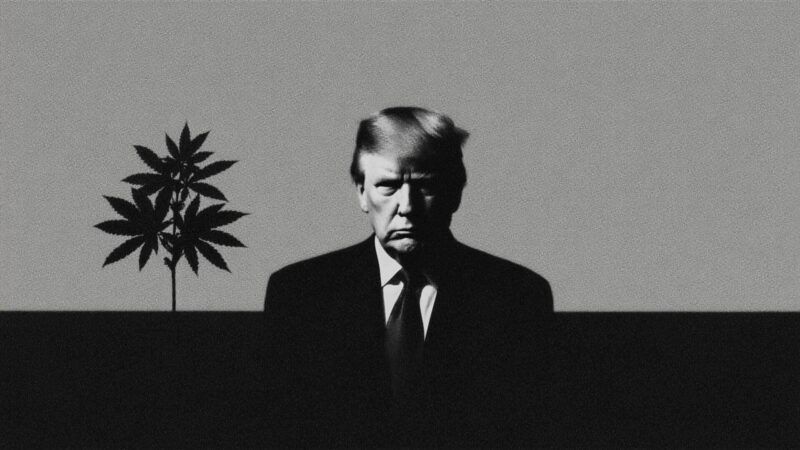
Nearly four decades ago, Francis Young, chief administrative law judge at the Drug Enforcement Administration (DEA), concluded that marijuana did not belong in Schedule I of the Controlled Substances Act, the law's most restrictive category. Although Young was ultimately overruled by DEA Administrator John Lawn, he was belatedly vindicated last week, when President Donald Trump ordered the "expeditious" reclassification of marijuana.
Under Trump's executive order, marijuana will be moved from Schedule I, which includes banned substances such as heroin, LSD, and MDMA, to Schedule III, which includes prescription drugs such as ketamine, anabolic steroids, and Tylenol with codeine. While that move falls far short of legalization, it implicitly acknowledges that the federal government has been exaggerating marijuana's hazards and ignoring its potential benefits for more than half a century.
Marijuana has been listed in Schedule I, which supposedly is reserved for especially dangerous drugs with a high abuse potential and no accepted medical applications, since 1970. The DEA has repeatedly rejected petitions asking it to reconsider that classification, including the one that resulted in Young's 1988 decision, which followed 16 years of litigation.
Because marijuana is "one of the safest therapeutically active substances known to man," Young said, "there is accepted safety for use of marijuana under medical supervision." He also concluded that marijuana had "currently accepted medical use" as a treatment for conditions such as nausea caused by cancer chemotherapy and spasticity caused by multiple sclerosis.
The federal government nevertheless continued to defend marijuana's Schedule I status until 2023, when the Department of Health and Human Services (HHS) completed a review ordered by President Joe Biden. HHS found "credible scientific support" for marijuana's utility as a treatment for pain, nausea and vomiting, and "anorexia related to a medical condition."
HHS said that evidence, combined with the practices of clinicians in states that recognize marijuana as a medicine, was enough to establish "currently accepted medical use." The review also assessed the drug's hazards, noting that "the vast majority of individuals who use marijuana are doing so in a manner that does not lead to dangerous outcomes to themselves or others."
All things considered, HHS concluded, marijuana's dangers do not justify keeping it in Schedule I or moving it to Schedule II, which includes fentanyl, PCP, and methamphetamine. "While marijuana is associated with a high prevalence of abuse," it said, "the profile of and propensity for serious outcomes related to that abuse lead to a conclusion that marijuana is most appropriately controlled in Schedule III."
Attorney General Merrick Garland accepted that recommendation in May 2024, when he published a proposed rule that Trump wants to finalize as soon as possible. Trump presented that change as a boon to "American patients suffering from extreme pain, incurable diseases, aggressive cancers, seizure disorders, neurological problems and more."
While rescheduling marijuana will facilitate medical research by eliminating the special regulatory requirements that apply to Schedule I drugs, it will not legalize medical use unless the Food and Drug Administration approves specific cannabis-based products as prescription medicines. Nor will reclassification legalize state-licensed marijuana businesses, which will remain criminal enterprises under federal law, albeit subject to somewhat less severe penalties.
Those businesses nevertheless will benefit from marijuana's rescheduling because it will allow them to claim standard deductions on their income tax returns, eliminating a disability that results in staggeringly high effective tax rates. Trump did not mention the positive implications for state-legal marijuana merchants, which seems odd given his support for recreational legalization in Florida and federal reforms aimed at facilitating the cannabis industry's access to financial services.
Since Young's marijuana ruling, 40 states have legalized the drug for medical use, and 24 of them, accounting for most of the U.S. population, also allow recreational use. That situation has created a conflict with federal prohibition, a policy that most Americans oppose.
Trump emphasized that his order "doesn't legalize marijuana in any way, shape or form." While true, that is nothing to brag about.
© Copyright 2025 by Creators Syndicate Inc.
