When may public libraries, and especially public school libraries, remove books based on their content?
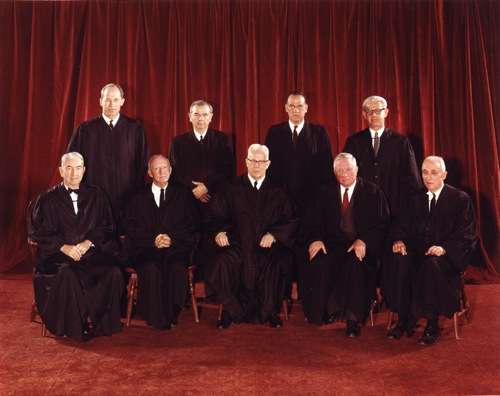
In Pico v. Bd. of Ed. (1982), the Supreme Court split 4-1-4 on the question. All the Justices agreed that books could be removed if they are "pervasively vulgar" or otherwise age-inappropriate. But four liberal Justices (to oversimplify) concluded that viewpoint-based removals are forbidden. Four conservative Justices concluded that they are permissible (because the government gets to choose what's included in either the curriculum or the libraries at government-run schools). And the ninth Justice, the centrist Justice White, concluded that there was no occasion in the case to decide the matter.
Since then, in Little v. Llano County (5th Cir. 2025), a 10-7 Fifth Circuit en banc majority concluded that the government can pick and choose what books can be removed from public or public school libraries, because people don't have a "right to receive information" via government-run libraries: "It is one thing to tell the government it cannot stop you from receiving a book. The First Amendment protects your right to do that. It is another thing for you to tell the government which books it must keep in the library." And just today, a unanimous Eighth Circuit panel held (in Penguin Random House, LLC v. Robbins, written by Judge Ralph Erickson, joined by Judges Lavenski Smith and Jonathan Kobes), that the government likely has broad (though not entirely unlimited) authority to pick and choose what books can be removed at least from public school libraries. An excerpt:
{[Iowa law] requires Iowa school districts to establish a library program, which contains "age-appropriate materials, and supports the student achievement goals of the total school curriculum." "Age-appropriate" is defined as "topics, messages, and teaching methods suitable to particular ages or age groups of children and adolescents, based on developing cognitive, emotional, and behavioral capacity typical for the age or age group." The law expressly precludes the inclusion of "any material with descriptions or visual depictions of a sex act," as defined in Iowa Code § 702.17.}
[T]he standard set forth in Hazelwood Sch. Dist. v. Kuhlmeier (1988)—that is, whether the book restrictions are "reasonably related to legitimate pedagogical concerns"—… applies to school activities that "may fairly be characterized as part of the school curriculum," and a school library is such an activity….
[Tina Marie] Peters was convicted of four felony and three misdemeanor charges in August 2024 for using another person's security badge to allow someone associated with MyPillow founder Mike Lindell, a prominent election denier and ally of President Donald Trump, access to county election equipment involving Dominion Voting Systems.
In Thursday's long opinion in People v. Peters, Colorado Court of Appeals Judge Ted Tow, joined by Judges Craig Welling and Lino Lipinsky de Orlov, decided Thursday by the Colorado Court of Appeals, in an opinion by Judge Tow, affirmed the conviction, holding (among other things):
President Trump's pardon of Peters could only affect federal offenses, and not the state offenses for which he was convicted (a pretty well-settled principle, since the pardon power extends only to "offenses against the United States," which is generally understood as violations of federal law).
Peters didn't have any Supremacy Clause immunity from state prosecution, because such immunity just affects federal officers discharging their federal responsibilities.
There was sufficient evidence that Peters was responsible for false representations alleged by the prosecution.
But the court concluded that Peters' sentencing (which led to a sentence of 6 months in jail plus 8¼ years in prison) violated the First Amendment by "punish[ing] her based on her protected speech regarding allegations of election fraud":
"Though referred to the Alabama State Bar for any disposition it deems appropriate, the undersigned regrettably recommends" that the lawyer "be found incompetent to practice law."
Attorney Franklin Hollis Eaton, Jr. filed several pleadings which contained fabricated citations and false statements of law that he failed to check or correct prior to submission. The Court had already discovered problems with Mr. Eaton's filings when Defendant filed its first motion flagging numerous misstatements of law. The Court then issued two show cause orders regarding the misstatements, which were partially acknowledged by Mr. Eaton, though he has failed to fully and accurately address the Court's numerous concerns despite as many opportunities to do so.
From the outset, the Court notes that this case is not just about Mr. Eaton's most recent misstatements of law, but rather about a pattern of conduct throughout this case that raises significant concerns about his competency to practice law. In sum, the misstatements and misrepresentations were just the final straw. After a careful review of the matter, the Court finds that Mr. Eaton's conduct amounts to bad faith. Therefore, the Court SANCTIONS him under Rule 11, Alabama R. 3.3, and the Court's inherent authority and ORDERS as follows:
Attorney Franklin Hollis Eaton, Jr. is hereby REPRIMANDED and this reprimand shall be published as follows:
Attorney Franklin Hollis Eaton, Jr. shall file, not under seal, a copy of this Memorandum Opinion and Order in any case in any court wherein he has appeared as counsel and final judgment has not been entered;
Attorney Franklin Hollis Eaton, Jr. shall file, not under seal, a copy of this Memorandum Opinion and Order in any case in any court wherein he appears as counsel for twelve (12) months after the date of this order;
Attorney Franklin Hollis Eaton, Jr. shall provide a copy of this Memorandum Opinion and Order to any jurisdiction in which he is licensed to practice law within two (2) business days of the issuance of this order. He shall further file a notice of compliance with the Court no later than the third business day from the date of this opinion.
The Clerk of Court shall send a copy of this Memorandum Opinion and Order to the General Counsel of the Alabama State Bar for review. Though referred to the Alabama State Bar for any disposition it deems appropriate, the undersigned regrettably recommends that Attorney Franklin Hollis Eaton, Jr. be found incompetent to practice law.
The Clerk of Court shall send a copy of this Memorandum Opinion and Order to the Chief Judges for the Northern District of Alabama, the Middle District of Alabama, and the Southern District of Alabama.
To further effectuate the reprimands and deter similar misconduct by others, the Clerk of Court is DIRECTED to submit this order for publication in the Federal Supplement.
Franklin Hollis Eaton, Jr. shall pay attorney fees in the amount of $55,597.00 to Defense counsel for their time spent addressing Mr. Eaton's misstatements of law.
Pursuant to S.D. Ala. GenLR 83.4(a) and (h)(1), the undersigned refers to the Judges of the Southern District of Alabama a review of Franklin Hollis Eaton, Jr….
The court begins by pointing to a wide range of past behavior by Mr. Eaton:
So reports Damien Charlotin's AI Hallucination Cases Database. And recall that likely (1) many hallucinations aren't spotted; (2) many that are spotted aren't noted in court decisions; and (3) the great majority of court decisions are in state trial courts, and thus aren't posted on Westlaw or Lexis or any other place where Charlotin and others can easily spot them.
From last week's decision in U.S. v. Murfin by Judge Gregory Frizzell (N.D. Okla.):
At various times from July to October, 2025, Mr. Murfin allegedly posted the following five statements on the social media platform, "X" (formerly known as Twitter) under the alias "Azulenq":
"Need too start shooting these 'just following orders' pigs. Ice agents are reenacting ww2 nazi germany and its not acceptable. Only good ice terrorist is buried 6 feet under.";
"Every ICE agent needs shot between the eyes 'just following orders' isn't acceptable and they already exposed they are human garbage.";
"Every Ice gestapo needs too be shot. 2nd amendment right too carry everyone should stay armed and when these terrorists come by just kill them. They dont deserve too live after 'just following orders' we aren't reliving ww2 germany. They dont want due process so show em.";
"but we as US citizens should be gunning down these domestic terrorists. All ice gestapo can not use the 'just following orders' excuse. If you're complicit in this act you've gotta be executed for this act."; and
"Yeah ICE agents need to get shot in a 3,959 mile radius no where safe for gestapo pigs."
Murfin was prosecuted under federal threat statutes, and the court allowed the case to proceed:
For a variety of reasons, I oppose Donald Trump's efforts to end birthright citizenship for children of undocumented immigrants and those in the US on temporary visas. And I have argued he deserves to lose the Supreme Court case on this issue. But unlike many other opponents of Trump's policy and of his constitutional arguments, I am not convinced birthright citizenship is the ideal system. It is, at most, only a second-best option, in the sense that it's better than the currently likely alternative.
Under current political conditions, that likely alternative is subjecting hundreds of thousands of children to deportation, and many adults, as well. Even though Trump's executive order is limited to children born at least 30 days after it was issued, the logic of his legal arguments would deprive millions of adults and older children of their right to live in the United States, as well. If the Fourteenth Amendment denies birthright citizenship to children of undocumented immigrants and temporary visa-holders, that fact did not begin suddenly in 2025, but must have been true all along. Thus, the likely consequence of a legal victory for Trump would be grave harm to millions of children and descendants of immigrants, plus severe damage to the American economy and society from the resulting deportations and legal uncertainty. In addition, millions of other Americans would find it difficult to prove citizenship status if it can no longer be done on the basis of a birth certificate.
But while birthright citizenship is better than the likely alternative at this point in history, I do not believe it is the ideal policy. I explained some of the reasons why in a 2018 post:
More generally, one of my (and many others') main objections to immigration restrictions is that they restrict people's liberty and opportunity based on arbitrary circumstances of ancestry and place of birth. If you were born to the right parents or in the right place, you get to live and work in the US; if not, you can only do so if the government gives you permission, which in the vast majority of cases is likely to be denied. In that respect, they are very similar to racial segregation and South African apartheid. In both cases, liberty is gravely restricted and many are consigned to a lifetime of poverty and oppression because of morally arbitrary circumstances of birth over which they have no control.
Birthright citizenship is an improvement, in this respect, over a policy based on ancestry and parentage. For many children, it creates an alternative pathway to get around unjust restrictions. But it still restricts liberty and opportunity based on circumstances of birth, in this case based on place of birth, as well as parentage. And people have no more control over the location of their birth than over the identity of their parents. Neither determines your moral worth or how much liberty you are entitled to.
Thus, the far superior policy is simply to let people live and work where they want, regardless of who their parents are or where they were born. If that liberty is to be restricted, it should be only if the people in question pose some grave danger that cannot be addressed in other ways. And, in such extreme situations, native-born people's liberty could potentially be restricted, as well. I develop these points in greater detail in Chapters 5 and 6 of my book Free to Move: Foot Voting, Migration, and Political Freedom.
Obviously, under current circumstances, citizenship includes not only the right to live and work in the US, but also rights to vote, hold public office, and receive various welfare benefits. In an ideal system, restrictions on voting and office-holding would be based on competence and (in some cases) there might be exclusions based on a demonstrated danger to liberal democratic institutions (as with Section 3 of the Fourteenth Amendment, which the Supreme Court wrongly gutted, to a large extent). We already have some competence-based constraints on the franchise, such as excluding children, some convicts, and immigrants who cannot pass a civics test most native-born Americans would fail if they had to take it without studying.
Access to welfare benefits should, I believe, be much more severely limited than is currently the case for both immigrants and natives. But even now the vast majority of immigrants contribute more to the public fisc than they take out, and limiting the welfare state is a bad argument for immigration restrictions that - if applied consistently - would also justify severely restricting many other liberties.
Thus, the ideal political system would have a strong presumption against restrictions on migration, while also imposing competence-based constraints on voting rights and office-holding, and limiting welfare benefits in various ways. We need some combination of decoupling citizenship from freedom of movement, constraints on access to government power, and limiting welfare benefits to a class of people who genuinely cannot avoid severe privation without them. And none of these rights and privileges should be, to any great extent, based on parentage or place of birth.
But, obviously, there are serious questions about whether governments can draw these lines in the right places and be trusted not to abuse their powers. Elsewhere, I have argued that we probably cannot rely too much on competence-based restrictions on the franchise, because real-world governments generally cannot be trusted in this field. We should instead address the problem of voter ignorance and bias by other means. It is also obvious that we are not going to get anywhere close to full freedom of movement for migrants anytime soon.
For these kinds of reasons, I think birthright citizenship for all people born in the United States is the best available option at this time. That's especially true because it does not preclude creating and expanding other pathways to residency, work rights, and citizenship. But we should be under no illusion that it is anywhere close to ideal, and we should remember that it includes an important element of unjust discrimination based on arbitrary circumstances of birth.
In this case, as with other situations involving unjust discriminatory immigration restrictions, the right approach to arbitrary discrimination is to "level up" rather than "level down." We should not deny birthright citizenship to those who currently enjoy its benefits. But we should also do all we can to expand these opportunities to others.
Mr. Riera was employed in a fixed term, non-tenure track faculty at Central Washington University (CWU)…. On the morning of April 1, [2024,] Mr. Riera called the CWU police to report an older, "apparently homeless," woman wandering around Samuelson Hall. He said he wanted to make a report "before things get … out of control." An officer reported to Samuelson Hall and confirmed the identity of the woman as a CWU professor. No further action was taken by campus police or Mr. Riera.
The CWU professor shared her experience with two colleagues. The colleagues immediately filed bias complaints with CWU, alleging the target of Mr. Riera's call—a Black woman—had been the victim of racial profiling.
This led to a great deal of institutional response, including a discussion at a faculty senate meeting. Defendant Erdman, "a lecturer at CWU and member of the faculty senate, emailed unofficial minutes [of the meeting] to non-tenured faculty," and her notes included this:
April 1, 2026 was an even busier day than I expected. The New York Times reports:
On Wednesday, the 60-year-old Ms. Bondi, downcast but determined, joined Mr. Trump for a glum crosstown drive to the Supreme Court, where they watched arguments in the birthright citizenship case. In the car, Mr. Trump told her it was time for a change at the top of the Justice Department.
Ms. Bondi hoped to save her job or, at the very least, buy a little more time — until the summer — to give herself a graceful exit.
She ended up with neither, and grew emotional Wednesday in conversations with friends and colleagues after she realized she was out. The next morning, Mr. Trump made it official, and fired her via social media post.
Bondi then sat next to Trump for nearly an hour. Several reports indicated that Trump sat emotionless during the oral argument. But what was Bondi's demeanor?
Yesterday, I submitted this brief as amicus curiae in United States v. Chatrie, the Supreme Court's case on the Fourth Amendment implications of geofencing and geofence warrants. You can get all of the briefs and materials in the case here. I'll probably blog about the case over the next few weeks, but for now I just wanted to flag my amicus brief. Here's the Summary of Argument:
The challenge of new technology is a recurring theme in Fourth Amendment law. This case raises a host of new and important questions, and this brief hopes to help frame the issues and provide directions for answering them.
The first set of questions considers whether obtaining Chatrie's Location History records was a Fourth Amendment "search" of his "papers." There are two different arguments to evaluate. The first is the virtual private locker question. Did Chatrie store his Location History records in a virtual private locker with Google, such that he had Fourth Amendment rights in the contents of the virtual locker just as he would with an equivalent physical locker? This brief concludes that the answer is likely no. Although the record is murky on the point, Chatrie likely lacked the control over the records needed to have Fourth Amendment rights in them.
The second search argument considers whether Chatrie had Fourth Amendment rights under the limits placed on the third-party doctrine by Carpenter v. United States, 585 U.S. 296 (2018). This brief argues that he did not. Carpenter does not apply because Chatrie voluntarily opted in to have Google create and store his Location History records.
The next set of issues considers the lawfulness of the warrant, assuming that one was needed. The brief argues that a properly drawn geofence warrant can satisfy the Fourth Amendment. The Fourth Amendment does not present an all or nothing choice between zero protection and absolute protection. Where the law requires a warrant, it also provides a means to draft a lawful warrant.
On the specifics of the warrant in this case, the warrant was properly drawn as to Step 1 because it was sufficiently narrow in both time and space. The constitutionality of the warrant at Step 2 is uncertain, however. It is not clear that the Fourth Amendment allows multi-stage warrants, and the particularity of Step 2 debatable. Chatrie may not have raised these issues as to Step 2, however, so they may be waived.
The fact that this case reaches the Court so late in the Term, and that it raises so many complex issues, suggests that there may be value in pointing to a resolution that might plausibly reach consensus. If so, amicus suggests that the Court might want to resolve this case by focusing primarily on the warrant issues. The legality of the warrant implicates fewer contested questions and has a more complete factual record. For the sake of completeness, however, this brief covers both issues.
Sign up here to receive all of the new Volokh Conspiracy posts in a daily e-mail.
The All-Argentina Issue is Here
New from Reason: a look into what Javier Milei
has accomplished and what it will take to make the most of Argentina’s window for real change. Out now
for subscribers.