The Volokh Conspiracy

Mostly law professors | Sometimes contrarian | Often libertarian | Always independent | Est. 2002

The Volokh Conspiracy

Bill Ackman's Letter to Harvard re Widespread Antisemitism on Campus

|

It's worth reading the whole thing, but here is a "highlight":

Last Wednesday, I spent seven hours on campus meeting with Jewish, Israeli, and non-Jewish students and faculty at the Law School, at HBS and in a 90-minute town hall in Aldrich 112 with 230 Jewish college students (coincidentally, one for each hostage held by Hamas), research staff, and faculty from the University at large, organized by Harvard Chabad. Over the course of the day, it became clear that the situation at Harvard is dire and getting worse, much worse than I had realized.

Jewish students are being bullied, physically intimidated, spat on, and in several widely-disseminated videos of one such incident, physically assaulted. Student Slack message boards are replete with antisemitic statements, memes, and images. On-campus protesters on the Widener Library steps and elsewhere shout "Intifada! Intifada! Intifada! From the River to the Sea, Palestine Shall Be Free!" as they knowingly call for violent insurrection and use eliminationist language seeking the destruction of the State of Israel and the Jewish people.

When you explained in your October 12th video address that Harvard "embraces a commitment to free expression," you sent a clear message that the eliminationist and antisemitic statements of the protesters are permissible on campus. Putting aside the legal limitations on free speech that include restrictions on fighting words and true threats, "where speakers direct a threat to a person or group of persons with the intent of placing the victim in fear of bodily harm or death," if Harvard indeed had a strong track record of protecting free speech, many would have taken your support for free speech more seriously. Unfortunately, Harvard has not embraced a serious commitment to free speech, particularly so in recent years.

In The Foundation for Individual Rights and Expression (FIRE) Annual College Free Speech Rankings, Harvard has consistently finished in the bottom quartile in each of the past four years, with its ranking deteriorating each year. On September 23rd, just two weeks prior to October 7th, FIRE announced that Harvard achieved its lowest free speech ranking ever for the 2023 academic year, ranking last out of 254 universities, with a rating of 0.00, the only university with an "abysmal" speech climate. See: https://thefire.org/news/harvard-gets-worst-score-ever-fires-college-free-speech-rankingsfor the results of the survey where FIRE cites multiple examples of incidents on the Harvard campus where students and faculty were denied their First Amendment rights. Therefore, when you cite Harvard's "commitment to free expression," in supporting the protesters, it rings false and hypocritical to the university at large and the Jewish community in particular.

Many Jewish students have also recently become afraid to express their concerns. Many have also felt the need to remove their mezuzahs, yarmulkes, Stars of David, and other overt evidence of their religion and heritage on campus and in Cambridge to avoid being exposed to discrimination, bullying or worse.

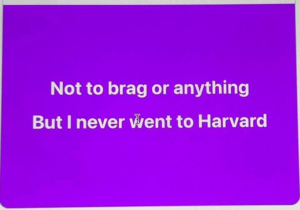
As for me,
Free Speech

N.Y. Law Protects Public's Right to Record in Police Precinct Lobbies

even though the First Amendment doesn't itself provide such protection. [UPDATE 8/10/26 9:54 am: This has been reversed.]

|

UPDATE 8/10/26 9:54 am: Reversed:

After initial briefing and oral argument, this court concluded that the determinative question on this appeal was one of state law, i.e., whether "either N.Y. Civ. Rights Law § 79-p or N.Y.C. Admin. Code § 14-189 afford individuals such as plaintiff Reyes the right to video record law enforcement activities inside public facilities—specifically, inside the publicly accessible lobbies of police stationhouses—notwithstanding a New York City Police Department policy forbidding any video recording inside its facilities?" Because that question had not yet been addressed by the New York Court of Appeals and because its resolution might implicate value judgments and public policy choices important to New York, we certified the question to the New York Court of Appeals while we reserved decision in this appeal…. [I]n an opinion filed June 23, 2026, [that court] answered that question in the negative….

[B]oth parties [now] agree[] that the New York Court of Appeals' ruling requires vacatur because the preliminary injunction was based on an incorrect view of New York law. Accordingly, we hereby VACATE the November 2, 2023 district court order preliminarily enjoining enforcement of the challenged Policy, and we REMAND for further proceedings consistent with this opinion. {Insofar as the parties' letter briefs discuss Reyes's pending constitutional claim or other points not at issue on this appeal, we express no view as to how these might be resolved on remand.}

In yesterday's Reyes v. City of New York, Judge Jessica Clarke (S.D.N.Y.) (appeal pending) held that the First Amendment "right to record police conducting official duties in public places" doesn't apply to police precinct lobbies: They are "nonpublic fora" where restrictions on First Amendment activity need only be viewpoint-neutral and reasonable, and bans on recording in such places are reasonable in light of the government's "privacy, safety and security interests." But it held that New York law protects such recording:

The New York State Right to Record Act ("NYS RTRA"), enacted on July 14, 2020, provides that "[a] person not under arrest or in the custody of a law enforcement official has the right to record law enforcement activity and to maintain custody and control of that recording and of any property or instruments used by that person to record law enforcement activities …." Persons are barred from recording if they "engage in actions that physically interfere with law enforcement activity or otherwise constitute a crime defined in the penal law involving obstructing governmental administration." The NYS RTRA further creates a private right of action.

Read More

Free Speech

Trump Gag Order Appeal Expedited, Oral Argument Set for Nov. 20; Gag Order Stayed for Now

|

"The purpose of this administrative stay is to give the court sufficient opportunity to consider the emergency motion for a stay pending appeal and should not be construed in any way as a ruling on the merits of that motion."

Politics

Short Circuit: A Roundup of Recent Federal Court Decisions

Gift cards, strong medicine, and cloud search warrants.

|

Please enjoy the latest edition of Short Circuit, a weekly feature written by a bunch of people at the Institute for Justice.

New cert petition: If the gov't wants to restrict speech based on its content, it bears the burden to show, among other things, why the restriction is necessary. But earlier this year, the Second Circuit upheld New York's restrictions on out-of-state therapists providing teletherapy to N.Y. residents without holding the state to its burden. The decision deepened not one, but two, circuit splits on important First Amendment questions, so we say the Supreme Court should take a look. Click here to learn more.

At Short Circuit, we're thinking of the Roman Empire. Well, at least what happened after it fell. That's because Duke's Judicature just published a piece by IJ's Matt Liles and Anthony Sanders on the history of the phrase "en banc," from its origins in the post-apocalyptic wilds of Gaul through modern-day federal courts. They conclude that "en banc" has no single correct pronunciation. Say it however you want.

Read More

Free Speech

Idaho "No Public Funds for Abortion" Act Doesn't Preclude Pro-Abortion Speech by Professors

Idaho's Attorney General Raúl Labrador so opines, including a rousing defense of academic freedom, including in scholarship and teaching.

|

From Idaho Att'y Gen. Op. No. 23-04, released Sept. 15 but not widely reported:

The No Public Funds for Abortion Act comprehensively prohibits the use of public funds to, among other things, "provide, perform, or induce an abortion; assist in the provision or performance of an abortion; promote abortion; counsel in favor of abortion; refer for abortion; or provide facilities for an abortion or for training to provide or perform an abortion." However, under a plain language interpretation of the Act applying appropriate canons of statutory construction, the Act does not prohibit university employees from speaking on abortion in their academic teaching or scholarship, even if that teaching or scholarship could be viewed as supporting abortion or abortion rights in general….

[T]he U.S. Supreme Court, in Garcetti v. Ceballos (2006), … held that "when public employees make statements pursuant to their official duties, the employees are not speaking as citizens for First Amendment purposes, and the Constitution does not insulate their communications from employer discipline." However, Garcetti also noted that "[t]here is some argument that expression related to academic scholarship or classroom instruction implicates additional constitutional interests that are not fully accounted for by this Court's customary employee-speech jurisprudence."

Indeed, the U.S. Supreme Court has stated that "[o]ur Nation is deeply committed to safeguarding academic freedom, which is of transcendent value to all of us and not merely to the teachers concerned." Keyishian v. Bd. (1967). "That freedom is therefore a special concern of the First Amendment, which does not tolerate laws that cast a pall of orthodoxy over the classroom." Thus, the majority in Garcetti determined that "[w]e need not, and for that reason do not, decide whether the analysis we conduct today would apply in the same manner to a case involving speech related to scholarship or teaching." … In Demers v. Austin (9th Cir. 2014), the court held that "Garcetti does not-indeed, consistent with the First Amendment, cannot-apply to teaching and academic writing that are performed pursuant to the official duties of a teacher and professor." Similarly, courts in the Fourth, Fifth, and Sixth circuits, in addition to the Ninth Circuit, have held that Garcetti does not apply to professors at public universities while engaging in teaching and scholarship….

Read More

Free Speech

S. Ct. Will Hear NRA's Case Alleging That N.Y. Government Coerced Companies to Stop Doing Business with NRA

The controversy is similar to part of the controversy in Murthy v. Missouri (formerly Missouri v. Biden), which also involves allegations of government coercion aimed at interfering with speech.

|

The case is NRA v. Vullo, and the Court agreed to consider this question (as formulated by the NRA):

Bantam Books v. Sullivan (1963) held that a state commission with no formal regulatory power violated the First Amendment when it "deliberately set out to achieve the suppression of publications" through "informal sanctions," including the "threat of invoking legal sanctions and other means of coercion, persuasion, and intimidation." Respondent here, wielding enormous regulatory power as the head of New York's Department of Financial Services ("DFS"), applied similar pressure tactics—including backchannel threats, ominous guidance letters, and selective enforcement of regulatory infractions—to induce banks and insurance companies to avoid doing business with Petitioner, a gun rights advocacy group. Respondent targeted Petitioner explicitly based on its Second Amendment advocacy, which DFS's official regulatory guidance deemed a "reputational risk" to any financial institution serving the NRA. The Second Circuit held such conduct permissible as a matter of law, reasoning that "this age of enhanced corporate social responsibility" justifies regulatory concern about "general backlash" against a customer's political speech….

Does the First Amendment allow a government regulator to threaten regulated entities with adverse regulatory actions if they do business with a controversial speaker, as a consequence of (a) the government's own hostility to the speaker's viewpoint or (b) a perceived "general backlash" against the speaker's advocacy?

The Court didn't grant review on the second question, which relates to qualified immunity. Here's my post on the petition, from March, though you can read all the filings here:

[* * *]

William Brewer, Sarah Rogers & Noah Peters of Brewer Attorneys & Counselors and I filed a petition earlier this month asking the Supreme Court to review the Second Circuit decision in NRA v. Vullo ….

I generally tend to agree with the NRA's ideological views, to a considerable extent, but I would have been glad to be engaged to argue a similar case on behalf of groups I disagreed with as well; it's a pretty important First Amendment question that can affect groups with all sorts of views. (Note that the ACLU filed an amicus brief on NRA's side in the District Court.) Here's our Introduction:

Read More

Free Speech

Nate Silver's "Free Speech Is in Trouble"

|

An excellent article about a recent survey of college students, by a man who knows a thing or two about surveys. A couple of short excerpts, though you should read the whole thing:

[A]fter seeing the latest polling on what college students think about free speech, I don't concern over "cancel culture" or the erosion of free speech norms is just some moral panic. In fact, I think people are neglecting how quick and broad the shifts have been, especially on the left….

College students aren't very enthusiastic about free speech. In particular, that's true for liberal or left-wing students, who are at best inconsistent in their support of free speech and have very little tolerance for controversial speech they disagree with.

Moreover, this attitude is broad-based — not just at elite schools. I was frankly surprised at how tepid student support was. A significant minority of students don't even have much tolerance for controversial speech on positions they presumably agree with….

People obviously have strong feelings about abortion, and a complete abortion ban is unpopular. Still, this is a commonly-articulated, garden-variety unpopular political opinion that doesn't make any sort of factual claim and can't reasonably be construed as hateful. You'd think even students with a tentative, half-baked belief in free speech principles would tolerate it. And yet, 57 percent of students — including 68 percent of liberals — thought a speaker expressing this anti-abortion viewpoint shouldn't be allowed on campus. That number kind of shocked me….

[I]s there a lot of hypocrisy around free speech? Of course there is. Republicans who rail against wokeness put significant limits of their own on academic freedom. Supposed "free speech absolutist" Elon Musk has often taken a censorious approach toward content he doesn't like while tolerating censorship by foreign governments.

Read More

Chief Justice Roberts' Remarks About Deputy Solicitor General Malcolm Stewart

|

Stewart argued Vidal v. Elster, the "Trump Too Small" trademark registration case Wednesday; but after his rebuttal, Chief Justice Roberts added:

Thank you, Mr. Stewart. If you'll linger at the podium just for a moment. Our records reflect that this is your or was your 100th argument before the Court. You are the fourth person to reach this rare milestone this century.

Throughout your career, you have consistently advocated positions on behalf of the United States in an exemplary manner. I recall one case in particular from my days in private practice 23 years ago in which I was counsel for petitioner and you argued in support of respondent.

Now, when the opinion came down, I was just nine votes short of a unanimous result—(Laughter.) for—for my client.

On behalf of the Court, I extend to you our appreciation for your advocacy before the Court and dedicated service as an officer of this Court. We look forward to hearing from you many more times.

Read More

Free Speech

False Accusation of Having Used a Slur Lead to Damages Award and Possible Punitives

|

From Cody v. Dirir, decided last Friday by Connecticut Superior Court Judge Donna Wilkerson Brillant, the court's findings of fact:

On October 12, 2022 [likely should say 2019 -EV], the plaintiff and the defendant were students at the University of Connecticut in Storrs, Connecticut (University). They did not know each other until October 12, 2022 [likely should say 2019 -EV], when the defendant attended a party at a home of a fraternity that the plaintiff was a member of and where he resided. During the party, the defendant believed that she was called a nigger (N-word) by another member of the fraternity, Frank V., a black male. When the defendant told the plaintiff, a white male, that Frank called her the N-word, the plaintiff tried to convince her that Frank would never say that and if he did, he did not intend it in a negative way as he used the N-word with an "a" at the end of the word and not with an "er" at the end of the word. Frank used the N-word in the defendant's presence, and she believed the word was directed to her.

The defendant was upset by this exchange at the party, and after the defendant left the party, she reported this encounter to her cousin, … Ellie …. With the defendant's assistance of providing a picture of the plaintiff and Frank, Ellie posted on her Twitter page the picture of Frank and the plaintiff with the following statement: "These two called my little cousin a nigga and continued to belittle her infront of their white friends at a UConn frat party. If anyone knows their names, please let me know. And tell them keep that energy." The statement with the picture (also referred to as "post" or "tweet") was seen initially by approximately 700 to 1000 people who are the cousin's Twitter followers. Those followers then forwarded the post/tweet to their Twitter followers, resulting in approximately 5000 or more people viewing the post.

The next day, a meeting was held with the plaintiff and the defendant and their respective friends at the defendant's dormitory hall, at which the defendant admitted to the students in attendance that the plaintiff did not call her the N-word. The defendant invited approximately ten people to the meeting, of whom some were vulgar and did not allow the plaintiff to speak, telling him to "shut up, white boy." The plaintiff, Frank, and two other members of the plaintiff's fraternity, Nihar and Akrash, attended the meeting. Frank apologized to the defendant at the meeting as he explained that his statement was not directed at her but at his fraternity brother.

Read More

Politics

Cato Institute Is Hiring A Research Fellow in the Center for Constitutional Studies

|

The Cato Institute is looking to hire a research fellow in the Center for Constitutional Studies. (I am an adjunct scholar at Cato, an unpaid position.) Here is the description:

Cato's Robert A. Levy Center for Constitutional Studies is ground zero-for cutting-edge constitutional advocacy. Whether your passion is vindicating individual rights like free speech, self-defense, and occupational freedom; dumping Chevron deference; ending the immoral and ineffective war on drugs; or confining the federal government to its enumerated powers—you'll find outlets for it here. Do you hate government-empowering nonsense doctrines like qualified immunity, aggregation, and rational basis review? So do we. But don't just complain about overweening government—do something about it by joining our dedicated team of constitutional avengers. . . .

As a Research Fellow in Cato's Center for Constitutional Studies, you will work to thwart Leviathan by spending every waking minute devising creative ways to prevent government officials from exercising powers they do not lawfully possess and riding roughshod over constitutionally protected rights. (Just kidding—we sometimes break for meals and happy hours.) The bread-and-butter work of a Research Fellow in the CCS includes writing Supreme Court amicus briefs, writing amicus briefs for other courts, and writing blog posts, op-eds, and impassioned Twitter threads about those amicus briefs; devising and executing strategic plans for minimizing government, maximizing liberty, and generally making life difficult for freedom-stealing bureaucrats; and educating policymakers, the public, and whoever happens to be sitting next to you on a plane about the virtues of liberty, limited government, and a properly engaged judiciary.

Things you will not do as a Research Fellow include filling out timesheets; anything involving discovery; exchanging vituperative emails with opposing counsel over fripperies; and flying cross-country for a ten-minute status conference.

This is a perfect position for someone 5-7 years out of law school, with a commitment to constitutional law and classical liberal values. If this is you, apply!

Free Speech

Sixth Circuit Serial Personal Jurisdiction Litigant Kathy Griffin Makes More Precedent

|

If you want to sue someone, you have to do it in a court that has "personal jurisdiction" over that person; that, courts have held, is required by the Due Process Clause. One way to make sure of this is to sue where the defendant lives (to oversimplify in some measure). But you can also sue in jurisdictions with which the defendant has "case-related contacts," for instance where the underlying tort has been committed.

In libel cases, where speech from one state often causes harm in another, the matter gets extra complicated. Here's an illustration from Johnson v. Griffin, decided Tuesday by the Sixth Circuit, in an opinion by Chief Judge Jeffrey Sutton, joined by Judges Guy Cole and Amul Thapar:

Kathy Griffin, a California-based celebrity and social activist, sent a series of tweets to her two million Twitter followers asserting that Tennessean Samuel Johnson, the CEO of Tennessee-based VisuWell, had engaged in homophobic conduct. She encouraged her followers to make him "online famous" and tagged his company. She then asked his employer to "remove[]" him from the Board of Directors and threatened that the "nation w[ould] remain vigilant" if it did not. Within a day of her first tweets, the company fired Johnson and removed him from the Board.

Johnson and his wife sued Griffin in federal court in Tennessee, claiming (among other things) that she tortiously interfered with his employment. Griffin argued that her tweets did not subject her to the State's personal jurisdiction, and the district court dismissed the case. We disagree and reverse….

Two cases "bookend" [the] application of personal jurisdiction to intentional torts. The first, Calder v. Jones, establishes that the effects of intentional torts sometimes may establish personal jurisdiction. In that case, a California actress sued Florida journalists in California for publishing a libelous article. The Supreme Court permitted the California court to exercise personal jurisdiction over the journalists, observing that they had engaged in intentional conduct "expressly aimed at California," not "untargeted negligence." They consulted "California sources" for the article whose "focal point" concerned California. And they knew that the actress would experience the brunt of the injury in California, where the magazine had its largest circulation and where she lived and worked.

Read More

More