
And Then There Were 22: Sen. Michael Bennet Enters the Presidential Race
The Colorado Democrat opposes Medicare for All and universal free college.


The Colorado Democrat opposes Medicare for All and universal free college.
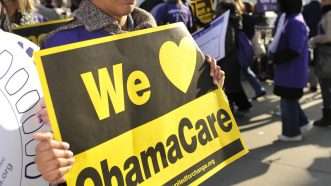
A new Congressional Budget Office report shows the consequences of undoing Trump-era rules on less regulated health coverage.
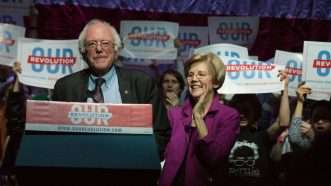
Being a presidential candidate means never having to say sorry for heavy-handed proposals to limit choice and promise free stuff.
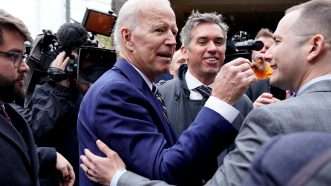
The former vice president has a long legacy of expanding federal power.
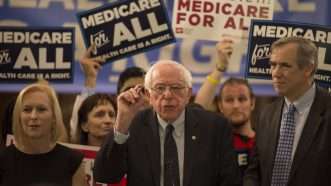
The democratic socialist from Vermont wants to radically expand coverage and benefits—while paying far less for health care services.

So we're probably only 15 years away from Congress deciding that's a big enough crisis to do something about it.

The 2020 Democratic presidential hopeful is running on a "Freedom Dividend" plan which promises a $1,000 per month UBI.
Medicare for America doesn't solve the problems of government-run health care. It just creates new ones.
Putting the government at the center of health care means putting politics at the center of doctor-patient relationships.
Meanwhile, both support single-payer, which would radically cut payments to health care providers.
House Democrats' new single-payer bill would legally prohibit today's private health insurance and determine financing for doctors and hospitals.
A new single-payer plan would be even more disruptive and expensive than Bernie Sanders' proposal.
A new report predicts Medicare spending will rise faster than private health care spending.
Medicare for All, free college, breaking up the banks, a $15 minimum wage-the Vermont socialist wants to do it all.

Q&A with economist Veronique de Rugy.

What comes next in the Virginia governor scandal, why "Medicare for All" ain't happening, and how Baby Boomers are a fatberg clogging America's cultural sewers
Transitioning to a fully government-run system would require eliminating private health insurance for nearly 180 million Americans.
The 2020 contender's single-payer pitch is all about disruption.
Support drops when you tell people it would require higher taxes, longer lines, and switching insurance plans.
Blame the city Board of Supervisors for unusually high hospital bills.
The fight over PAYGO is about whether Democrats will pretend to care about the deficit.

Our fiscal problems aren't going away. In fact, they're getting worse.
Under the health law, Medicare started penalizing hospitals for too many readmissions. Now mortality rates are up.
Peter Suderman, Len Gilroy, and C. Boyden Gray diagnose the country's many fiscal woes, and offer some solutions, at Reason's 50th anniversary celebration.
The single-payer fight is pitting moderate Democrats against progressives, partly because of Obamacare.
Americans don't support single payer. They support Medicare for All, which is just a meaningless catchphrase.

Plus: Postmodern marketplaces or fraud? And the Reason webathon continues!
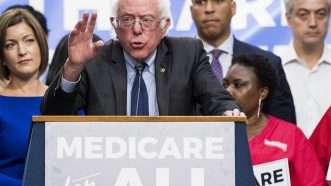
It will cost way too much, increase wait times, and slow down the development of new drugs.

By 2020, interest on the debt will cost more than Medicaid. By 2025, it will cost more than defense spending. And that's just the start.
At an election-eve campaign rally, Trump all but defends the health law he tried to repeal.
Turns out voters like the Democratic health law...when it's run by Republicans.
In a new op-ed attacking single-payer, Trump inadvertently reveals that he's in favor of socialism-as long as it's for his supporters.
CNN's Jake Tapper kept asking the socialist candidate where the money would come from. Eventually, he gave up.
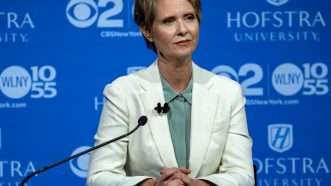
Progressive policies require higher rates and a broader base.

Prescription drugs are getting more and more expensive thanks to the needlessly complex interplay of intellectual property, public funding, and FDA regulation.
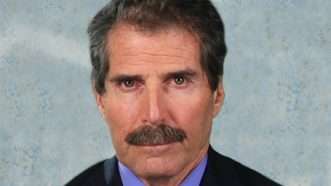
How to reform social security so that it won't bankrupt us.

Medicare will run dry even sooner. Do you trust anyone in Washington to solve this problem?
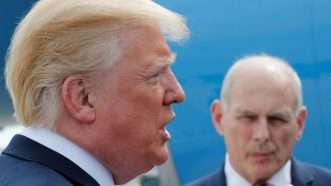
From ripping families apart to nominating a torture-enabler as CIA director, the administration is calling the GOP's bluff, Reason editors argue.
Under the final rule, pharmacists may fill high-dose opioid prescriptions as long as they verify them.
Taking a cue from the CDC, the proposed regulation imposes an arbitrary cap on opioid prescriptions.

Watch or listen to the latest Soho Forum on expanding government-run health care.
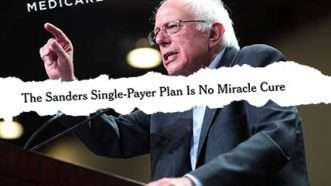
If single-payer couldn't make it out of Sanders' home state, there's no reason to try it on all of America.
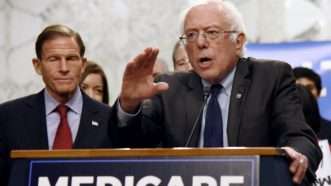
Americans might love what Sanders offers in the way of more benefits for more people. What they would hate is paying for it.
The Fifth Column interviews the ex-Reasoner about this week's political controversies
The new plan refuses to grapple with costs or tradeoffs.
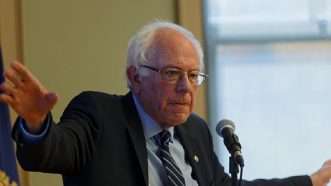
Expanding existing government healthcare systems would also spread the reach of their already messy problems.
Celebrate your independence with a subscription to Reason magazine, your most trusted source of honest, insightful news and analysis.




