
Georgia: The Possible Birthplace of Wine and Definite Birthplace of Stalin
If geography really is destiny, then the Georgian situation has understandably necessitated a stiff, perpetual drink.

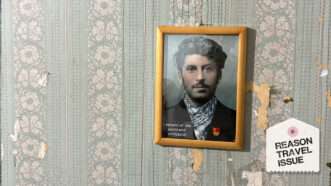
If geography really is destiny, then the Georgian situation has understandably necessitated a stiff, perpetual drink.

New Zealand's geography feels magically pulled straight from J.R.R. Tolkien's stories.

Inching backward while bleeding Russia dry, Ukraine is relying on a time-tested military truth: You don’t need to outgun an invader—you just need to outlast them.
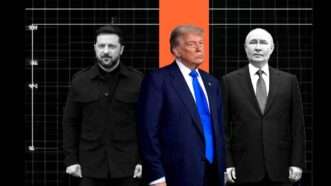
He calls Volodymyr Zelenskyy a “dictator,” but not Vladimir Putin.
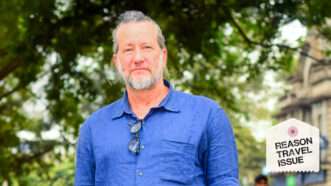
"I walked the entire length of the New York subway system above ground. I've always been into walking," says the author of the Chris Arnade Walks the World newsletter.
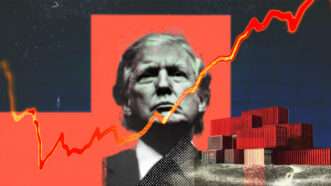
The 10 percent baseline reciprocal tariff rate was bad for America; the 15 percent rate is even worse.
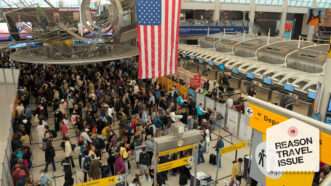
From trade wars to visa restrictions, policies aimed at foreigners are backfiring on U.S. travelers—raising costs, shrinking freedoms, and souring global goodwill.
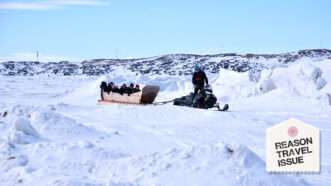
"Why not here?" says the owner of a Lebanese restaurant in Canada's semiautonomous Nunavut Territory.
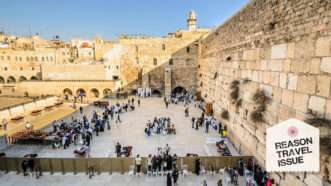
The City of Peace has been a locus of conflict for a very long time—a story that continues to this day.
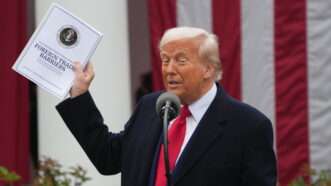
Americans will continue to pay higher tariffs, while Vietnamese businesses won't pay anything. Whatever happened to reciprocity?
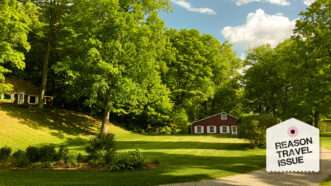
Reason's 2025 travel issue takes seriously the idea that the right to roam is inseparable from the right to speak, to work, to love, and to associate freely.
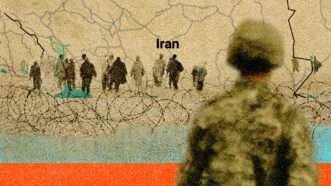
Iranians are already beginning to flee to neighboring countries.

Plus: a players union failure, immigration for the World Cup, and Welcome to Wrexham.

"I like Italy. I like South Korea. I enjoy the existence of distinctive human cultures. I would prefer that these cultures and countries not disappear," the New York Times columnist tells Reason.
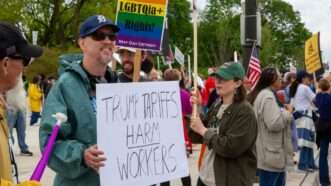
The real case for free trade is not "my enemies hate it" or "it's cheaper for me, personally" but "it makes the world richer, freer, and more peaceful."
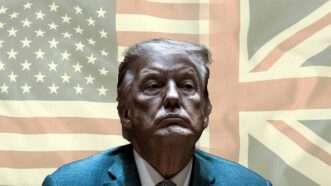
Residents of the United Kingdom will get lower tariffs, while Americans are stuck paying higher ones.
Trump's new imperialism makes neither economic nor geopolitical sense.
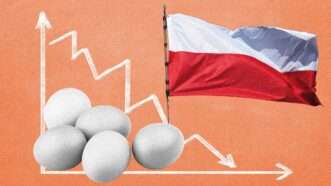
In the chaotic early days of Poland's "shock therapy," free market reformers measured their success by the falling price of this one basic commodity.
If tariffs are so great, why has Trump shown a willingness to back down from his threats if other countries agree to certain conditions?
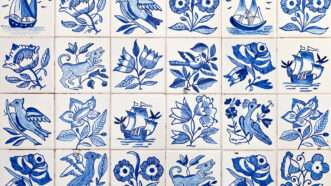
Azulejos remind us that globalization has been shaping art, politics, and culture for centuries.
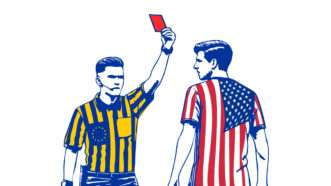
Meta, Apple, Microsoft, and others have all faced legal action from the European Union in recent years.
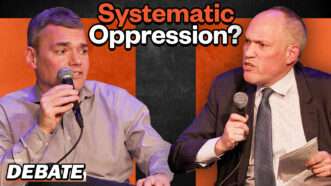
City University of New York professor Peter Beinart and AEI's Michael Rubin debate Israel and Palestine.

Trump’s tariffs will kill the global trade that makes the holiday’s cultural celebration possible.
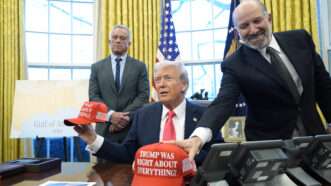
There is no "royal we" in the marketplace.
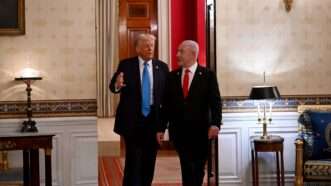
The president is publicly taking a tough line on the Middle East—while privately supporting diplomacy.
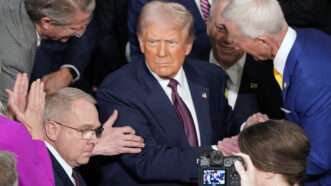
The tariffs Trump has already imposed on Canada, Mexico, and China will cost an estimated $142 billion this year—and he says more are on the way.
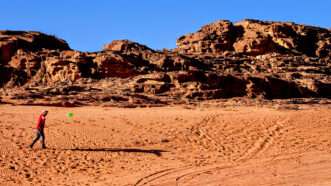
The spread of Ultimate Frisbee testifies to a kind of Western soft power in the Middle East, one far friendlier than bombs or bullets.
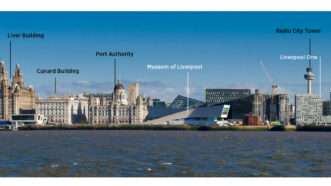
The English city protects its historical sites while embracing growth and redevelopment.
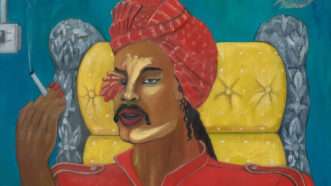
A Haitian art exhibit in Washington, D.C., reminds us there is much more to the country than false allegations about eating cats.
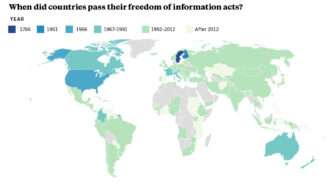
Flawed as it may be, the U.S. Freedom of Information Act became a model in transparency for other countries to follow.

President Yoon Suk Yeol tried to go down a path trodden by past South Korean military dictators. The Korean people wouldn’t let him.

Under this restrictive measure, there will be no exceptions, even for parental consent.
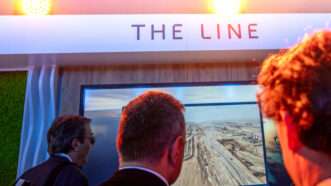
Inhumane labor practices, worker deaths, and the forced eviction and repression of local residents have characterized the kingdom's efforts to build a miles-long linear skyscraper in the desert.
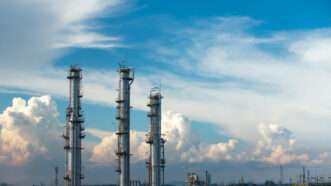
A Department of Energy analysis found natural gas is the cheapest residential energy source on the market.

Great Reset co-author Thierry Malleret discusses stakeholder capitalism, libertarianism, and his new book satirizing the World Economic Forum on Just Asking Questions.

In the Netherlands, kids grow up with more independence than in the United States.
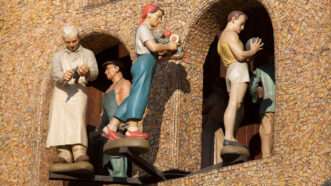
The Olomouc clock's changing design reflects history's victors and their legacies.
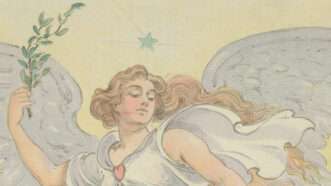
In Pax Economica, historian Marc-William Palen chronicles the left-wing history of free trade.
Freedom "requires you to curtail freedom of speech and freedom of the press," the book declares.
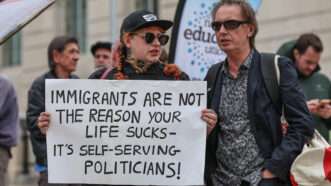
As Britain grapples with riots, politicians shift focus to “holding tech accountable” by pushing for censorship and sidestepping the deeper issues fueling the chaos.
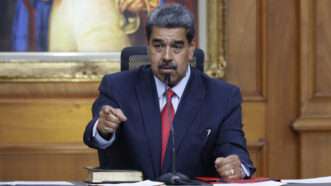
His rule threatens U.S. interests by stifling market opportunities, fueling illegal immigration, and elevating regional security risks.
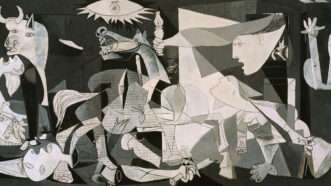
The bombing of a Basque town during the Spanish Civil War gave rise to art—and cultural resilience.
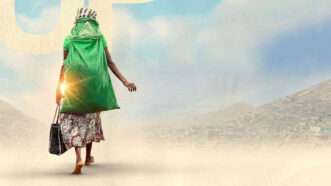
She Rises Up manages to be inspirational without being sappy, like so many documentaries are.
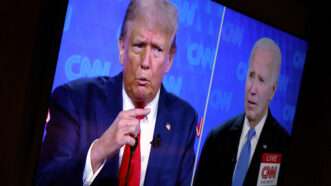
And you have to admit, he's got a point.
Ending U.S. aid would give Washington less leverage in the Middle East. That's why it's worth doing.
The number of job openings far exceeds the number of unemployed Americans. Seasonal businesses can't get the foreign labor they need.
Ending U.S. aid would give Washington less leverage in the Middle East. That's why it's worth doing.
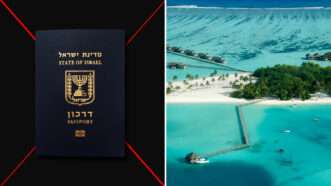
President Mohamed Muizzu cannot claim to be on the right side of history while adhering to a textbook definition of bigotry.
Celebrate your independence with a subscription to Reason magazine, your most trusted source of honest, insightful news and analysis.




