
"When Someone Loses His Livelihood as a Result of Government Action,
he has a right to know how and why the government took that action.”

he has a right to know how and why the government took that action.”
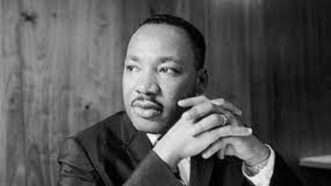
Contrary to a widespread misconception, King did not favor absolute nonviolence, nor does his reasoning always require practitioners of civil disobedience to accept punishment. But he also strongly opposed rioting.
But that’s not adequate reason to allow them to litigate pseudonymously, a district court rules.

Modern medical devices are lifesavers. But they’re vulnerable to hackers and compromise our privacy.
The court concludes that, because the plaintiff hadn't applied to be hired, he didn't have standing to challenge the policy.

Police forced 44-year-old Teddy Pittman facedown on the road at gunpoint after mistaking him for a fugitive. When they let him go, they slapped him with a traffic ticket.

In Jason Statham's latest lowbrow actioner, the bee puns buzz all the way to the top.

Survey finds growing acceptance of civilian firearms among the country’s population.

Republicans should remember that they have spent years railing against censorship on college campuses.


The doctor's claims that he was open to either explanation is flatly contradicted by his literal words.

"The First Amendment prevents DeSantis from identifying a reform prosecutor and then suspending him to garner political benefit," U.S. Circuit Judge Jill Pryor wrote.

In an era when X (formerly Twitter) is blamed for all the ills of the world, here's a case where it did good.
California made carry permits easier to obtain but nearly impossible to use.
that it’s probably not “‘trying to advance the public exchange of ideas’ essential to a healthy democracy.”
The lawyers also argue that the speech in the newspaper was “not made pursuant to its right of free speech, but to instead to advance the personal agendas of male faculty members at Notre Dame [and others].”

The state Senate bill, which is extremely similar to another House proposal, aims to scrap major First Amendment protections in defamation cases.

The Washington Post hectors Congress to make U.S. life expectancy a "political priority."

The state's law, which a federal judge enjoined last month, prohibits firearms in most public places.
A good illustration of the strong policy of openness in American court cases, even when defendants argue that unfounded allegations in court records are intruding on their privacy and damaging their reputations.



The story shows what can happen when those accused of misconduct are subjected to opaque investigations with little due process.
The trial court found that "Decker continued contacting Siewert after she had asked him to stop five times" and "Decker's intent was to impose his will on Siewert to make her write about certain issues and to cover those issues in the way that he wanted them covered."
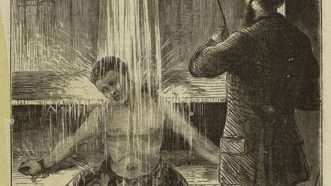
The Supreme Court judges Eighth Amendment cases with "evolving standards of decency." Some conservative jurists don't like it.

After a federal judge deemed the state's location-specific gun bans unconstitutional, the 9th Circuit stayed his injunction.

Restricting speech about the world's most pressing problems does not make them go away, nor does it settle any disputes.
Westbrook and the Jazz characterized the fan's insults to Westbrook as racist; in context, the court concluded, these were constitutionally protected statements of opinion.

Letting state officials determine whether a candidate has "engaged in insurrection" opens a huge can of worms.
Colorado, North Dakota, probably Montana, and maybe New York.
Celebrate your independence with a subscription to Reason magazine, your most trusted source of honest, insightful news and analysis.




