
There Have Been 13 Mass School Shootings Since 1966, Not 27 This Year
Don't conflate mass shootings with school shootings.


Don't conflate mass shootings with school shootings.
The underlying lawsuit was brought by Mickell Lowery, a Commissioner for Shelby County (which contains Memphis)—and son of longtime Memphis City Councilman Myron Lowery, who had also briefly served as Mayor—over allegedly libelous statements during his election campaign.
as applied to "program that would train non-lawyers to give [free] legal advice to low-income New Yorkers who face debt collection actions" about how to "fill out checkboxes on a one-page answer form provided by the State."

A federal lawsuit argues that the department's regulations violate due process, the separation of powers, and the First Amendment.

Making schools more like prisons would not appreciably decrease violence.

The co-founders of Ideas Beyond Borders talk about bringing Steven Pinker and John Stuart Mill to an audience dying for them.

Neither expanded background checks nor a federal "assault weapon" ban can reasonably be expected to have a meaningful impact on such crimes.

Plus: Florida social media law violates First Amendment, against populist antitrust action, and more...
fired for doing so in a way that includes a "personal ... attack on [the superintendent's] integrity.
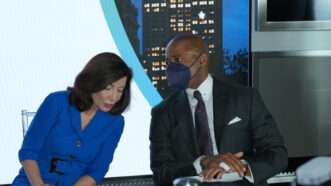
The answer to “Why should these people go to prison?” should not be ill-informed gibberish.

These three gun controls failed in New York, and there is little reason to think they would work elsewhere.
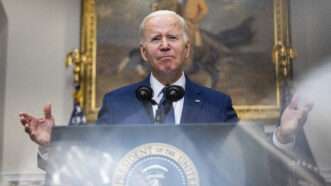
There's much we don't know about the shooting in Texas that left at least 21 people dead, including 19 children. Nevertheless, Joe Biden knows exactly who to blame and how to stop future shootings.
"Plaintiff's behavior may make it more difficult for other courts (and the public) to find his litigation history, which could act to conceal future vexatious litigation or behavior."
The claims arise out of “UPMC’s purported disclosure of their confidential medical information to [child protection authorities] for the purpose of targeting them with highly intrusive, humiliating and coercive child abuse investigations starting before taking their newborn babies home from UPMC’s hospitals shortly after childbirth.”
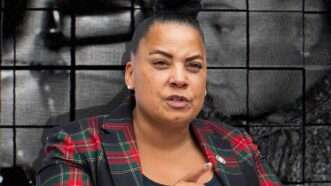
On Wednesday, a Massachusetts judge will decide whether Joao DePina will face the possibility of a decade behind bars for publicly criticizing a district attorney.

A new ruling says Twitter and Facebook are not “common carriers" and thus cannot be forced to carry politicians' messages.

The torturous trial calls to mind Title IX investigations on college campuses.
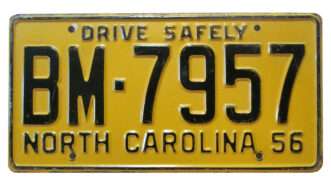
Civil liberties groups argue that debt-based license suspensions are unfair and illogical since they deprive people of transportation, preventing them from earning money to pay off debts.
The result might have been different "if plaintiff's speech had occurred off-campus."
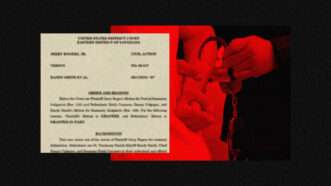
Jerry Rogers Jr. complained that police hadn't solved a murder yet—and found himself in a jail cell.

The Georgetown professor isn't a toy lover—he's trying to convey a philosophical idea about the nature of free will and the capacity of humans to remake the world around them.
The court so holds as a matter of the law of remedies, though I think such an order would generally be an unconstitutional prior restraint as well.
Sen. Marsha Blackburn's "Biological men have no place in women's sports" post was apparently blocked as "hate speech."
The trial court reasoned: "You guys ... have a spat on Facebook.... Nobody cares about these s[p]ats. Just block them and move on."

It seems like an ambiguous episode that was handled appropriately.
Criticism of Grayson (who's now running in the 2022 Florida Senate primary) in his losing 2018 House campaign was based on "articles by independent, reputable sources," and there wasn't clear and convincing evidence that the defendants knew their statements were false or likely false (the so-called "actual malice" standard).

Plus: Twitter defends user anonymity, Oklahoma legislature approves abortion ban, and more...
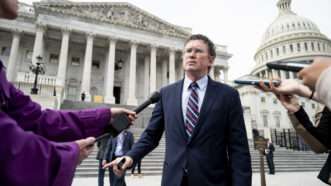
Massie was the only House member to vote against a resolution demanding social media companies do more to track and suppress antisemitic content.

It's not clear which guns she is talking about, and even Collins does not seem to know.
The student's mother alleged that he had been bullied and the school district had done nothing to protect him; the teacher's aide responded in an online public discussion, saying (among other things) that the student had been doing the bullying; the parents sued.
said Judge Vince Chhabria (N.D. Cal.) about this amicus brief from Paul Alan Levy (Public Citizen) and Phillip R. Malone of the Juelsgaard I/P and Innovation Clinic (at Stanford).

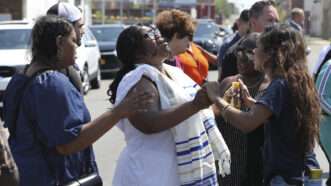
Predicting violence is a lot harder than people claim in retrospect, and a wider net inevitably ensnares more innocent people.
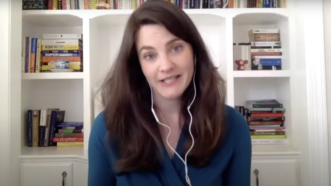
And The Washington Post's wildly one-sided account of Jankowicz's fall was an exercise in government PR.
The Supreme Court split on this 4-4 in 1982, and the matter remains unsettled.
Celebrate your independence with a subscription to Reason magazine, your most trusted source of honest, insightful news and analysis.




