Reason.com - Free Minds and Free Markets
Reason logo Reason logo
  • Latest
  • Magazine
    • Current Issue
    • Archives
    • Subscribe
    • Crossword
  • Video
    • Reason TV
    • The Reason Roundtable
    • Free Media
    • The Reason Interview
  • Podcasts
    • All Shows
    • The Reason Roundtable
    • The Reason Interview With Nick Gillespie
    • Freed Up
    • The Soho Forum Debates
  • Volokh
  • Newsletters
  • Donate
    • Donate Online
    • Ways To Give To Reason Foundation
    • Torchbearer Society
    • Planned Giving
  • Subscribe
    • Reason Plus Subscription
    • Print Subscription
    • Gift Subscriptions
    • Subscriber Support

Log In

Create new account

Supreme Court

A Bad Day at SCOTUS for Government Accountability

The Supreme Court looks ready to further insulate rights-violating federal officers from facing civil liability.
Damon Root | 11.10.2026 7:00 AM

Share on FacebookShare on XShare on RedditShare by emailPrint friendly versionCopy page URL Add Reason to Google
Media Contact & Reprint Requests
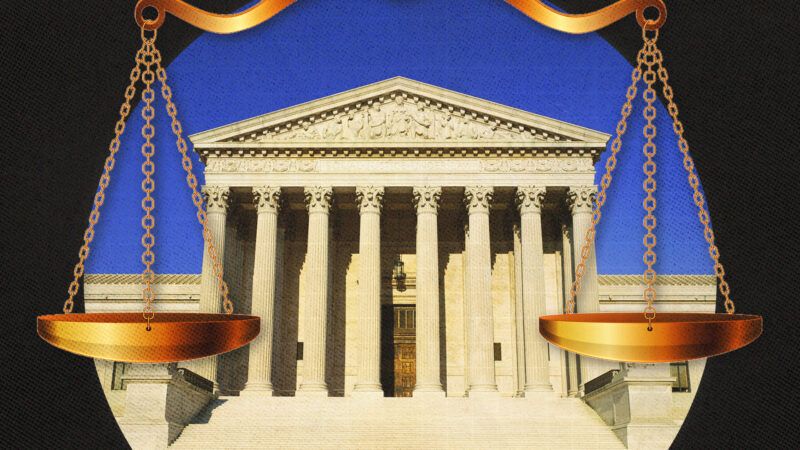
Supreme Court of the United States | AWesleyFloyd/Joe Sohm/Dreamstime/Fatima Ruiz
(AWesleyFloyd/Joe Sohm/Dreamstime/Fatima Ruiz)

Thanks to a series of recent decisions by the U.S. Supreme Court, it has become exceptionally difficult to sue a federal officer in federal court over an alleged constitutional rights violation. Yesterday, the justices heard oral arguments in a case that could further insulate federal officials from facing any civil liability for their misdeeds.

You’re reading Injustice System from Damon Root and Reason. Get more of Damon’s commentary on constitutional law and American history.

This field is for validation purposes and should be left unchanged.

First, a brief history of how we got here. In Bivens v. Six Unknown Named Agents of the Federal Bureau of Narcotics (1971), the Supreme Court allowed a Brooklyn man's lawsuit against a group of federal agents who allegedly violated his constitutional rights to proceed in federal court. "That damages may be obtained for injuries consequent upon a violation of the Fourth Amendment by federal officials should hardly seem a surprising proposition," the Court held. "Historically, damages have been regarded as the ordinary remedy for an invasion of personal interests in liberty." Lawyers soon began to call it a "Bivens claim" when a federal officer was similarly sued for allegedly violating someone's rights.

Over the past decade or so, however, the Supreme Court has basically hacked away at Bivens until there is practically nothing left, stopping just short of overruling the precedent entirely. In Egbert v. Boule (2022), for example, the Supreme Court refused to allow a Bivens claim to proceed against an FBI agent who was credibly accused of violating the Fourth Amendment, basically the same scenario that first gave rise to Bivens itself. But because a majority of the current Court now sees Bivens as an example of judicial activism, in which an earlier group of justices overstepped their bounds by recognizing an implied federal cause of action absent a congressional statute, the Bivens precedent now effectively goes unenforced.

Which brings us to yesterday's oral arguments in the case of Nielsen v. Watanabe. The matter arose after a federal inmate named Kekai Watanabe suffered severe injuries in a prison gang fight. He alleges that he never received proper medical treatment from his captors despite repeatedly requesting it. He later sued staff nurse Francis Nielsen for violating his right to be free from cruel and unusual punishment under the Eighth Amendment.

In Carlson v. Green (1980), the Supreme Court allowed a Bivens claim to proceed in a very similar Eighth Amendment context: namely, the Court allowed the estate of a prisoner to sue prison officials for allegedly contributing to the prisoner's death by denying him medical treatment.

If the current Supreme Court treated Bivens the same way it treats many other precedents—by actually following the precedent, I mean—then the holding in Carlson v. Green would seem to offer strong support for letting Watanabe's Bivens claim move forward now. After all, both Carlson v. Green and Nielson v. Watanabe involve the same thing: a Bivens claim about prison officials allegedly violating the Eighth Amendment by failing to provide proper medical care.

But a majority of the current Supreme Court does not seem too keen on allowing any more Bivens claims to proceed in any context, including under the Eighth Amendment. And while yesterday's arguments seemed to show that the Court will probably again stop short of overruling Bivens outright, a number of justices still seemed to be looking for a reason to deny this latest Bivens claim.

In 2021, Judge Don Willett of the U.S. Court of Appeals for the 5th Circuit registered his objections to what he called "today's rights-without-remedies regime," in which the Supreme Court had whittled Bivens down to such nothingness that "redress for a federal officer's unconstitutional acts is either extremely limited or wholly nonexistent, allowing federal officials to operate in something resembling a Constitution-free zone."

Unfortunately, Willett's objections remain as valid and urgent as ever.

Start your day with Reason. Get a daily brief of the most important stories and trends every weekday morning when you subscribe to Reason Roundup.

This field is for validation purposes and should be left unchanged.

NEXT: An Absurdist's Exile in Buenos Aires: Witold Gombrowicz's Argentine Years

Damon Root is a senior editor at Reason and the author of three books, including A Glorious Liberty: Frederick Douglass and the Fight for an Antislavery Constitution (Potomac Books). His latest book is Emancipation War: The Fall of Slavery and the Coming of the Thirteenth Amendment (Potomac Books).

Supreme CourtQualified ImmunityPoliceLaw enforcementPrisonsConstitutionBill of RightsCivil LibertiesLaw & GovernmentFourth Amendment
Share on FacebookShare on XShare on RedditShare by emailPrint friendly versionCopy page URL Add Reason to Google
Media Contact & Reprint Requests

Hide Comments (0)

Editor's Note: As of February 29, 2024, commenting privileges on reason.com posts are limited to Reason Plus subscribers. Past commenters are grandfathered in for a temporary period. Subscribe here to preserve your ability to comment. Your Reason Plus subscription also gives you an ad-free version of reason.com, along with full access to the digital edition and archives of Reason magazine. We request that comments be civil and on-topic. We do not moderate or assume any responsibility for comments, which are owned by the readers who post them. Comments do not represent the views of reason.com or Reason Foundation. We reserve the right to delete any comment and ban commenters for any reason at any time. Comments may only be edited within 5 minutes of posting. Report abuses.

Please log in to post comments

Mute this user?

  • Mute User
  • Cancel

Ban this user?

  • Ban User
  • Cancel

Un-ban this user?

  • Un-ban User
  • Cancel

Nuke this user?

  • Nuke User
  • Cancel

Un-nuke this user?

  • Un-nuke User
  • Cancel

Flag this comment?

  • Flag Comment
  • Cancel

Un-flag this comment?

  • Un-flag Comment
  • Cancel

Latest

A Bad Day at SCOTUS for Government Accountability

Damon Root | 11.10.2026 7:00 AM

An Absurdist's Exile in Buenos Aires: Witold Gombrowicz's Argentine Years

John Pistelli | From the December 2026 issue

Brickbat: Evergreen Gun Rules

Charles Oliver | 11.10.2026 4:00 AM

California Voters Reject 5% Billionaire Wealth Tax

Reem Ibrahim | 11.9.2026 10:20 PM

Gina Hinojosa Wants To Freeze Electricity Rates in Texas. New Jersey Shows Why That Won't Work.

Tosin Akintola | 11.9.2026 5:19 PM

Recommended

  • About
  • Browse Topics
  • Events
  • Staff
  • Jobs
  • Donate
  • Advertise
  • Subscribe
  • Contact
  • Media
  • Amazon
Reason Facebook@reason on XReason InstagramReason TikTokReason YoutubeApple PodcastsReason on FlipboardReason RSS Add Reason to Google

© 2026 Reason Foundation | Accessibility | Privacy Policy | Terms Of Use

This site is protected by reCAPTCHA and the Google Privacy Policy and Terms of Service apply.

Reason

The All-Argentina Issue is Here

New from Reason: a look into what Javier Milei has accomplished and what it will take to make the most of Argentina’s window for real change. Out now for subscribers.

Subscribe & Start Reading Learn More

