

North Carolina Woman Doesn't Have First Amendment Right to Publish Video of Cop Shooting Her Dogs, Court Rules
A North Carolina state trooper shot Lydia Nikac's two dogs, but an appeals court ruled she doesn't have a right to publish body camera footage of the shooting under the state's restrictive public records laws.
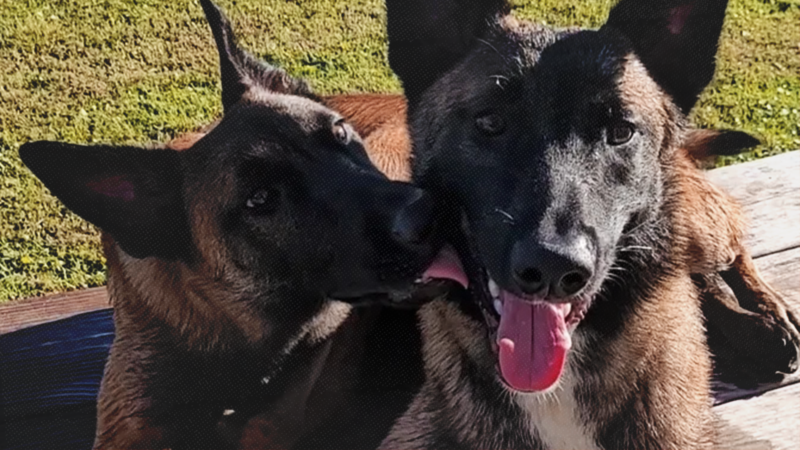
A North Carolina appeals court on Wednesday rejected a woman's First Amendment challenge to a judge's order barring her from publicly sharing body camera footage of a state trooper killing her two dogs.
After a North Carolina State Highway Patrol officer fatally shot two of her dogs in October 2024, Lydia Nikac, a professional dog trainer, got a court order to obtain body camera video recording of the incident, but the trial judge restricted Nikac from sharing the footage publicly. A three-judge panel of the North Carolina Court of Appeals unanimously ruled that judge did not abuse his discretion under North Carolina's statutes, which make body camera footage nonpublic by default.
Nikac argued the restriction amounted to unconstitutional prior restraint under the First Amendment, but the appeals court found that there was a legitimate government interest in at least temporarily suppressing the footage, that Nikac could petition for its release again later, and that nothing restricted her from speaking publicly about the footage or pursuing a civil lawsuit.
On October 5, 2024, Nikac, who runs a business training dogs for agility and police work, discovered a man breaking into her car. Nikac called 911 and, with the help of her two trained Belgian Malinois dogs, Bonnie and Clyde, cornered the man.
When North Carolina State Trooper Justin Maness arrived on the scene, he discovered the intruder lying down on the ground and the two dogs circling him.
According to the appeals court opinion, Bonnie and Clyde were also barking at Maness. "Trooper Maness instructed Petitioner to 'control' her dogs," the opinion states. "He then drew his firearm and fired multiple shots at the dogs, killing them both."
Dash camera video published by Nikac shows Maness repeatedly telling Nikac to control her dogs and threatening to shoot them before striding onto her property. The shootings occur out of the frame.
"Clyde was trying to get away [after Maness started firing]. He kept shooting," Nikac later told local news outlet WITN. "I don't know where he went after that, and then Bonnie ran over because she didn't know somebody was there, and she heard the gunshots, so she went to go say hi," said Nikac. "She looked up, and he had a clear shot, and he shot her in the heart. When she tried to go around, he kept shooting and shooting."
"I can't live my life without those two. They were everything to me," Nikac continued. "They were also my demo dogs, and now I've got nothing to show for."
Nikac's neighbors said the dogs were friendly.
"They were approachable," one neighbor told WITN. "They were the nicest dogs in the world. You really couldn't ask for anything better than them."
The ruling against Nikac is the predictable result of the restrictive body camera law that North Carolina enacted in 2016. Under the law, people who appear in police bodycam and dashcam videos can request the footage from police departments. If denied, they must ask permission from judge, who must find a "compelling public interest" in releasing the footage.
Transparency advocates and press organizations warned at the time that the law would make it harder to hold police accountable and ran contrary to the spirit of having bodycams in the first place.
In 2017, a North Carolina judge blocked release of footage of a teen's violent encounter with the police against the wishes of the family and the City Council of Greensboro. In 2021, deputies in Pasquotank County, North Carolina, shot and killed a father of seven while attempting to serve a drug warrant. A judge initially refused to release video footage to the public and even restricted how much the man's family could see.
Incidents of police killing family pets are disturbingly common—so common that Reason has a "puppycide" tag in our archives. Officers are rarely trained how to read dog behavior or handle aggressive dogs with non-lethal methods. These shootings have led to huge lawsuit payouts and viral news stories. Last year, for example, a small Missouri town paid $500,000 to settle a lawsuit filed by a man whose 13-pound, blind, deaf shih tzu dog was shot and killed by a police officer.
This June, another of the Belgian Malinois dogs that Nikac trained died after its handler, a member of the Pitt County Sheriff's Office, left it in a hot car.




