

Reason.com - Free Minds and Free Markets
Reason logo Reason logo
  • Latest
  • Magazine
    • Current Issue
    • Archives
    • Subscribe
    • Crossword
  • Video
    • Reason TV
    • The Reason Roundtable
    • Free Media
    • The Reason Interview
  • Podcasts
    • All Shows
    • The Reason Roundtable
    • The Reason Interview With Nick Gillespie
    • Freed Up
    • The Soho Forum Debates
  • Volokh
  • Newsletters
  • Donate
    • Donate Online
    • Ways To Give To Reason Foundation
    • Torchbearer Society
    • Planned Giving
  • Subscribe
    • Reason Plus Subscription
    • Gift Subscriptions
    • Print Subscription
    • Subscriber Support

Log In

Create new account

Section 230

Section 230's Legal Protections for Internet Speech Face New Challenge

This week, senators heard testimony over the foundation for modern online conversations.
J.D. Tuccille | 3.20.2026 7:00 AM

Share on FacebookShare on XShare on RedditShare by emailPrint friendly versionCopy page URL Add Reason to Google
Media Contact & Reprint Requests
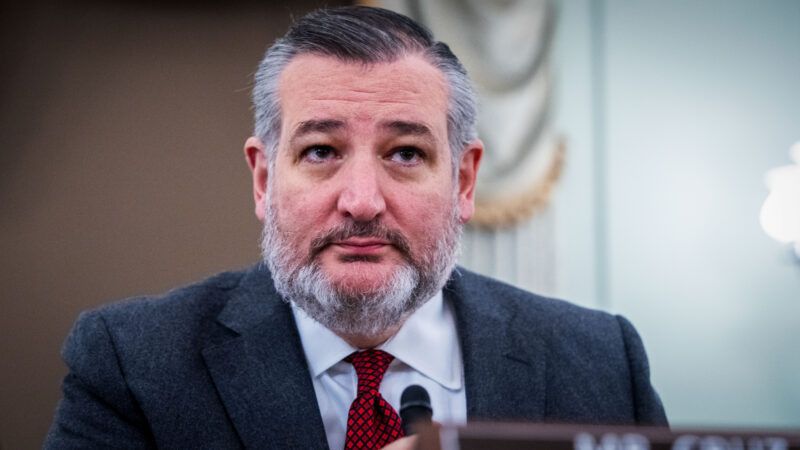
Sen. Ted Cruz (R–Texas) chairs a hearing of the Senate Commerce, Science, and Transportation Committee in 2025. | Tom Williams/CQ Roll Call/Newscom
(Tom Williams/CQ Roll Call/Newscom)

For 30 years, Section 230 of the Communications Decency Act has protected online speech, shielding platforms from liability for content posted by third parties. Basically, comments sections, discussion boards, and social media are made possible by that law. But Section 230 has long suffered attacks from people who don't like what they see published in the digital world. This week, the U.S. Senate Commerce Committee heard arguments from both those who favor maintaining the current free environment for online speech and those who want to roll it back or outright repeal its protections.

You are reading The Rattler from J.D. Tuccille and Reason. Get more of J.D.'s commentary on government overreach and threats to everyday liberty.

This field is for validation purposes and should be left unchanged.

Section 230 and the Gatekeepers

"It was only a short time ago that speech and newsworthiness was controlled by a handful of TV networks and giant newspaper publishers," Committee Chairman Sen. Ted Cruz (R–Texas) said in opening comments. "If you held a position they didn't want to print, or wasn't consistent with their political views, it didn't get said. The internet changed that, allowing anyone to bypass these gatekeepers and shape public opinion with their own views."

Cruz gave a brief history of the early legal treatment of online speech and the evolution of what became Section 230 of the Communications Decency Act. Before passage of the law, court decisions gave internet platforms a choice between a completely hands-off approach to anything published by users on their sites, or else taking responsibility for all that was posted. That meant leaving even the vilest content up or assuming the impossible task of moderating everything. The new law created a middle ground.

"Congress included Section 230 to ensure that online platforms would not be liable for the illegal speech of another person," Cruz noted.

But Cruz went on to address modern concerns that big tech companies have become "the new speech police"—often in service to government agendas, as we saw under the Biden administration with the suppression of criticism directed at public health policy and discussion of Hunter Biden's laptop.

Cruz has also criticized the Trump administration, particularly Federal Communications Commission (FCC) Chairman Brendan Carr, for squeezing disfavored speech through old-fashioned regulatory pressure. He proposed stripping the FCC of some of its authority as a consequence.

But while Cruz acknowledged support in some circles for legislative changes that would target tech firms that many of his allies see as political foes, he came out on the side of maintaining current protections. "I'm concerned that a full repeal or sunset would lead platforms to engage in worse behavior, to engage in more censorship, to protect themselves from litigation," he warned regarding Section 230. In this, Cruz will find plenty of support among free speech advocates.

'The Twenty-Six Words That Created the Internet'

Key language in Section 230 is often described as "the twenty-six words that created the internet." Those words are: "No provider or user of an interactive computer service shall be treated as the publisher or speaker of any information provided by another information content provider."

"Without Section 230, websites would be left with a menu of unattractive options to avoid lawsuits over their users' speech," Aaron Terr of the Foundation for Individual Rights and Expression wrote in 2023. "Many would likely change their business model and stop hosting user-generated content altogether, creating a scarcity of platforms that sustain our ability to communicate with each other online."

That potential end to hosting user-generated content in the form of comments, discussions, and social media posts lies at the core of Cruz's concern that fear of litigation would fuel greater censorship and return us to the days of gatekeepers controlling which ideas are aired for public debate.

"Section 230 has created space for social movements; enabled platforms to host the speech of activists and organizers; and allowed users and content creators on sites like Instagram, TikTok, and Twitch to reach an audience and make a living," commented Jenna Leventoff, senior policy counsel at the ACLU, after a 2024 House hearing on Section 230. "Platforms must be able to host user speech without the threat of constant lawsuits."

The Cato Institute's David Inserra agrees, writing that "Section 230 is a cornerstone of how online speech works in the United States. It allows websites and platforms to host user-generated content without being legally responsible for everything their users say, while still giving them the freedom to remove content that they and their users may find objectionable."

While skeptics of Section 230 hope that legal changes will rein in tech giants who muzzle some people and ideas on behalf of their own prejudices or their friends in government, Inserra believes the opposite is likely to occur: "Expanding platform liability would entrench large incumbents by raising legal and compliance costs that small and new companies cannot absorb, ultimately reducing competition and innovation."

An Internet Without Section 230 Is One With Less Free-Wheeling Speech

That is, Facebook and Google are in better positions to weather a less-friendly legal environment than are smaller operations that might be more philosophically inclined to host challenges to establishment opinions but would potentially face crippling consequences for doing so in the absence of Section 230.

Senators heard testimony on both sides of the debate, although members of the committee already hold firm opinions on the issue. While Cruz has come out in favor of retaining Section 230's protections for free speech, other members of the committee from both parties strongly disagree. Sens. Marsha Blackburn (R–Tenn.) and Amy Klobuchar (D–Minn.) have both signed on to a bipartisan bill sponsored by Sens. Lindsey Graham (R–S.C.) and Dick Durbin (D–Ill.) that would sunset Section 230.

"I am extremely pleased that there is such wide and deep bipartisan support for repealing Section 230, which protects social media companies from being sued by the people whose lives they destroy," Graham commented in December. He accused tech firms of "making billions of dollars in advertising revenue off some of the most unsavory content and criminal activity imaginable."

Of course, much of that allegedly objectionable content originates with users, who will be largely silenced in the absence of Section 230. Without the protection of the law, the internet might be a nicer place, but that's only because a great deal of free-wheeling discussion among regular people will be shut down.

The Rattler is a weekly newsletter from J.D. Tuccille. If you care about government overreach and tangible threats to everyday liberty, this is for you.

This field is for validation purposes and should be left unchanged.

NEXT: Review: Did the Feds Finally Crack the Food Pyramid Code? Probably Not.

J.D. Tuccille is a contributing editor at Reason.

Section 230SenateLegislationInternetFree SpeechScience & TechnologyTechnology
Share on FacebookShare on XShare on RedditShare by emailPrint friendly versionCopy page URL Add Reason to Google
Media Contact & Reprint Requests

Hide Comments (8)

Editor's Note: As of February 29, 2024, commenting privileges on reason.com posts are limited to Reason Plus subscribers. Past commenters are grandfathered in for a temporary period. Subscribe here to preserve your ability to comment. Your Reason Plus subscription also gives you an ad-free version of reason.com, along with full access to the digital edition and archives of Reason magazine. We request that comments be civil and on-topic. We do not moderate or assume any responsibility for comments, which are owned by the readers who post them. Comments do not represent the views of reason.com or Reason Foundation. We reserve the right to delete any comment and ban commenters for any reason at any time. Comments may only be edited within 5 minutes of posting. Report abuses.

  1. SQRLSY   2 hours ago

    "If you held a position they didn't want to print, or wasn't consistent with their political views, it didn't get said. The internet changed that, allowing anyone to bypass these gatekeepers and shape public opinion with their own views."

    Thanks Much to Section 230!!! Long live Section 230!!!

    ALSO note the below!!!

    https://reason.com/2023/01/02/twitter-files-reveal-politicians-officials-evading-the-constitutions-restrictions/?comments=true#comment-9858074
    When, in the USA, we have access to 1.14 billion web sites… Number of web sites today… https://siteefy.com/how-many-websites-are-there/ … I don’t care much about supposed censorshit! We also have phone calls, pamphlets, letters, word of mouth, smoke signals, telegraphs, Morse code, cryptic codes on the back-sides of stop signals, messages on cereal boxes, nano-molecules in your vaccines, tin-foil hats, ESP, clairvoyance, text messages, and… Now I will show my advanced years… EMAILS!!!!
    I wish that the whining crybabies would JUST SHUT UP about HOW horribly bad censorshit is today!!! In the USA at least… We have MORE access to MORE lies, every day! We can freely access more lies than you can shake your dick at!

    Log in to Reply
    1. SQRLSY   1 hour ago

      Update from 2nd cite above:

      1,354,989,060

      TOTAL WEBSITES

      Currently, there are around 1.4 billion websites in the World

      206,211,019

      ACTIVE WEBSITES

      15% of these websites are active, 85% are inactive

      Log in to Reply
    2. MollyGodiva   14 seconds ago

      You left out carrier pigeons, which ironically has been shown to be faster to move very large data than the internet. A bird with a 5 terabyte of microSD cards can do wonders.

      Log in to Reply
  2. Sometimes a Great Notion   1 hour ago

    "making billions of dollars in advertising revenue off some of the most unsavory content and criminal activity imaginable."

    Sounds like they are already breaking the law then, Lindsey. If your statement is true - its not - then why not enforce the laws being broken. And really do you expect me to believe advertisers are willing to put their products on a platform showcasing criminal activity? Those same advertisers who pull ads at even the wiff of scandal let alone criminal behavior.

    Log in to Reply
    1. SQRLSY   1 hour ago

      All true!!!

      With an exception... "...pull ads at even the wiff of scandal let alone criminal behavior."

      EXCEPT if scandals and criminal behavior originate with Dear Deep Orange Caligula-Shitler!!! Do SNOT pull Shitler's ads, or ye swill be sued and regulated out of existence!

      Log in to Reply
  3. John Rohan   29 minutes ago

    I support Section 230 protections in theory, but it's being misused. Social media companies are trying to have it both ways - they want the protections of a neutral platform, like the telephone company. After all, AT&T can't be sued for slanderous statements sent through their system, and AT&T doesn't police what is said on their phones or text messages.

    By contrast, Facebook, YouTube, Reddit, etc DO police the statements on their platforms. They are acting much more like newspaper editors than the phone company. They ban users, delete comments, shadowban comments, make some comments more difficult to see, and elevate others more prominently. In other words, they have gone from just being a neutral platform to actively participating in the content that people can read. Under those circumstances, they should be ineligible for Section 230 protections.

    Log in to Reply
    1. MollyGodiva   15 minutes ago

      That is not a misuse of 230, that is how it was designed. Sites are allowed to have their own content moderation polices as they wish.

      (2) Civil liability No provider or user of an interactive computer service shall be held liable on account of—
      (A) any action voluntarily taken in good faith to restrict access to or availability of material that the provider or user considers to be obscene, lewd, lascivious, filthy, excessively violent, harassing, or otherwise objectionable, whether or not such material is constitutionally protected; or

      Log in to Reply
  4. Longtobefree   6 minutes ago

    Key language in Section 230 is often described as "the twenty-six words that created the internet."

    Tim Berners-Lee holding on line three - - - - - - - -

    Log in to Reply

Please log in to post comments

Mute this user?

  • Mute User
  • Cancel

Ban this user?

  • Ban User
  • Cancel

Un-ban this user?

  • Un-ban User
  • Cancel

Nuke this user?

  • Nuke User
  • Cancel

Un-nuke this user?

  • Un-nuke User
  • Cancel

Flag this comment?

  • Flag Comment
  • Cancel

Un-flag this comment?

  • Un-flag Comment
  • Cancel

Latest

$200 Billion War? 

Peter Suderman | 3.20.2026 9:30 AM

Section 230's Legal Protections for Internet Speech Face New Challenge

J.D. Tuccille | 3.20.2026 7:00 AM

Review: Did the Feds Finally Crack the Food Pyramid Code? Probably Not.

Katherine Mangu-Ward | From the April 2026 issue

Review: This Podcast Details the Brutal Effects of the War on Drugs

C.J. Ciaramella | From the April 2026 issue

Brickbat: No Right To Know

Charles Oliver | 3.20.2026 4:00 AM

Recommended

  • About
  • Browse Topics
  • Events
  • Staff
  • Jobs
  • Donate
  • Advertise
  • Subscribe
  • Contact
  • Media
  • Shop
  • Amazon
Reason Facebook@reason on XReason InstagramReason TikTokReason YoutubeApple PodcastsReason on FlipboardReason RSS Add Reason to Google

© 2026 Reason Foundation | Accessibility | Privacy Policy | Terms Of Use

This site is protected by reCAPTCHA and the Google Privacy Policy and Terms of Service apply.

r

I WANT FREE MINDS AND FREE MARKETS!

Help Reason push back with more of the fact-based reporting we do best. Your support means more reporters, more investigations, and more coverage.

Make a donation today! No thanks
r

I WANT TO FUND FREE MINDS AND FREE MARKETS

Every dollar I give helps to fund more journalists, more videos, and more amazing stories that celebrate liberty.

Yes! I want to put my money where your mouth is! Not interested
r

SUPPORT HONEST JOURNALISM

So much of the media tries telling you what to think. Support journalism that helps you to think for yourself.

I’ll donate to Reason right now! No thanks
r

PUSH BACK

Push back against misleading media lies and bad ideas. Support Reason’s journalism today.

My donation today will help Reason push back! Not today
r

HELP KEEP MEDIA FREE & FEARLESS

Back journalism committed to transparency, independence, and intellectual honesty.

Yes, I’ll donate to Reason today! No thanks
r

STAND FOR FREE MINDS

Support journalism that challenges central planning, big government overreach, and creeping socialism.

Yes, I’ll support Reason today! No thanks
r

PUSH BACK AGAINST SOCIALIST IDEAS

Support journalism that exposes bad economics, failed policies, and threats to open markets.

Yes, I’ll donate to Reason today! No thanks
r

FIGHT BAD IDEAS WITH FACTS

Back independent media that examines the real-world consequences of socialist policies.

Yes, I’ll donate to Reason today! No thanks
r

BAD ECONOMIC IDEAS ARE EVERYWHERE. LET’S FIGHT BACK.

Support journalism that challenges government overreach with rational analysis and clear reasoning.

Yes, I’ll donate to Reason today! No thanks
r

JOIN THE FIGHT FOR FREEDOM

Support journalism that challenges centralized power and defends individual liberty.

Yes, I’ll donate to Reason today! No thanks
r

BACK JOURNALISM THAT PUSHES BACK AGAINST SOCIALISM

Your support helps expose the real-world costs of socialist policy proposals—and highlight better alternatives.

Yes, I’ll donate to Reason today! No thanks
r

FIGHT BACK AGAINST BAD ECONOMICS.

Donate today to fuel reporting that exposes the real costs of heavy-handed government.

Yes, I’ll donate to Reason today! No thanks


