

Judge Orders Takeover of Arizona Prison Health Care Following Years of Barbaric Medical Neglect
A federal judge ruled in 2022 that "no legitimate humane system would operate" like Arizona's prison health care system. Three years later, that same judge found the problems still hadn't been fixed.
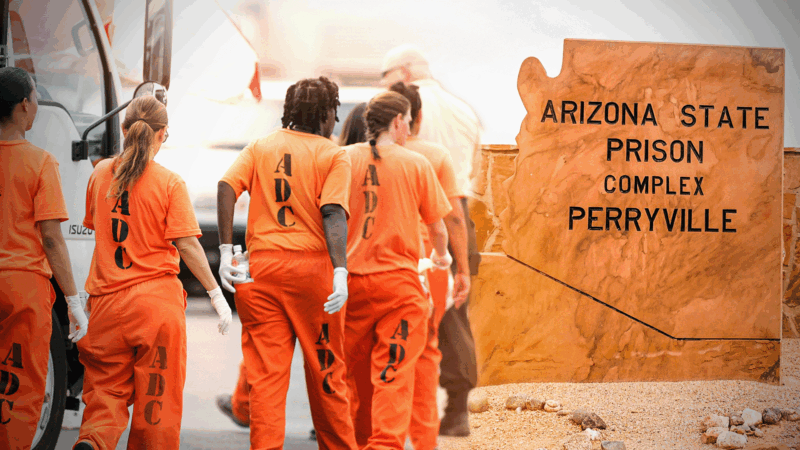
A federal judge on Thursday ordered the Arizona state prison system's health care services to be put under the control of a court-appointed receiver after finding it was still subjecting incarcerated people to unconstitutional medical neglect, despite a decade-old lawsuit settlement to fix the problems.
Judge Roslyn Silver of the U.S. District Court for the District of Arizona ruled that—after years of litigation, numerous findings of neglect and preventable deaths, and over $2 million in contempt fines—the Arizona Department of Corrections, Rehabilitation, and Reentry (ADCRR) remained out of compliance with both a 2015 lawsuit settlement and the Eighth Amendment of the Constitution.
Allowing the ADCRR to continue to control medical services, Silver wrote, would expose Arizona inmates to "an intolerable grave and immediate threat of continuing harm and suffering because the systemic deficiencies pervade the administration of health care."
Silver wrote that her attempts to gain compliance from the ADCR through less-severe means had "not only failed completely, but, if continued, would be nothing short of judicial indulgence of deeply entrenched unconstitutional conduct."
The American Civil Liberties Union (ACLU) of Arizona, the Arizona Center for Disability Law, and the law firm Perkins Coie LLP, filed a federal class-action suit in 2012 alleging grossly inadequate medical care inside the ADCR. The suit followed media investigations and persistent allegations of fatally inadequate medical care by the ADCRR's medical provider.
"We are relieved the court has taken this critical step to protect the health and lives of people in Arizona prisons," David Fathi, director of the ACLU's National Prison Project, says in a statement to Reason. "The appointment of a receiver marks a turning point in a crisis that has persisted for far too long, despite multiple court orders and over a decade of litigation. This decision means that an independent authority will be able to implement the systemic changes necessary to ensure that medical and mental health care meets constitutional standards. This is a life-saving intervention, and it brings hope that the preventable suffering and deaths that have haunted Arizona's prison system for over a decade can finally end."
The ADCRR agreed to settle the suit in 2015 by taking steps to improve medical care inside its prisons. But since then, the ACLU and other law firms have repeatedly accused the ADCRR of failing to abide by the settlement agreement, and federal judges have agreed.
A federal magistrate judge fined the ADCRR $1.4 million in 2018. Silver held the department in contempt in 2021 and fined it another $1.1 million for failing to meet the benchmarks for proper medical care.
In 2022, Silver ruled that Arizona prison officials were deliberately indifferent to "grossly inadequate" medical and mental health care, violating inmates' Eighth Amendment rights.
The ruling came after an expert witness report filed in the case described appalling and fatal delays in medical care for incarcerated people inside the ADCRR: A paraplegic man was left to physically deteriorate until his penis had to be amputated; a man with undiagnosed, untreated lung cancer lost 90 pounds and died "slowly and agonizingly" without pain medication; a woman's multiple sclerosis was ignored and misdiagnosed until she was left, at age 36, nearly completely paralyzed.
"No legitimate humane system would operate in this manner," Silver concluded.
The ADCR agreed to substantial reforms in response to Silver's 2022 ruling, but by 2025, a court-appointed monitor reported that the agency was still out of compliance with requirements to fix severe understaffing and other problems with its health care services.
For instance, the monitor noted one case where a patient with potentially curable liver cancer waited nine months for treatment, "resulting in progression of cancer, and decreased overall rate of survival."
Lawmakers in Arizona have tried to get the state prison system under control, but with mixed success. Last year, the Arizona Legislature passed a bipartisan bill to create an independent office to act as a watchdog over the ADCRR. However, funding for the office was stripped from the state budget, and it remains unfunded this year.
Lauren Krisai, the executive director of the Justice Action Network, a criminal justice advocacy group that lobbied in favor of the oversight office, says that "having an independent correctional oversight office is essential for identifying issues inside prisons before they become widespread problems and systemic failures."
"Seeing a judge place the state's prison health care system into federal receivership underscores why making this office operational is so urgently needed," Krisai continues. "We urge Governor [Katie] Hobbs to include funding for the independent oversight office established in statute last year in this year's budget so it can begin its work immediately. Proactive, independent oversight is a far smarter investment of taxpayer dollars than costly federal intervention when conditions have deteriorated."
Unfortunately, the problems in Arizona prisons are part of a national crisis of medical neglect behind bars. Last year, a federal judge stripped control of the infamous Rikers Island jail complex from New York City because of similar failures to curb violence, suicides, and wretched conditions.




