
If 'You Bring a Gun' to D.C., U.S. Attorney Jeanine Pirro Warns, 'You're Going to Jail'
The prosecutor's threat renewed concerns about the Trump administration's commitment to protecting Second Amendment rights.
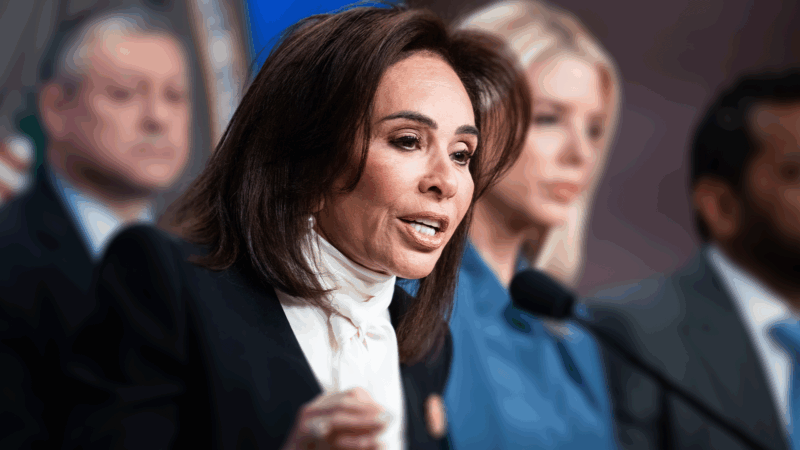
If "you bring a gun" to Washington, D.C., Jeanine Pirro warned during a Fox News interview on Monday, "you're going to jail." Pirro, the U.S. attorney for the District of Columbia, was touting her crime-fighting efforts, elaborating on her argument that "taking guns off the street" helps prevent homicides, carjackings, and robberies. But her threat provoked objections from Second Amendment advocates, who noted that the Constitution guarantees the right to carry guns for self-defense and that there is nothing necessarily illegal about doing so in the nation's capital.
The controversy over Pirro's remarks is especially notable because it comes shortly after President Donald Trump and other federal officials dismayed gun rights groups by suggesting that Alex Pretti, the Minneapolis protester who was fatally shot by immigration agents on January 24, was asking for trouble by legally carrying a concealed pistol. Both episodes illustrate the tension between Trump's avowed commitment to "protecting Second Amendment rights" and his frequently authoritarian tough-on-crime instincts.
"I don't care if you have a license in another district, and I don't care if you're a law-abiding gun owner somewhere else," Pirro said on Fox News. "You bring a gun into this district, count on going to jail, and hope you get the gun back."
That broad threat is hard to reconcile with the right to bear arms recognized by the Supreme Court's 2022 decision in New York State Rifle & Pistol Association v. Bruen, which said states may not require that people demonstrate a "special need" to carry guns in public for self-defense. Even before that decision, the U.S. Court of Appeals for the D.C. Circuit, in the 2017 case Wrenn v. District of Columbia, had permanently enjoined the Metropolitan Police Department (MPD) from enforcing D.C.'s "proper reason" requirement for carrying a handgun. Under current D.C. policy, carry permit applicants must be at least 21 and meet several other requirements, including registration of the weapon and completion of a firearms training course.
Notably, those requirements do not include residence in the District of Columbia. "Non-residents can obtain a permit in DC," Rep. Thomas Massie (R–Ky.) noted in an X post responding to Pirro's comments. "I bring a gun into the district every week," Rep. Greg Steube (R–Fla.) wrote in another X post addressed to Pirro. "I have a license in Florida and DC to carry. And I will continue to carry to protect myself and others. Come and Take it!"
The National Association for Gun Rights (NAGR) was also offended. "Jeanine Pirro threatening to arrest people for carrying in DC, even if they are law-abiding and licensed, shows how broken and out of touch these gun laws are," the NAGR said on X. "Unacceptable and intolerable comments by a sitting US attorney. This is why we need Real Constitutional Carry nationwide. Bureaucrats act like the 2A does not exist and brag about jailing people for exercising their rights."
The National Rifle Association (NRA) likewise responded to Pirro's comments by reiterating its support for reducing barriers to carrying guns in public. "Now is the time for Congress to pass HR 38, the National Concealed Carry Reciprocity Act," it said. "Your right to self-defense should not end simply because you crossed a state line or into Washington, D.C."
Twenty-nine states do not require permits for concealed carry—the policy to which the NAGR alluded. Several additional states have reciprocity policies that recognize carry permits issued by other states. While D.C. does not fall into either category, nonresidents such as Massie and Steube can still legally carry handguns there if they meet local requirements.
In addition to overlooking that point, Pirro's comments seemed inconsistent with the agenda of the "Second Amendment Section" that the Justice Department recently established within its Civil Rights Division. Harmeet Dhillon, the assistant attorney general in charge of that division, has said one aim of the new litigation project is facilitating the right to bear arms by challenging obstacles to obtaining carry permits such as "multi-thousand-dollar costs" and "unreasonably long delays."
Last April, Dhillon noted that jurisdictions with "unreasonably long delays" included Washington, D.C. "The wait right now in DC for an appointment to apply for concealed carry is four months!" she said. Although the situation reportedly has improved since then, people who want to legally carry handguns still face bigger obstacles in D.C. than they do in most states, starting with the permit requirement itself. They can expect to pay about $500 for fees and training, and they have to register their guns with the MPD, a process that is possible only for handguns approved for sale in California, Maryland, or Massachusetts.
On Tuesday morning, Pirro responded to criticism of her threat, suggesting it did not apply to nonresidents with D.C. carry permits. "I am a proud supporter of the Second Amendment," she wrote on X. "Washington, D.C. law requires [that] handguns be licensed in the District with the Metropolitan Police Department to be carried into our community. We are focused on individuals who are unlawfully carrying guns and will continue building on that momentum to keep our communities safe."
Pirro could have avoided this contretemps if she had spoken more carefully, and the negative reaction is not surprising in light of what happened after Pretti's death. Although videos of the incident show that Pretti, who had a carry permit, never drew his pistol, Homeland Security Secretary Kristi Noem falsely claimed he was "brandishing" the weapon. Her department issued a statement saying Pretti "approached US Border Patrol officers with a 9 mm semi-automatic handgun," adding that they "attempted to disarm [him] but the armed suspect violently resisted." In reality, those officers did not see the gun until after they tackled Pretti.
The Department of Homeland Security nevertheless portrayed Pretti as a would-be murderer who "wanted to do maximum damage and massacre law enforcement." And even after that narrative collapsed under the weight of the video evidence, officials such as FBI Director Kash Patel, Treasury Secretary Scott Bessent, and Bill Essayli, the first assistant U.S. attorney for the Central District of California, suggested that Pretti's exercise of the right to bear arms was unseemly, unwise, illegal, and an invitation to police violence.
Trump, who initially described Pretti as a "gunman," reinforced those claims. "I don't like it when somebody goes into a protest and he's got a very powerful, fully loaded gun with two magazines," he told The Wall Street Journal the day after the shooting. "You can't have guns," he told reporters a couple of days later. "You can't walk in with guns. You just can't."
Trump was still expressing that sentiment last week. "Certainly he shouldn't have been carrying a gun," the president said during a visit to Iowa. "I don't like that he had a gun. I don't like that he had two fully loaded magazines. That's a lot of bad stuff."
The idea that there is something inherently suspicious or threatening about exercising a constitutional right recognized by the Supreme Court understandably provoked complaints from Second Amendment groups such as the NRA and Gun Owners of America. Yet despite that experience, Pirro did not hesitate to threaten "law-abiding gun owner[s]" with jail if they dare to "bring a gun into this district."
Even with the qualification that Pirro later added, she seems intent on vigorously enforcing D.C.'s strict gun policies, regardless of whether potential defendants pose a threat to public safety. In her view, it makes sense to fight violent crime by jailing visitors who erroneously believe their out-of-state carry permits are good in D.C. You might think "a proud supporter of the Second Amendment" would have different priorities.
Trump likewise presents himself as a Second Amendment champion yet periodically deviates from that stance. His lapses include not only his comments about Pretti but also the positions he took during his first term.
After the 2017 mass shooting in Las Vegas, Trump demanded a bump stock ban that the Supreme Court ultimately overturned, deeming it beyond the statutory authority of federal gun regulators. He also spoke favorably of requiring background checks for all gun transfers, raising the minimum age for buying long guns, and banning "assault weapons." And he expressed support for "red flag" laws, saying police should "take the gun first" and "go through due process second" when they think someone is dangerous.
The second Trump administration, by contrast, has challenged D.C.'s "assault weapon" ban in federal court. But it is steadfastly defending other constitutionally dubious gun laws, including the federal bans on gun possession by drug users and people convicted of nonviolent felonies. In both cases, the NRA and other gun rights groups are vigorously challenging the administration's position.
As these examples show, Trump's desire to placate Second Amendment supporters conflicts with his crime-fighting impulses, even when the perceived threats are as improbable as medical marijuana patients or people who pleaded guilty to nonviolent felonies decades ago. Unlike Trump, critics of those pro-control positions, including Republicans who are normally allied with him, recognize that constitutional rights cannot be secure if they hinge on a politician's idiosyncratic understanding of what public safety requires.
