
The Far Right Is Powered by Left-Wing Illiberalism and Hypocrisy
The left has to accept that it shares blame for our current political mess.
The introduction of the "Groypers" into our national consciousness over the last six weeks has ignited curiosity about what is causing the evident moral and intellectual disintegration of American conservatism. As someone who has been covering this space for years, I do not believe it's possible to grasp what's happening on the right without accepting that the left has, for decades now, been on its own illiberal journey—because to a far greater extent than most observers would like to admit, the former phenomenon is a response to the latter.
If there's one thing that voters of President Donald Trump and reactionary online personalities alike have made clear, it's that they're frustrated by the eagerness of mainstream institutions to excuse left-wing overreach while treating every right-wing infraction as an existential menace to democracy. This has created a boy-who-cried-wolf problem where attempts to sound the alarm about serious threats to the rule of law during Trump's second term often provoke eyerolls or yawns.
We need to recognize that there's a natural tendency to overlook violations of norms and legal procedures by our own side while hyperfixating on our rivals' transgressions. Human beings are excellent at rationalizing breaches of etiquette and convincing ourselves that extraordinary measures are necessary when they benefit us. Departures from the rules of the game by allies are downplayed or dismissed, and in any individual case that may be defensible—but the cumulative effect is that those on the receiving end sooner or later conclude that playing by the rules is for suckers.
Republican claims of Democratic hypocrisy may sometimes be overblown, but they are decidedly not imagined. The activist left in particular is guilty of helping to create the conditions for our toxic political moment. Consider the following ways in which left-of-center politics have, over the last generation or two, effectively repudiated liberal values.
1. By Beginning From Collectivist—and Thus Inevitably Racialist—Rather Than Individualistic Assumptions
In a recent essay at The Argument, the liberal journalist Matt Yglesias makes a crucial observation: Critical race theory and related programs are not, as he once presumed, "natural extensions of basic liberal commitments to tolerance and human equality," analogous to the expansion of franchise rights to women in the early 20th century. Emphatically to the contrary, they are open rejections of philosophical liberalism, understood as "the view that the basic unit of moral concern is the individual; that institutions should be governed by general, neutral rules; and that rights and due process are core to justice."
Yglesias rightly notes that the identitarian approach introduced policies and practices into society that subject people to collective blame or confer on them collective benefits based on their demographic characteristics. Members of groups that were historically disadvantaged or oppressed receive better treatment than do members of historically privileged groups. Individual virtues, accomplishments, and abilities become less important than identitarian labels.
Such policies and practices tend to produce what is sometimes called "victimhood Olympics," or the habit of competitive jostling to show that your combination of identity markers (as a Hispanic lesbian with a medical disability, say) entitles you to a higher status than someone else's. This is what is meant by "intersectional" identity politics.
Unsurprisingly, one side effect of such a political approach is that those at the bottom of the victimhood totem pole—namely, straight white men—feel increasing resentment and rage over being denied respect and opportunities based on attributes outside their control. They correctly note that this flies in the face of the ethos of the Civil Rights Movement, which rather famously argued that people deserve to be judged by the content of their character rather than the color of their skin.
It has also more generally increased the salience of race and other tribal labels, training people to think of themselves as members of "affinity groups" whose interests they share and to whom they owe a sort of primary loyalty. No wonder we've seen a rise in white nationalist and Christian nationalist sentiments, with young conservatives in particular taking to complaining that mass immigration is diluting America's once-dominant Anglo-Protestant culture.
With all the attention lately being paid to the antisemitic influencer Nick Fuentes and his followers (those aforementioned "Groypers"), it may be tempting to think this is a problem of recent vintage. But social commentators have been warning for decades that policies such as affirmative action in hiring and practices such as militant speech policing would have exactly these sorts of predictable consequences.
"The new racism is reactive rather than residual, let alone resurgent," Christopher Lasch wrote in The Revolt of the Elites and the Betrayal of Democracy way back in 1995. "It is a response, however inappropriate and offensive, to a double standard of racial justice that strikes most Americans as unreasonable and unfair."
2. By Treating Progress as Zero-Sum
The liberal journalist Jerusalem Demsas (also at The Argument) has a recent essay on the "peasant logic" of zero-sum thinking: the idea that "there's only so much to go around. Only so many good jobs, decent homes, and slots in the social hierarchy. If someone else starts doing better, that's a threat—it means someone else (maybe you) is getting screwed."
Demsas describes this view as "the throughline of MAGA politics," and I can't say I disagree with her. But it's important to realize that left-wing activism has long made the same mistake. I recently had reason to revisit an interview I gave to The Ezra Klein Show a couple of years ago in which I tried to make this point:
There are ways in which our approach…to advocating for social change can make it more or less likely that the more radical elements of the New Right will be successful. So if we treat social change as zero-sum, if we act as if any advance toward justice for one group of people comes at the expense of another group, that is going to provoke backlash and that is going to empower the worst voices that we've been describing.
There is an alternative to that approach of social change as zero-sum. We can talk about it as positive-sum. And if you look at the ways that, for example, gay rights activists in the 1990s and early 2000s advocated for the changes that they were in favor of, they did it in an inclusive way. They did it by humanizing their cause. They did it by talking about equal rights under the law and liberal values—and in some cases, even appealing to conservative values, family formation, lifelong commitment.
They achieved an incredible feat in terms of, if you look at the polling data, how quickly public opinion changed on support for gay marriage….That is the kind of activism success story that there are going to be textbooks written about.
I think if we're being honest with ourselves, if we compare that to the kinds of activism in the gender politics space today or really any kind of social-justice space today, we find that they have adopted a very different approach to pushing for the things they believe in, which is much more militant and much more retributive. Not just "we want equal rights under the law," but "we're going to punish you if you do not line up behind our views." I think that is a huge mistake.
That approach is a mistake because it causes people to stop thinking in terms of equal rights and start thinking in terms of redistribution of scarce resources, where status and opportunity (as well as more tangible goods such as homes and jobs) are a fixed pie. And people operating from a scarcity mindset will resent rather than celebrate other people's gains.
A survey of Trump voters conducted just after the 2020 election found a shocking amount of agreement on issues related to cultural resentment, with some 89 percent of respondents believing that "Christianity is under attack in America today," 90 percent fretting that "Americans are losing faith in the ideas that make our country great," 92 percent saying that "the mainstream media today is just a part of the Democratic Party," and 87 percent worrying that "discrimination against whites will increase a lot in the next few years."
What unites these findings is that they all point to the sort of siege mentality that understandably appears in zero-sum contexts in which someone else seems to be in charge of who gets what.
3. By Being Willing To Employ State Power on Behalf of One Side on Contested Questions
One of my favorite ways to talk about liberalism is as an exercise of "mutual forbearance," where all sides forgo the temptation to use government power to force others to live the same way they do. This creates space in society for people to disagree on important questions of both taste (do you prefer living in a walkable urban environment or in a big house on a large plot of land?) and values (is it a morally good thing or a morally bad thing to have a lot of kids?), without needing to go to war over them.
In this view, the government's job is to protect basic rights and liberties, not to choose sides on contested questions by prescribing one way of life for all. It's supposed to be a dispassionate referee that ensures the rules of the game are applied equally to everyone; it's not supposed to tilt the playing field to produce outcomes desired by one team over another.
Yet the left has never been very comfortable with that bargain, and its willingness to employ the coercive power of the state to control various aspects of people's lives, against their will and for their own supposed good, has generated an enormous amount of acrimony toward "liberal" elites who are not, in fact, liberal at all in this sense of the word.
Anger over "nanny statism," or laws dictating what foods people can eat, what cars they can drive, and so on, has been around for decades. But revelations involving debanking and jawboning over the last 15 years proved that things were actually much more dire. I don't think people on the left of center appreciate just how much damage such efforts have done when it comes to eroding trust in our governing institutions across large swaths of the American public.
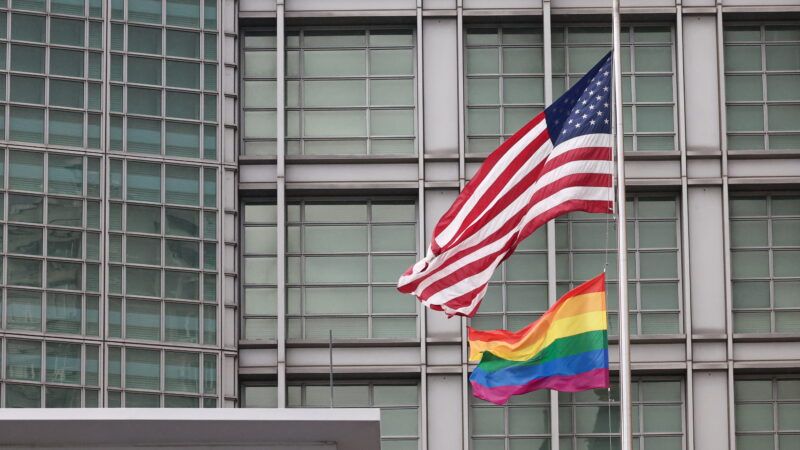
And there are many, many more examples of the left being willing to tilt the playing field on behalf of its own predilections: the repeated targeting of Christian hospitals for declining to perform abortions and Christian wedding vendors for declining to provide custom services for same-sex weddings; the military and State Department's embrace of rainbow flags and other controversial symbols of the progressive worldview; the use of civil rights "guidance" to impose left-wing dogmas on public schools and private businesses; the use of government grants and loans to prop up politically aligned groups and promote ideologically aligned causes. The list goes on.
In some cases, the Trump administration has used precisely the same tools Democrats were all too happy to wield a few years ago, but to accomplish different ends, and Democrats have suddenly cried foul. The point is that proponents of left-progressivism didn't just win the battle of ideas fair and square, as we're often told; they won in part by employing illiberal means that they immediately recognize as troubling when employed by their opponents.
While I'll be first, second, and third in line to decry the current president's shameless weaponization of our justice system, the left hasn't exactly covered itself in glory in its pursuit of charges against Trump since 2020. When the eminent Harvard law professor Jack Goldsmith is penning op-eds in The New York Times to warn that your prosecutions may have ominous consequences for the body politic, some introspection is probably in order.
4. By Abandoning Free Speech and Other Liberal Values
I'm strongly of the belief that some people deserve to be "canceled," inasmuch as private actors have every right to disassociate from people whose views or behavior they find abhorrent. The First Amendment protects our freedom to express ourselves without experiencing government censorship or retaliation; it doesn't give us a right to access someone else's platform or audience, and it certainly doesn't mean we won't face harsh criticism or even social ostracization as a result of our speech.
Nonetheless, even without involving state power, it is obviously possible to take things too far. When students shout down campus speakers or activists otherwise disrupt events to the point of obstructing people who want to hear a message (or gather for some other purpose) from being able to do so, their behavior may not technically qualify as violence or coercion, but it is indisputably hostile to liberal values. Likewise when it comes to some of the more egregious examples of out-of-control cancellation mobs we've seen in the last decade or so.
Private companies (unlike the state) are wholly within their rights when they take sides in the culture war. Yet they can't then be surprised when people come to see them as hostile combatants and treat them accordingly. When Amazon chooses to pull a book on a controversial topic by a conservative scholar, or when social media platforms mobilize in lockstep to block a damning news story about a Democratic candidate's son, they forfeit the trust and goodwill of a huge segment of the country. Their behavior, while legal, may still be tactically imprudent. Just look at what politicization of the public health field during COVID has wrought!
Worse, such actions contribute to the perception that every aspect of life needs to be viewed through a friend-vs.-enemy lens. That's an idea that many voices on the radical right have been all too happy to embrace, since it helps them convince people to accept their enmity-fueled, "will-to-power" approach to politics.
None of this absolves the Groypers and others who have been seduced by the illiberal right from responsibility for their actions. But it's next to impossible to convince people to lay down weapons that they have repeatedly seen turned against them. Trust me: I've been trying.
The president of the pro-Trump Claremont Institute, Ryan P. Williams, summed up his side's position in a 2021 blog post when he wrote that "conformity with [left-wing] fads, in word and deed, is being fanatically enforced across civil society and by national and state governments." He called on Americans to fight back by "wielding whatever levers of power are available"—including governmental levers*.
"Will the other side abuse governmental power if the tables are turned?" Williams asked. "Of course, but that will happen regardless."
It's a very good thing that prominent figures such as Yglesias have begun drawing attention to the left's illiberal turn. I welcome him to this cause. A story about the current crisis on the American right that doesn't grapple with the role played by the American left is worse than incomplete; it empowers the voices who say that politics will never be anything other than an all-out war for tribal domination, so we'd better just act like it. Liberalism offers an alternative, but it requires a lot more self-awareness from people on the left of center than we've seen so far.
CLARIFICATION: The original version of this article used ambiguous phrasing.
