

Reason.com - Free Minds and Free Markets
Reason logo Reason logo
  • Latest
  • Magazine
    • Current Issue
    • Archives
    • Subscribe
    • Crossword
  • Video
    • Reason TV
    • The Reason Roundtable
    • Free Media
    • The Reason Interview
  • Podcasts
    • All Shows
    • The Reason Roundtable
    • The Reason Interview With Nick Gillespie
    • Freed Up
    • The Soho Forum Debates
  • Volokh
  • Newsletters
  • Donate
    • Donate Online
    • Ways To Give To Reason Foundation
    • Torchbearer Society
    • Planned Giving
  • Subscribe
    • Reason Plus Subscription
    • Print Subscription
    • Gift Subscriptions
    • Subscriber Support

Log In

Create new account

Supreme Court

Prison Guards Forcibly Cut a Rastafarian Inmate's Dreadlocks. SCOTUS Will Decide If They Can Be Sued Over It.

The Supreme Court will hear Landor v. Louisiana Department of Corrections and Public Safety this fall.
Damon Root | 9.9.2025 7:00 AM

Share on FacebookShare on XShare on RedditShare by emailPrint friendly versionCopy page URL Add Reason to Google
Media Contact & Reprint Requests
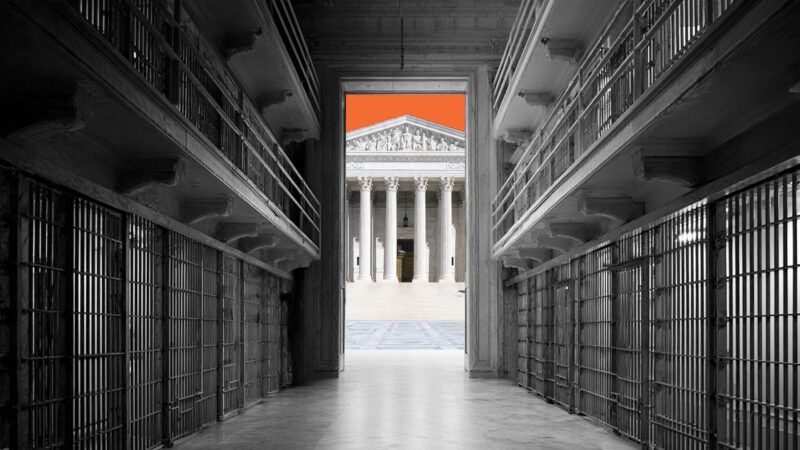
The Supreme Court building viewed through a prison hallway | Illustration: Eddie Marshall | Adam Parent | Dreamstime.com | Midjourney
(Illustration: Eddie Marshall | Adam Parent | Dreamstime.com | Midjourney)

When Louisiana prison guards told a newly arrived Rastafarian inmate named Damon Landor that he was required to cut off the knee-length dreadlocks that he had been growing for decades as part of his religious practice, Landor produced a copy of a three-year-old decision by the U.S. Court of Appeals for the 5th Circuit, which held that the state's prison grooming policy, which prohibited dreadlocks, was illegal as applied to Rastafarians under the terms of the federal Religious Land Use and Institutionalized Persons Act of 2000.

But instead of adhering to the 5th Circuit's unambiguous judgment, the guards threw Landor's copy of that ruling in the trash (literally), handcuffed him to a chair, and forcibly shaved his head.

Now, Landor is fighting for his right to hold those prison officials individually liable for their conduct. This fall, the U.S. Supreme Court will hear oral arguments in his case. The stakes are high not only for religious liberty, but also for the crucial importance of imposing greater accountability on rights-violating government agents.

You’re reading Injustice System from Damon Root and Reason. Get more of Damon’s commentary on constitutional law and American history.

This field is for validation purposes and should be left unchanged.

To be sure, the Supreme Court has not exactly done such a stellar job in recent years when it comes to holding rights-violating government agents to account. In fact, under the Court's bizarro world doctrine of qualified immunity, "the federal courts will acknowledge that a police officer violated the Constitution but then deem the officer not civilly liable for his unconstitutional actions because there was no prior court decision explicitly frowning on the same behavior." All too often, injured parties seeking redress for blatant law enforcement abuses are effectively locked out of federal court.

At the same time, however, the Supreme Court's recent activity at the intersection of religious liberty and government accountability has been somewhat more promising.

In Tanzin v. Tanvir (2020), the Supreme Court held that the Religious Freedom Restoration Act of 1993, which said that injured parties may sue to obtain "appropriate relief" when their rights are violated by the government, included the ability to sue federal officials in their individual capacities for damages.

At issue before the Supreme Court this fall in Landor v. Louisiana Department of Corrections and Public Safety is whether the same interpretation of the Religious Freedom Restoration Act that prevailed in Tanzin should now determine the meaning and scope of the Religious Land Use and Institutionalized Persons Act. In other words, if a federal prison guard had forcibly shaved Landor's head, Landor would be able to sue that guard individually for damages under Tanzin. The Landor case asks SCOTUS to decide whether the same thing should also be true when it comes to suing a state prison guard.

For advocates of religious liberty, civil liberty, and greater government accountability, this case is definitely one to watch.

Start your day with Reason. Get a daily brief of the most important stories and trends every weekday morning when you subscribe to Reason Roundup.

This field is for validation purposes and should be left unchanged.

NEXT: Before Trump Had Elon Musk, Nixon Had Howard Phillips

Damon Root is a senior editor at Reason and the author of A Glorious Liberty: Frederick Douglass and the Fight for an Antislavery Constitution (Potomac Books). His next book, Emancipation War: The Fall of Slavery and the Coming of the Thirteenth Amendment (Potomac Books), will be published in June 2026.

Supreme CourtReligion and the LawCivil LibertiesPrisonsConstitutionCourtsLaw & Government
Share on FacebookShare on XShare on RedditShare by emailPrint friendly versionCopy page URL Add Reason to Google
Media Contact & Reprint Requests

Show Comments (30)

Latest

America Was Not Founded by 'Tariff Men,' Contrary to This Painting in Trump's White House

Phillip W. Magness | From the July 2026 issue

Trump's Embrace of Psychedelic Therapy Could 'Save a Lot of Lives'

Jacob Sullum | From the August/September 2026 issue

On America's 250th Birthday, the United States Arms the World's Tyrannies

Matthew Petti | 7.4.2026 7:30 AM

1776 All-Stars: George Washington Was a Model of Restraint

Christian Britschgi | From the July 2026 issue

Review: This Iconic Musical Reminds Us That Open Debate Still Matters

Reem Ibrahim | From the July 2026 issue

Recommended

  • About
  • Browse Topics
  • Events
  • Staff
  • Jobs
  • Donate
  • Advertise
  • Subscribe
  • Contact
  • Media
  • Shop
  • Amazon
Reason Facebook@reason on XReason InstagramReason TikTokReason YoutubeApple PodcastsReason on FlipboardReason RSS Add Reason to Google

© 2026 Reason Foundation | Accessibility | Privacy Policy | Terms Of Use

This site is protected by reCAPTCHA and the Google Privacy Policy and Terms of Service apply.

Reason's July 4 Special!

For America's 250th, Get 2 Years of Reason for $17.76

Celebrate your independence with a subscription to Reason magazine, your most trusted source of honest, insightful news and analysis.

Subscribe to Reason


