

The First Amendment Protects Everyone, Even Facebook and Twitter
Florida passed a law to stop big tech “censorship.” But the law itself tramples First Amendment rights.
The last few years have seen a flurry of efforts from both right and left to regulate how social media platforms police their users. These laws and proposed laws have raised a key constitutional question: Is a platform's power to moderate user-created content protected by the First Amendment?
So far, courts have consistently held that platforms do have such protection. A critical case to be decided by the Eleventh Circuit in the new year will be the most important yet to address that question.
The law at issue is Florida's SB 7072, a sweeping measure ostensibly enacted to stop censorship by big tech. SB 7072 forces platforms to host all content from registered political candidates and "journalistic enterprises," even if that content would violate the platforms' terms of service. The law also imposes a consistency provision, which forces a platform to take down (or leave up) content if a judge rules that the platform has previously taken down (or left up) similar content. The law imposes penalties of up to $250,000 for each instance of noncompliance.
Florida Republicans argue that their "freedom of speech as conservatives is under attack by the 'big tech' oligarchs in Silicon Valley" and that SB 7072 "is about the 22 million Floridians and their First Amendment rights." By calling the bill a defense of free speech and by calling the platforms' content moderation "censorship," these supporters obscure the critical fact that editorial choices by private actors are categorically different from the abridgement of free speech by the state.
This distinction is crucial because the government is, and always will be, a monopoly; when it bans speech, citizens have no recourse. Private speech platforms, by contrast, have competition. Whether they are new social media companies or traditional newspapers, these platforms can only decide what speech they host and present. Those unsatisfied with their choices can choose to read or contribute elsewhere.
That difference is why the Supreme Court unanimously struck down a similar Florida law in 1974. By compelling newspapers to run editorials written by politicians they had criticized, the high court explained, the law infringed the papers' editorial right to choose what speech they print. Private citizens have the right to respond to criticism, but not the right to force others to host their speech.
So when Florida argued nearly 50 years later that SB 7072 is on the side of free speech, a federal district court correctly and unsurprisingly deemed those arguments "wholly at odds with accepted constitutional principles."
Florida nonetheless claims that social media platforms are not protected by these traditional First Amendment principles. The state argues that a social media site does not present a sufficiently "unified speech product" and that platforms have not engaged in enough content moderation in the past to merit a right to do so in the future. But as explained in a recently filed amicus curiae brief on behalf of the Cato Institute (which one of us co-wrote), the First Amendment's protections are not contingent on either of these criteria.
Private actors have a First Amendment right to choose what they say, what speech they host, and how they arrange it, regardless of the coherence of the speech they host or the extent to which they have edited that speech in the past. The First Amendment protects the editorial rights of all platforms, not just a privileged class of institutional media that have already engaged in heavy content moderation.
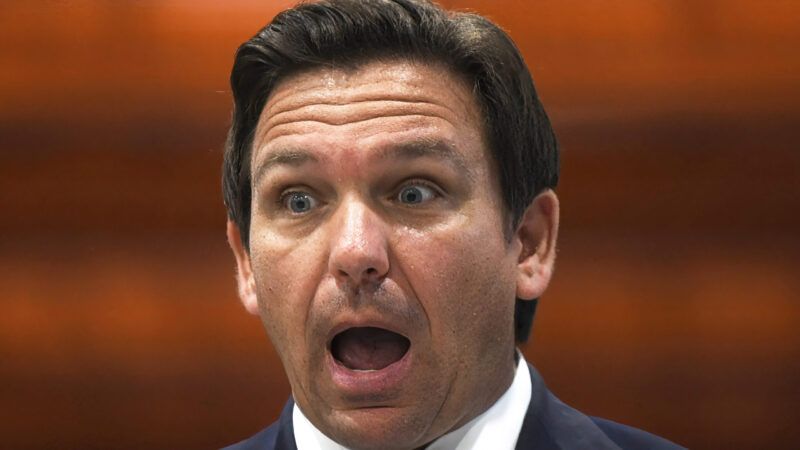
When he signed 7072, Florida Gov. Ron DeSantis likened social media platforms' content moderation to the "tyrannical behavior" of Fidel Castro and Hugo Chavez. If DeSantis is really concerned about free speech and authoritarianism, he should think twice before giving the government more control over private communications platforms.




