
There's No Market Failure in Choosing to Stay Home. So Why Subsidize It?
J.D. Vance would like to give money to people for choices they're already making—without a workable plan to actually pay for it.


J.D. Vance would like to give money to people for choices they're already making—without a workable plan to actually pay for it.

Plus: A nightmare squatting situation in Washington, D.C.


There's “no reason to think a federal incentive would work any differently from state incentives,” says one expert.

Plus: No one is drafting Enes Kanter Freedom into the WNBA, Congress fails to reform NCAA again, and why Field of Dreams nostalgia is no good
According to a newly published study, states that issued "extraordinarily large" economic development subsidies saw more lobbyists located in the state capital.

Gov. Gretchen Whitmer promised "generational" investments in her state, but as she leaves office, there's little to show for it.
Studies repeatedly show the credits aren't worth the cost.
The Trump administration can build on its success in the nuclear industry by getting out of the way.

A new Bears stadium and Gov. J.B. Pritzker himself stand to gain if the legislation passes.

Plus: governments get deeper and deeper into horse racing, fiscally conservative Republicans keep subsidizing stadiums, and Full Swing is in a doom spiral
Small-government conservatives are tripping over themselves to give millions of taxpayer dollars to billionaires.

Is there really a truck driver shortage? Or are companies just using that story to pull off an outrageous corporate welfare scam?


Politicians like New York’s Mayor Mamdani promise to solve a problem that they created.


“If we stop funding all sports stadiums tomorrow, then the world wouldn't change hardly at all," says one economist.

The company is backed by Volkswagen but still received considerable funding from state taxpayers.

Such attempts try to engineer outcomes while acting like political favors can substitute for market incentives.
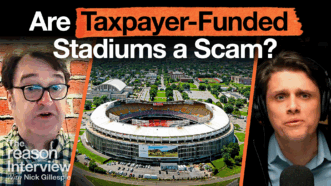
Economist J.C. Bradbury breaks down why taxpayer-funded stadiums are a bad idea, how team owners market them to politicians, and why another stadium building boom may be coming.

The real squeeze comes from government-distorted markets, not economic decline.

The Senate failed to pass a three-year extension on tax credits for the Affordable Care Act. But the only thing keeping it at all "affordable" was a flood of taxpayer money to conceal its true expense.
Real industrial policy has been tried—in many countries, by governments of every ideology. It fails every time for the same reason.

Democrats defend every entitlement and dream up new benefits. Republicans demand more defense spending and still more tax cuts.
Government interference in health care should be reduced, not expanded.
Four ideas that are better than extending Obamacare subsidies and a government shutdown.

Just as Biden’s preference for renewables distorted markets and harmed consumers, so too does Trump’s bias toward coal.
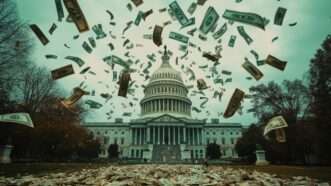
This time, Democrats turned the most basic government housekeeping into hostage drama.

Will city and state governments get swindled by sports teams?

Some policymakers now say the federal government's stake in Intel should be a "down payment" on a U.S. sovereign wealth fund. The idea is terrible.

Studios certainly appreciate free money, but lower fixed costs on labor are a much better incentive than tax credits they don't use.

LiveWire, an electric motorcycle company, sold just 55 motorcycles in Q2 2025 despite receiving millions of dollars in federal backing.

It's time to ask what level of spending Americans truly want with the money we actually have.

If Trump kills the deal over the team changing its name, he'd be doing the right thing but in perhaps the most corrupt possible way.
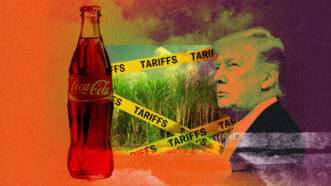
Government policy bears much of the blame for the use of high-fructose corn syrup, and Trump's policies will not change that.

Green energy is promising. But subsidies distort the tax code, misallocate capital, and favor companies already in the game.
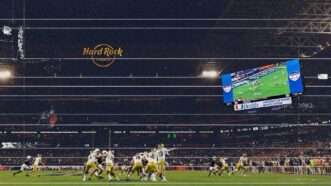
“There's no such thing as a free stadium,” says J.C. Bradbury. “You can't just pull revenue out of thin air.”

This is what Washington calls compromise: The House proposes $1, the Senate proposes $2, and somehow, the government ends up spending $3.
The tech and online retail giant will build at least two data centers in the Keystone State but pay no sales taxes on equipment.

Local governments love giving sweetheart deals to billion-dollar companies—now data centers instead of football stadiums.

Plus: A ridiculous tax carveout, Trump backs D.C. stadium, and Shedeur Sanders
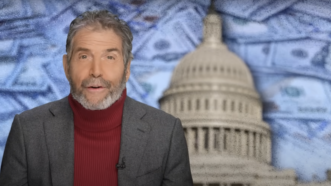
Eliminating the deficit requires cutting the biggest spending—defense, Medicare, Social Security. So far, Trump says he won't touch those.
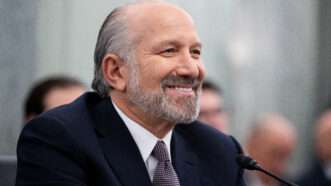
Howard Lutnick told senators that CHIPS Act subsidies were "an excellent down payment."

He set a process in motion that led to the state's wasteful and expensive film tax credits.
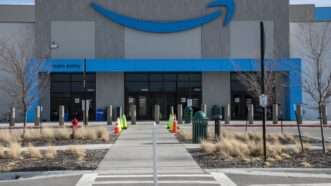
The newly published paper found that Amazon's entry in a metro area led to increases in wages, jobs, and home values.

California's governor is considering revamping wasteful state rebate programs for low-emitting vehicles.
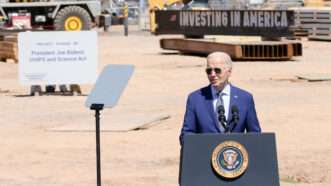
The law's biggest beneficiary is Intel, which lost more than half its market value this year as competitors soared.

If funding were approved, St. Petersburg residents would have been on the hook for a new stadium for one of baseball’s least attended teams.
Celebrate your independence with a subscription to Reason magazine, your most trusted source of honest, insightful news and analysis.




