
Source: apostrophe.ua, supposedly from comments posted on Valentine's Day of this year.

Mostly law professors | Sometimes contrarian | Often libertarian | Always independent | Est. 2002
Source: apostrophe.ua, supposedly from comments posted on Valentine's Day of this year.
The lyrics are in the top comment. "Video was made in cooperation with the Estonian Defence Forces."
A fun dig from commenter Noscitur a sociis, entirely apart from the substance or political valence of the comment to which he was responding. I generally prefer that comments be more substantive than that, but even I have to acknowledge high-quality snark.
Sergey Babkin is cofounder of 5'Nizza (apparently pronounced as the word "Friday"), a band that has been prominent in Russia and Ukraine, and around 2009 he put out a Russian-language song called "I'm a Soldier," which I think can fairly be described as focusing on the misery and pointlessness of soldiering. The YouTube version has more than 8 million views.
Then a few weeks ago, he put out a very different Russian-language language version, now up to 5 million views. (I briefly noted here why it makes sense that many pro-Ukraine songs might well be in Russian.) Have a look or listen at both:
[1.] The 2009 version:
https://www.youtube.com/watch?v=n8ukBgJX2tw
Here's a translation, free-riding largely on this page (thanks, unknown katya) but with some modifications:
I'm a soldier
I haven't slept in five years
And I have dark circles under my eyes
Haven't seen them myself
But so I've been told
From World Trademark Review (Tim Lince):
WTR can reveal that a Ukrainian border guard who refused to surrender to a Russian warship has filed an EU trademark application for the phrase that went viral during their stand-off. It comes as reports emerge of major brands being targeted with rogue trademark filings in Russia, while opportunists around the world file for terms related to the military conflict.
At the end of last month, a Russian naval vessel requested that 13 Ukrainian border guards on Snake Island surrender. Instead of giving themselves up, the 13 soldiers went viral for telling the Russian warship to "go f*ck yourself". Initial reports (later contradicted) suggested that the soldiers were killed after the Russian warship shelled the island in response. The actions of the men received global coverage and plaudits, and this week the Ukrainian government even announced a postage stamp representing the phrase.
WTR has learned that the soldier who uttered the 'f*ck yourself' phrase – with permission obtained from his family and the Ukrainian military – is seeking an EU trademark for the term (in both Cyrillic script and English). It was filed yesterday by Taras Kulbaba, founder and lawyer at Bukovnik & Kulbaba, and covers a variety of goods and services from clothing and bags to entertainment and NFTs.
Andrey Makarevich, another founding father of Russian (originally Soviet) rock was interviewed on a Ukrainian TV program two weeks ago. Unsurprisingly to me, he spoke in Russian, though the interviewers asked him started by asking questions in Ukrainian (they later switched to Russian). They asked him, among other things, how messages opposing the war can be spread in Russia, and he understandably answered that he didn't know, though he thought it was important to try and he hoped that eventually the word would get out.
Instead, he sang an older song of his that is a nice bookend to the beautiful but deeply pessimistic Vertinsky song sung by Boris Grebenshchikov, which I blogged yesterday. If you need some cheering up after hearing that one, here's a translation of Makarevich's (again loose and not rhymed and metered, which of course saps the words of their power):
Believe not in promises empty and tales,
The Savior won't save you from prison or ruin,
But there's slightly more life than death in this world,
And light in the world a bit more than the dark.
This new article of mine is now out, in the NYU Journal of Law & Liberty. The Introduction:
In several major cities and counties, in some territories, perhaps in the whole states of California and Montana, and to a small extent in Minnesota, private businesses may not discriminate against patrons based on certain kinds of political activities. In most of these jurisdictions (plus in South Carolina), it's also illegal to discriminate based on political activities in housing (and sometimes in commercial real estate transactions). Some of these bans are narrow, just protecting the decisions to belong to or support a political party. Others are broader, applying to political advocacy more generally, including political advocacy on the business's premises.
I don't know whether these rules are sound in essentially protecting political affiliation and political expression like how most antidiscrimination laws protect religious affiliation and religious expression. But I do believe they are generally constitutionally permissible in many situations, given that property owners generally don't have a First Amendment right to exclude speakers or speech they dislike, and given the broad acceptance of bans on discrimination based on religious affiliation. And I think it's helpful to gather these rules so as to better understand the options that legislators have chosen with regard to this question, especially when evaluating similar new proposals. This is particularly so given the interest in using public accommodations law as a model for limiting social media platforms' ability to block users based on their speech or political ideology.
It's also helpful to see these rules when considering the implications of certain readings of public accommodation law more broadly. Say, for instance, that courts conclude that a wedding photographer has no First Amendment right to refuse to photograph a same-sex wedding in a state with a ban on sexual orientation discrimination by public accommodations. A photographer would then have no First Amendment right to refuse to photograph a Nazi or Communist event in a jurisdiction with a ban on political discrimination by public accommodations. Indeed, briefs and an opinion in such cases have drawn this analogy.
Here, then, is the list of such bans that I have found, to accompany an older article of mine on laws banning political discrimination by employers. I arrange these roughly in order from narrowest to broadest, but only roughly; the scope of some of them is hard to determine, and the scope of others doesn't fall on a neat spectrum.
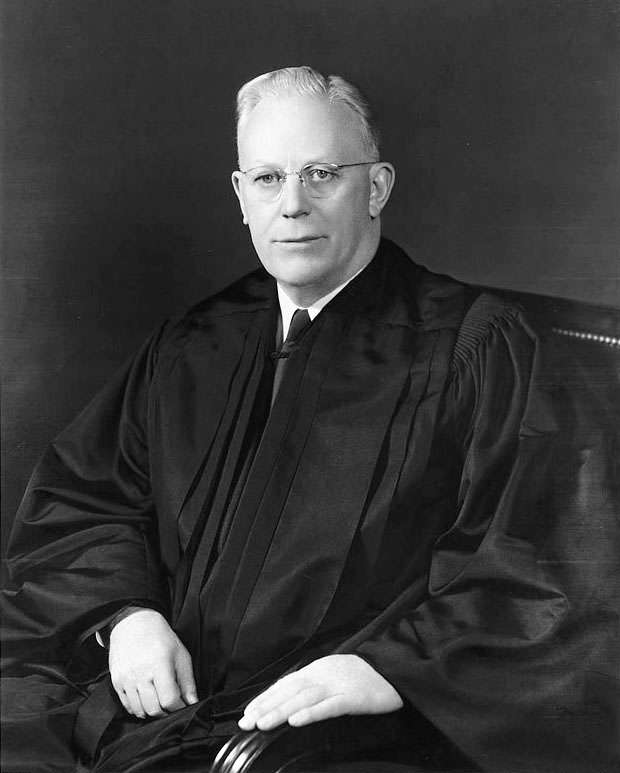
3/19/1891: Chief Justice Earl Warren's birthday.
From Burghardt v. Yvon, decided today by the California Court of Appeal, in an opinion by Justice William Dato, joined by Justices Cynthia Aaron and Truc Do:
Brigitte Yvon's dog, Davie, was severely burned during or soon after undergoing routine surgery. Yvon settled the potential veterinary malpractice claim against Dr. James Theodore Burghardt, Jr. and his corporate practice, Companion Pet Care, Inc. (collectively, Burghardt). This case erupted later after Yvon posted a very uncomplimentary Yelp review about Burghardt and the incident. Burghardt responded by suing Yvon for[, among other things,] defamation ….
On February 21, 2019, Burghardt performed a "neuter and scrotal ablation surgery" on Davie. He told Yvon the surgery went well, and she took Davie home that same afternoon.
Davie "whimpered" the first night home. Over the next few days, he was lethargic and "whined some." Yvon stayed home to care for him and "even accompanied him outside to go to the bathroom" to make sure he stayed out of harm's way.
On March 1, Yvon noticed the fur on Davie's back was wet. She assumed he had been licking the area. But when it was wet the next day, she pushed the thick fur aside and saw blood. She clipped away some of the wet fur, revealing a large oozing and bleeding wound. Yvon quickly took Davie to an animal hospital, where the veterinarian found this severe burn under his fur:
Boris Grebenshchikov, a well-known Russian singer and songwriter, sometimes apparently labeled the "Grandfather of Russian Rock," performed this song on March 2 in London, saying "The war between Russia and Ukraine is madness, and the people who made it are the shame of Russia." Various sources (e.g., here, here, and here) report that both appearances by Grebenshchikov and performances of any of his work have been banned by Russian authorities, though I can't vouch for the accuracy of that.
I found the performance quite affecting: The sentiment is hardly novel, but the occasion (and Grebenshchikov's performance) gave it heft. Then I looked more closely, and saw that it was in fact not novel—it was written in 1917, under the title "That which I must say," by the great Russian singer and songwriter Alexander Vertinsky, apparently prompted by the death of young anti-Bolshevik soldiers in the Communist revolution. (Grebenschikov's version changes some words, but only slightly.)
It is a deeply pessimistic song, from a part of the world that has long had much to be pessimistic about. For those who can't read the Russian text, here is my inexpert and regrettably unpoetic translation.
I don't know why, and who needs it,
Who sent them to die, with an untrembling hand,
Only that so mercilessly, so evilly and needlessly,
They lowered them into eternal rest.
Straight teeth, prurient firefighters, and Fresh American Beef.
Please enjoy the latest edition of Short Circuit, a weekly feature from the Institute for Justice.
New on the Bound By Oath podcast: With the doors to federal courthouses closing on civil rights plaintiffs, the final episode of the season looks at state constitutional and common law causes of action as an alternative way to hold government officials accountable for their misconduct.
Friends, you might enjoy a little feature we run over the at the Center for Judicial Engagement's blog called The State Con Law Case of the Week. This week, a heartening but somewhat curious opinion from the New Jersey Supreme Court on an individual's "'right to determine how best to pursue her personal and financial affairs' without the interference of an attorney." Striking down a law that required parties to a "palimony" agreement (alimony, but for pals) to each consult a lawyer separately, the court engaged in some reasoning that … we engage with. History buffs will enjoy the opinion's discussion of the provinces of East New Jersey and West New Jersey.
A lecture on textualism at the Case Western Reserve University School of Law.
Earlier this month, the Honorable Neomi Rao of the U.S. Court of Appeals for the D.C. Circuit delivered a lecture on "Textualism's Political Morality" at the Case Western Reserve University School of Law. We were honored to be able to host Judge Rao, and a video of the lecture is below.
This lecture was part of the Sumner Canary Memorial Lecture series, which has included many prominent jurists, including three currently sitting members of the Supreme Court. Prior Canary lectures may be found here.
Privacy law should supplement the First Amendment's anonymity protections.
First Amendment anonymity safeguards have been vital over the past half-century, but they have limits. The constitutional protections prevent certain uses of government power to unmask people. Cases like Talley limit the government's ability to force authors to disclose their real names. And John Doe online subpoena opinions protect online anonymity when a private party seeks to use a court-issued subpoena to compel the disclosure of identifying information. But due to the state action doctrine, these precedents generally do not restrict purely private activities that could compromise a person's anonymity.
We disclose information to companies, the government, and other people that, when pieced together, can provide a roadmap to our identities. This occurs even when we assume that we are anonymous. As Helen Nissenbaum wrote in 1999, while anonymity in the computer age is not impossible, "achieving it is a more demanding business than merely allowing people to withhold their names."
My book outlines three primary challenges to maintaining anonymity that are largely beyond the reach of the First Amendment protections. First, some online platforms have adopted "real-name" policies, prohibiting customers from using their services anonymously or pseudonymously. Second, the vast amount of public information that is available about people enables them to be unmasked, even when they try to speak anonymously online. Third, companies maintain large swaths of unregulated personal information that can make it harder to operate anonymously.
3/18/2008: District of Columbia v. Heller argued.
What's on your mind?
The Ninth Circuit decides the Riley's American Heritage Farms case.
From Judge Sandra Ikuta's opinion today (joined by Judges Mark Bennett and Ryan Nelson) in Riley's American Heritage Farms v. Elsasser:
This case involves a school district that severed its longstanding business relationship with a company that provides field trip venues for public school children. The school district took this step after the principal shareholder of the field trip vendor made controversial tweets on his personal social media account, and some parents complained.
In response to the school district's adverse action, the field trip vendor and its shareholder sued the responsible public school officials under 42 U.S.C. § 1983 for violating their First Amendment rights. We conclude that there is a genuine issue of material fact whether the plaintiffs' First Amendment rights have been violated, but the school officials are entitled to qualified immunity as to the plaintiffs' damages claims because the right at issue was not clearly established when the conduct took place. However, the district court erred in granting summary judgment to the school officials on the plaintiffs' claim for injunctive relief, because there is a genuine issue of material fact whether the school officials are maintaining an unconstitutional, retaliatory policy barring future patronage to the vendor….
A lot of our readers are persuaders by profession. What do you think of Schwarzenegger's video?
https://twitter.com/i/status/1504426844199669762
I watched this video (see also this news story), and thought it was very effectively crafted. (I'm sure it was also heartfelt on Schwarzenegger's part, but sincerity by itself isn't enough.) I thought the opening about the Russian weightlifter hero of Schwarzenegger's childhood was especially effective, as was the connection back to him in the end. Nothing counterintuitive, to be sure; one is told to try to build a connection with the audience, and make clear that you're on their side even if you're attacking someone connected to them.
I just thought this was particularly well-executed, in part because the story was so concrete and vivid. Even the little touch about the 14-year-old Schwarzenegger's handshake with the Russian weightlifter (Yuri Vlasov), and how Schwarzenegger (now 74) still had a child's hand that was out of proportion to the powerful Vlasov's, struck me as affecting. Same with the story of how he kept Vlasov's photo in his room as an inspiration, despite his father's objections.
I think Schwarzenegger's forthright admission of his father's having been in the Nazi army in World War II was also effective. To Russians generally, and I expect especially to Russians who have been listening to Putin's propaganda, those wounds remain fresh. It was necessary for Schwarzenegger to "draw the sting," as trial lawyers say, of his Germanness (Russians understandably wouldn't much distinguish the Austrians from Germans here) and of his family connection. But I thought he did this especially well, and turned it around against Putin. Indeed, he painted a story of change—of the father's Nazi past being replaced with the son's respect for Russia and desire for peace, and implicitly of the dark days of World War II being replaced by a more peaceful time. And that, I think, helped send the message that a similar change in Russia was possible as well.
Of course, much depends on Russian public attitudes, of which I know little. I assume Schwarzenegger, as a memorable movie action hero, is big there (as he apparently once was); but I'm not sure, and I'm also not sure how his visible age will affect that message. As I tell the students in my Persuasion class, one thing to remember about persuasion is that it's often unfair, and you can't expect it to be fair. At 74, one is surely entitled to look old, but that may well unfairly undermine one's persuasiveness in certain contexts, or unfairly strengthen it in others. (Indeed, perhaps it's unfair that one's persuasiveness should be strengthened by the fact that one was an athlete and a movie star; but, again, none of this is about fairness.) And of course I can't speak about the degree to which such appeals to the Russian people will indeed affect the actions of those who can actually control events.
Still, my tentative reaction is that this is quite effectively done, speaking as someone who is a student of persuasion, entirely apart from the merits of the matter. What do you think?
Today's decision in Knight v. McLaughlin (N.D. W. Va.) adopts the Report and Recommendations that entered a default judgment for the plaintiff in a libel case; the underlying libel alleged that plaintiff had sexually assaulted a 12-year-old girl (within the Society for Creative Anachronism). The case was litigated under West Virginia law, though in federal court because of the diversity of citizenship between the parties.
The interesting legal twist here is that the court enjoined "Defendant from publishing the same or similar statements about Plaintiff that are the subject of this matter." Narrow anti-libel injunctions are generally viewed as constitutional under modern First Amendment law; but West Virginia appears to be one of the few states that still forbids them under its own law, and I think the district court should have applied that law and refrained from issuing the injunction. I also think that injunctions against publishing "similar statements" are unconstitutionally vague and overbroad.
I submitted an amicus brief on my own behalf so arguing; the court denied as moot my motion for leave to file the brief—but I assume that it did read the brief, and just concluded that my arguments were mistaken. Unfortunately, since the defendant hasn't really been participating in the litigation, it seems unlikely that she will appeal, so the Fourth Circuit won't get a chance to consider the question. But I thought I'd again pass along my brief, just in case some people are interested
[* * *]
Summary of Argument
[1.] Under Erie, this Court should not issue an injunction unless state law authorizes it. Lord & Taylor, LLC v. White Flint, L.P., 780 F.3d 211 (4th Cir. 2015); Kramer v. Thompson, 947 F.2d 666, 676 (3d Cir. 1991). And West Virginia law appears to forbid anti-libel injunctions. Kwass v. Kersey, 81 S.E.2d 237, 245 (W. Va. 1954).
[2.] If this Court nonetheless believes that West Virginia law does not bar such an anti-libel injunction, the First Amendment would not bar it, either, if the junction is properly narrowed and provides sufficient procedural protections to the defendant.
Celebrate your independence with a subscription to Reason magazine, your most trusted source of honest, insightful news and analysis.




