The Volokh Conspiracy

Mostly law professors | Sometimes contrarian | Often libertarian | Always independent | Est. 2002

The Volokh Conspiracy

Free Speech

Seventh Circuit Rejects Free Speech / Free Exercise Arguments Against Mask Mandate

|

From Mahwikizi v. CDC, decided Monday by the Seventh Circuit (Judges Frank Easterbrook, Diane Wood & Thomas Kirsch II):

Mahwikizi works for a rideshare business. As a Catholic, he practices the "Good Samaritan Principle," which instructs him to help those in need. He says that doing so became difficult when, in 2021, the Centers for Disease Control and Prevention issued a pandemic-mitigation order, the federal mask mandate. The mandate required that people wear masks during commercial transit, including rideshare use. As a result, he had to cancel orders from customers who ordered rides but refused to wear a mask. (He still received payment from his company for the rides.) The mandate left him free to drive these people noncommercially….

[Mahwikizi believes] that the mask mandate violates his free-speech rights. He contends that his desired "speech" of driving paying, maskless customers is not commercial: if he denies a customer a ride for refusing to wear a mask, he is paid anyway and thus, he concludes, he lacks a commercial incentive to drive that passenger. But the district court's ruling that driving paying customers is commercial activity was an alternative to its primary ruling that driving them is conduct, not speech. "[A] message may be delivered by conduct that is intended to be communicative and that, in context, would reasonably be understood by the viewer to be communicative." But "[s]ymbolic expression of this kind may be forbidden or regulated if the conduct itself may constitutionally be regulated, if the regulation is narrowly drawn to further a substantial government interest, and if the interest is unrelated to the suppression of free speech." The government "may not, however, proscribe particular conduct because it has expressive elements."

Based on these principles, Mahwikizi's free-speech claim fails for two reasons.

Read More

Sunday Closing Laws and New Year's Eve

A federal court holds that New York can restrict alcohol sales when NYE falls on a Sunday

|

UPDATED: Not sure what happened when I tried to post before, but here's what I was trying to say:

It may be hard for people to believe, but even the city that doesn't sleep occasionally takes a break from drinking. A longstanding NY State law prohibits bars from selling alcohol from 4:00 to 10:00 AM on Sundays (and from 4:00 to 8:00 AM on weekdays). The state liquor authority grants all-night permits on an exceptional basis--but never, as the song says, on Sunday.

This year, New Year's falls on a Sunday, and Eris Evolution, a bar in Brooklyn, wishes to serve alcohol all night. The state liquor authority has declined to give the bar a permit, and Eris Evolution has sued in federal court, arguing that the NY restriction violates the Establishment Clause.

Last month, the Eastern District of New York ruled for the state. Judge Block reasoned that NY's rule was constitutional under McGowan v. Maryland (1961), in which the Supreme Court ruled 8-1 in favor of the constitutionality of Sunday closing laws generally. The McGowan Court reasoned that, while Sunday closing laws originated in a desire to maintain the Christian sabbath, they had long since become secular in nature--a way for the state to promote a uniform day of rest and relaxation.

In our latest Legal Spirits podcast, my colleague, Marc DeGirolami, discuss the NY case and the Court's jurisprudence regarding Sunday closing laws more generally. How has the Court's treatment of Sunday closing laws affected the way Americans perceive Sunday today? And what are the prospects for new Sunday closing laws?

Eris Evolution has appealed, and by the time you read this, the Second Circuit may have weighed in. Meanwhile, listen to our podcast--and Happy New Year!

Sexual Autonomy

The Tort of Seduction: Still a Thing in North Carolina

North Carolina precedents have defined tortious seduction as "intercourse induced by deception, enticement or other artifice."

|

In High v. Wake Chapel Church, Inc., decided today by the North Carolina Court of Appeals (Judge Chris Dillon, joined by Judges Richard Dietz and Lucy Inman), plaintiff had been a member of defendant congregation:

Plaintiff commenced this action, claiming Bishop Wilkins "groomed" her for about three years beginning in 2015 when she was 15 years of age, culminating in several sexual encounters and assaults by Bishop Wilkins with and upon Plaintiff in 2018 and 2019. She asserted claims against Bishop Wilkins for his actions and against the Church based on respondeat superior and on its own negligence in its hiring, retention, and supervision of Bishop Wilkins….

Bishop Wilkins only appeals the trial court's denial of his motion to dismiss Plaintiff's claim for seduction. Bishop Wilkins contends that we have jurisdiction to consider his appeal, arguing that the claim involves ecclesiastical matters and thus affects his First Amendment rights. Indeed, our Supreme Court has recognized that a substantial right is affected when "a civil court action cannot proceed [against a church defendant] without impermissibly entangling the court in ecclesiastical matters." And when a lawsuit requires a civil court to judge a religious belief or practice, subject-matter jurisdiction is not present, and the suit fails to state a claim upon which relief can be granted. …

[But w]hile courts should not get involved in ecclesiastical matters, our courts may resolve claims that touch on ecclesiastical issues if they can be resolved using "neutral principles of law." We have reviewed Plaintiff's claim for seduction and agree with the trial court that this claim can be resolved using neutral principles of law. Specifically, neutral principles of law can be applied to determine whether Bishop Wilkins procured a sexual relationship with Plaintiff by "deception, enticement or other artifice." Hutchins v. Day (N.C. 1967)….

Read More

Law & Government

Another Alternative to Student-Run Law Reviews

The Journal of Legal Analysis at Harvard Law School is trying to broaden its coverage

|

I've blogged before about the controversies over student-run law reviews, which I think generally get a bad rap. But I nonetheless think they do have plenty of predictable or systematic flaws -- being vulnerable to intellectual fads or disfavoring certain kinds of scholarship that student editors may find hard to appreciate. It seems to me that the best intellectual insurance against these kinds of problems are a number of faculty-edited law journals that can publish excellent pieces that do not necessarily match the fads of the day.

One excellent example is of course the Journal of Free Speech Law, which Eugene is the editor in chief of. Another one near to my heart is the University of Chicago's Supreme Court Review, which I co-edit. But these journals both have relatively specialized coverage, so not all pieces will be a great fit.

So I want to draw your attention to one more good option to newly consider: the Journal of Legal Analysis, a faculty-edited journal published by the Oxford University Press on behalf of Harvard Law School. JLA has been publishing excellent work for some years, but it is making an effort to recommit to the breadth of a generalist law journal, and I recently agreed to join as one of the Co-Editors to help find and evaluate strong work.

If you have something good, I hope you consider submitting it.

Also worth mentioning, the goal is to make submission relatively simple and initial review relatively quick. From the new Editors-in-Chief:

Our goal is to take the best parts of "peer review" while jettisoning the not-so-great parts. The most important benefit of peer-review, of course, is that our editors, with the help and advice of experts from around the world, will select articles that make genuine, significant contributions to their fields, and provide authors with constructive, substantive feedback. Needless to say, student law review editors are not reliably well-equipped to provide this kind of screening or substantive input.

At the same time, we believe we can avoid the exasperating delays that often characterize the peer-review process. We promise our authors a very quick turn-around—in most cases, we should be able to provide at least a preliminary decision within a week or two. Given that time frame, and because we review continuously throughout the year, authors can submit pieces to JLA and get a decision during months when student-run law reviews are not considering submissions.

More generally, we want to make submitting to JLA cost-free for authors who might also be weighing law review submissions. We do not require manuscripts to be in any particular style or format. We are happy to consider standard law review-style submissions; and equally happy to read shorter pieces with less background material and fewer footnotes. Moreover, the manuscripts we accept for publication are not subject to extensive or invasive editing. We publish articles on-line on a rolling basis, as soon as they are complete. And all our articles are fully open access, widely available and disseminated on-line on a platform supported by Oxford University Press.

Electoral Count Act

Congress Moves Forward on Electoral Count Act Reform

The new legislation would fix many of the problems that helped lead to the attempt to overturn the results of the 2020 election.

|

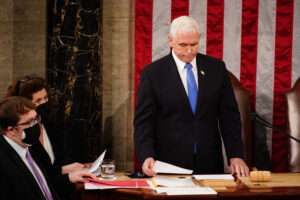
Then-Vice President Mike Pence oversees electoral vote count in Congress, January 6, 2021.Jim LoScalzo - Pool via CNP/picture alliance / Consolidated News. (Jim LoScalzo - Pool via CNP/picture alliance / Consolidated News Photos/Newscom)


Congress is moving forward on reforming the Electoral Count Act of 1887, by including the Electoral Count Reform and Presidential Transition Improvement Act in a massive spending bill that must be approved within the next few days to keep the federal government funded:

A bipartisan bill that would change how members of Congress could object to electoral votes has been included in a sweeping spending bill lawmakers unveiled early Tuesday that must be approved in the coming days to fund all government agencies and departments.

The Electoral Count Reform and Presidential Transition Improvement Act, sponsored by Sen. Susan Collins (R-Maine) and Sen. Joe Manchin III (D-W.Va.), would amend the Electoral Count Act of 1887 and reaffirm that the vice president has only a ministerial role at the joint session of Congress where electoral college votes are counted. The measure also would raise the threshold necessary for members of Congress to object to a state's electors.

The bill was driven by the Jan. 6, 2021, attack on the Capitol by a mob of President Donald Trump's supporters seeking to stop the certification of Joe Biden's win. Lawmakers have warned a similar effort could disrupt future electoral counts without changes to the process.

The version that ultimately  gets enacted will probably be close to that developed by a bipartisan group of senators, rather than the possibly slightly better version that passed the House of Representatives in September. But either version will be a significant improvement over the status quo.

In a July post, building on the work of Andy Craig, then of the Cato Institute (a leading expert on ECA reform), I summarized the three main goals a reform bill achieve:

1. Preventing state governments from, in effect, changing the rules after election day, in order to reverse election results they don't like.

2. Preventing Congress from throwing out electoral votes for bogus reasons (as some GOP members of Congress sought to do after the 2020 election).

3. Making it more clear that the Vice-President does not have the power to invalidate electoral votes (a step then-VP Mike Pence rightly refused to take in January 2021, despite the urging of Donald Trump).

Both the Senate and House bills make major improvements on all three points, and have, for that reason, been praised by election law experts across the political spectrum. Craig has a helpful breakdown of the similarities and differences between the two bills here.

ECA reform will not fix all the ills that ail American democracy. But it will close some important loopholes revealed by the traumatic aftermath of the 2020 election. This reform act is not only good enough for government work, but one of the rare acts of Congress that is just plain good, period!

Campus Free Speech

Can Professors be Sanctioned for Political Flyers?

District court's opinion in Gruber v. Bruce shows problem with how Pickering balancing is done

|

Fearless blog leader Eugene Volokh highlighted a recent federal district opinion involving the First Amendment and political speech by state university professors. Unfortunately, the opinion illustrates the problem with how many courts conduct a Pickering balancing test in university settings. An appellate court could productively correct this error if it paid head to my forthcoming Wake Forest Law Review article on "What Can Professors Say in Public?"

To briefly recap, Professor Andrew Donadio serves as the faculty advisor for the local chapter of Turning Point USA at Tennessee Tech University. Professor Julia Gruber and Andrew Smith (an instructor) produced a flyer that they placed around campus declaring that the "hate and hypocrisy" of "Professor Donadio and Turning Point USA" are "not welcome at Tennessee Tech" and that there should be "no unity with racists" and that "hate speech is not free speech." In response to a complaint by Donadio, Provost Lori Bruce disciplined Gruber and Smith for violating Policy 600, which requires members of the faculty "to conduct themselves fairly, honestly, in good faith, and in accordance with the highest ethical and professional standards." The flyer can be seen here. Gruber and Smith sued Bruce for retaliatory action against constitutionally protected speech. The district court upheld the university's discipline.

The Supreme Court laid down the relevant analytical framework for resolving such cases in Pickering v. Board of Education. When a government employee speaks in his or her personal capacity about a matter of public concern, the courts recognize some First Amendment interest against reprisal by the governmental employer. When such speech is at issue (as is the case here), then courts must balance the employee's First Amendment interests against the employer's interest in the efficient delivery of government services. That balancing is understood to require a highly contextual judgment.

Unfortunately, Tennessee Tech ignored its own policy against punishing speech that some might find "offensive" or "disagreeable" on the grounds that the flyer constituted unprofessional conduct and a "personal grievance" rather than political speech. The court agreed that "calling a colleague a racist is hardly collegial" and "sneaking around and dropping-off anonymous flyers . . . falls short" of "respectful" conduct. Even though the university had shown "little in the way of actual harm" (Donadio got a Fox News hit out of the dust-up and it was otherwise business as usual on campus), the court thought the university had an overriding "interest in fostering a collegial educational environment."

As I argue in the forthcoming article, such an analysis is completely unsuited to a university environment. The government's interest in fostering a harmonious working environment might be quite strong in the context of a police department, but in the context of professors at a university the demand for "harmony" and "collegiality" too easily becomes a heckler's veto aimed at silencing disagreeable political speech. As then-Judge Alito noted, "'Harassing' or discriminatory speech, although evil and offensive, may be used to communicate ideas or emotions that nevertheless implicate First Amendment protections." Although the district court quoted the 6th Circuit on a "university's interest in maintaining a hostile-free learning environment," it ignored that court's warning that such speech is protected when it "serve[s] the purpose of advancing viewpoints, however repugnant, which had as their purpose influencing or informing public debate."

As I argue in the paper:

The key question is what should count as disruptive speech in the university context. If academic freedom values are going to be adequately protected, the government employer's concern with fostering workplace harmony needs to be sharply cabined when it comes to the extramural speech of university faculty. The demand for harmony in academia can easily become a demand for "supineness and dogmatism." Reconciling academic freedom with the university employer's interest in preventing disruption requires more guidance than the Court has thus far provided. Protecting academic freedom means protecting "the freedom to teach and write without fear of retribution for expressing heterodox ideas." Universities should foster intellectual disruption, but they need not tolerate "interfer[ence] with the work of the school."

. . .

Professors who incite anger by expressing unpopular ideas or making use of inflammatory rhetoric are a byproduct of fostering a vigorous intellectual environment, and universities have no legitimate interest in disciplining them for ruffling feathers by speaking their minds. Professors who incite anger by being verbally abusive to students or staff, however, are not speaking as citizens or advancing ideas. They are not disrupting their workplace by challenging conventional wisdom but by bullying those around them. Professors who are merely "demeaning, rude, and insulting" give universities good cause to take action to curb their behavior. The Court has said that the "manner, time, and place" of a government employee's speech should weigh in the Pickering balance. Professorial speech that is directed to the broader community or to an audience and addresses a matter of public concern will always deserve a high degree of constitutional protection, even when members of the audience take offense, but the face-to-face hurling of personal insults at a student or fellow employee is much less likely to weigh in favor of a professor in a Pickering balancing.

The distribution of a flyer on a college campus denouncing the political activities of professors and student groups is precisely the kind of "free exchange of ideas" that Tennessee Tech has committed itself to tolerating and that the First Amendment protects on a state university campus. Speech is no less protected whether it offends the sensibilities of those on the left or on the right. Donadio should not be disciplined for his "shocking" speech, and Gruber and Smith should not be disciplined for their counter-speech.

Weaponizing professional conduct regulations on campus to suppress unpopular speech is the kind of action that courts should deter rather than encourage. Unfortunately, if not appropriately calibrated to the university context, the Pickering balancing test can subvert rather than protect First Amendment values.


Free Speech

Journal of Free Speech Law: "Free Speech Apart from Law," by Prof. Jeremy Waldron (NYU)

|

Just published as part of the "Non-Governmental Restrictions on Free Speech" symposium; the Introduction (the article, 2 J. Free Speech L. 107 (2022), is here):

Is there a moral principle of free speech? If so, how does it work? We are accustomed to think of free speech as something set up and sustained by law—by constitutional law in the United States upheld with strong judicial review—in a way that makes it hard to focus our thoughts on what morality in and of itself requires in this area. But it is something that's important to consider.

In this essay, I would like to get an understanding of some philosophical dimensions of the possible operation of the free speech principle—or a free speech principle—considered apart from law. Since domain makes a difference to such a principle's mode of application and what is at stake in the way it operates—I mean the domain of law as opposed to the domain of morality—I would like to set out some of the difficulties that might be involved in formulating and applying a free speech principle, unaided by law, in a purely moral or social domain. And in the second half of this essay, I shall call in aid the example of John Stuart Mill whose essay On Liberty tried to grapple honestly with the difficulties that a purely moral principle of free speech would have to face.

The question is not just academic. It is worth asking, first, as a practical matter, because we want to know how free speech operates at present in the United States in areas where the First Amendment does not apply—namely, areas that do not involve state action. The constitutional principle of free speech applies to the federal government and the states, not to private persons or entities. Congress may not pass any law abridging freedom of speech and (in our understanding of the Fourteenth Amendment) nor may state, county, or municipal legislators, or any other official entity like a state agency or a state university. But these are far from the only power holders in society, far from the only entities in a position to limit or challenge the free expression of ideas. So we may ask: How—in the sense of "by what principles?"—are these other power holders constrained?

Religion and the Law

EEOC Sues Over Employer's Refusing Religious Exemption from Flu Vaccine Requirements

|

From this press release sent out last Friday (see also the Complaint):

Children's Healthcare of Atlanta (CHOA), a pediatric healthcare system in Georgia, violated federal law when it fired a maintenance assistant for requesting a religious exemption to its influenza vaccination policy, the U.S. Equal Employment Opportunity Commission (EEOC) charged in a lawsuit it filed today.

According to the EEOC's suit, the maintenance employee, in accordance with CHOA's procedures, requested a religious exemption to CHOA's flu vaccination requirements based on sincerely held religious beliefs. CHOA had previously granted the employee a religious exemption in 2017 and 2018. In 2019, however, CHOA denied the employee's request for a religious accommodation and fired him, despite the employee's extremely limited interaction with the public or staff.

Read More

Free Speech

Court Rejects "Speech Integral to Criminal Conduct" Justification for Harassment Prosecution

|

In State v. Billings, officially released today, the Appellate Court of Connecticut (Judges Bethany Alvord, Nina Elgo, and Robert Clark), the court rejected defendant's stalking and harassment convictions that were based on defendant's public Facebook conversation with a third party (not the alleged victim). The conversation discussed defendant's possibly releasing incriminating photographs of the victim (who had had an extramarital affair with the defendant, and who had gotten a restraining order against the defendant).

The defendant argued that the stalking charge violated the First Amendment; the state responded that the stalking statute fell within the "speech integral to criminal conduct" exception to the First Amendment; but the court agreed with the defendant:

The operative language of the second degree criminal stalking statute provides in relevant part: "A person is guilty of stalking in the second degree when: (1) Such person knowingly engages in a course of conduct directed at a specific person that would cause a reasonable person to (A) fear for such person's physical safety or the physical safety of a third person, or (B) suffer emotional distress …." A "course of conduct" means "two or more acts, including, but not limited to, acts in which a person directly, indirectly or through a third party, by any action, method, device or means, including, but not limited to, electronic or social media, (1) follows, lies in wait for, monitors, observes, surveils, threatens, harasses, communicates with or sends unwanted gifts to, a person, or (2) interferes with a person's property …."

Although it is clear from the language of the stalking statute that it is directed at conduct, specifically, a "course of conduct," it is apparent that a "course of conduct" under § 53a-181d can be established through conduct and unprotected speech alike, similar to that of the criminal harassment statute.

The defendant argues that his stalking conviction was not based on any conduct but was based exclusively on the April 7, 2018 Facebook conversation—a constitutionally protected conversation that he had with a third party on his own Facebook page—and, thus, his conviction violates his first amendment rights. The state disagrees and argues that the defendant's first amendment rights were not violated because the speech contained in his April 7, 2018 Facebook conversation was not protected and the defendant's conviction was based on nonspeech conduct.

Although the state concedes that the defendant's speech contained in the April 7, 2018 Facebook conversation, which forms the sole basis for the defendant's convictions, "does not fall into the unprotected categories of speech of true threats, fighting words, or obscenity," it contends that the speech in question is unprotected because it falls within the speech integral to criminal conduct exception to the first amendment. We are not persuaded.

Read More

Supreme Court Issues Stay of District Court's "Title 42" Order

|

Chief Justice Roberts has issued a stay of the district court's order in Arizona v. Mayorkas. The bottom line is that the vacatur of the "Title 42" immigration order is on hold for now, with a very tight deadline for a response from the federal government. You can read more details in this Politico story. Here's a link to my earlier discussion of this case, including the tension between one court's vacatur and another court's national injunction. The unusual characteristics of this case raise fundamental questions about what kind of remedy vacatur is.

Guns

Judge Blocks California Fee-Shifting Statute That Targets Gun Lawsuit Plaintiffs (and Lawyers)

|

From Miller v. Bonta, decided today by Judge Roger Benitez (S.D. Cal.):

"It is cynical." "It is an abomination." "It is outrageous and objectionable." "There is no dispute that it raises serious constitutional questions." "It is an unprecedented attempt to thwart judicial review." Such are the Intervenor-Defendant Governor's expressed views regarding the fee-shifting provisions of a Texas law (S.B. 8) and, at least by implication, of California's § 1021.11. It is "blatantly unconstitutional," says Defendant Attorney General Rob Bonta. {To his credit, given the obvious, the Attorney General has refused to defend § 1021.11.} For the reasons that follow, as they may apply to S.B. 8, but apply clearly to § 1021.11, § 1021.11 is declared unconstitutional. Therefore, Defendants are permanently enjoined throughout the state from enforcing or taking any action to seek attorney's fees and costs pursuant to § 1021.11.

[A.] Texas S.B. 8 (§ 30.022) and California S.B. 1327 (§ 1021.11)

The Intervenor-Defendant Governor describes the California law as identical or virtually identical to a Texas law known as S.B. 8. But that is not quite accurate. S.B. 8, among other things, creates a fee-shifting provision that applies only to cases challenging abortion restrictions. It is codified at Texas Civil Practice & Remedies Code § 30.022. California's Code of Civil Procedure § 1021.11 applies only to cases challenging firearm restrictions. Both provisions tend to insulate laws from judicial review by permitting fee awards in favor of the government, tilting the table in the government's favor, and making a plaintiff's attorney jointly and severally liable for fee awards.

California's law then goes even further. As a matter of law, a California plaintiff cannot be a prevailing party. See § 1021.11(e). The Texas statute has no similar provision and thus it appears that a Texas prevailing plaintiff can be awarded his attorney's fees. The California provision, on the other hand, denies prevailing party status to a plaintiff, even a plaintiff who is entirely successful, and thus denies any possibility of recovering his attorney's fees. The California plaintiffs-never-prevail provision is not insignificant.

Read More

How Privilege Undermines Cybersecurity

Bonus Episode 435 of the Cyberlaw Podcast

|

Despite the title, rest assured that the Cyberlaw Podcast has not gone woke.

This bonus episode is focused instead on how cybersecurity is undermined by the attorney-client privilege.  To explore that question, I interview Josephine Wolff and Dan Schwarcz, who along with Daniel Woods have written an article with the same title as this post.

Their thesis is that breach lawyers have lost perspective as they've waged a no-holds-barred (and frequently losing) battle to preserve the attorney-client privilege for forensic reports that diagnose their clients' cybersecurity breaches. Remarkably for the authors of a law review article, they did actual field research, and it tells us a lot.

The authors interviewed all the players in breach response -- the breached company's information security teams, the breach lawyers, the forensics investigators who parachute in for incident response, the insurers and insurance brokers, and more. I am reminded of Tracy Kidder's astute observation that, in building a house, there are three main players – owner, architect, and builder – and that if you get any two of them in a room alone, they will spend all their time bad-mouthing the third. Wolff, Schwarcz, and Woods seem to have done that with the breach response players, and while the bad-mouthing is spread around, it falls hardest on the lawyers.

The main problem is that invoking attorney-client privilege to keep breach forensics confidential is not an easy sell. The courts have been unsympathetic. To overcome the undertow of judicial skepticism, breach lawyers end up imposing more and more draconian restrictions on forensic investigators and their communications. The upshot is that no forensics report at all may be written for many breaches (up to 95% of them, Josephine estimates). How does the breached company find out what it did wrong and what lessons it should learn from the incident? Simple. Their lawyer talks to the forensic firm, translates its advice into a high-level PowerPoint, and orally explains the cybersecurity details to the company's management and information security team. Really, what could go wrong?

In closing, Dan and Josephine offer some ideas for how to get out of this mess. I push back. All in all, it's the most fun I've ever had talking about insurance law.

Download the Bonus 435th Episode (mp3)

You can subscribe to The Cyberlaw Podcast using iTunes, Google Play, Spotify, Pocket Casts, or our RSS feed. As always, The Cyberlaw Podcast is open to feedback. Be sure to engage with @stewartbaker on Twitter. Send your questions, comments, and suggestions for topics or interviewees to CyberlawPodcast@steptoe.com. Remember: If your suggested guest appears on the show, we will send you a highly coveted Cyberlaw Podcast mug! The views expressed in this podcast are those of the speakers and do not reflect the opinions of their institutions, clients, friends, families, or pets.

Hearsay Evidence Admissible in Gun Violence Restraining Order Proceedings

So holds a California appellate panel, by a 2-1 vote.

|

In S.D. Police Dep't v. Geoffrey S., decided Friday (but posted today) by the California Court of Appeal (Justice Martin Buchanan, joined by Presiding Justice Cynthia Aaron), the court upheld a one-year Gun Violence Restraining Order that barred Geoffrey S. from possessing guns.

[1.] The court concluded that the statute allowed such orders to be issued based on hearsay evidence:

[A] GVRO proceeding is "procedurally truncated, expedited, and intended to provide quick relief …." These types of proceedings are all intended to prevent a threat of harm and designed to take less than a month to litigate from beginning to end. They all contemplate an initial ex parte or emergency order to be issued immediately for a limited duration of 21 days, followed by a noticed hearing to be held within 21 days of the initial order for the court to determine whether to issue a long-term restraining order. And a GVRO proceeding is also "heard by the court, not a jury, and is decided by the clear and convincing evidence standard of proof" by judges who "are particularly aware of the potential unreliability of hearsay evidence" and "are likely to keep this in mind when weighing all of the evidence presented." …

We recognize that a GVRO proceeding implicates the Second Amendment right to bear arms. But the Second Amendment has nothing to say about the admissibility of hearsay evidence. The Legislature has accounted for the importance of the right at stake by mandating a clear and convincing standard of proof. The clear and convincing evidence standard reduces the risk of error when particularly important individual interests are at stake, such as parental rights, involuntary commitment, and deportation….

"Considering the fact that the purpose of the [GVRO] statute is to prevent [gun] violence …, the expedited nature of the proceeding contemplated by the statute, and the Legislature's directive that the trial court shall receive [any evidence of an increased risk for violence] without qualification, we conclude that the [evidence] that a trial court may consider in making a ruling on a petition pursuant to [the GVRO statute] is not limited to nonhearsay [evidence]." Accordingly, we hold that hearsay evidence is admissible in a GVRO hearing under section 18175. At the same time, we caution that courts must bear in mind "the potential unreliability of hearsay evidence, … when weighing all of the evidence presented." …

Read More

Journal of Free Speech Law: "Public Calls for Censorship as Bad Speech," by Prof. J.P. Messina (Purdue, Philosophy)

|

Just published as part of the "Non-Governmental Restrictions on Free Speech" symposium; the abstract (the article, 2 J. Free Speech L. 87 (2022), is here):

Responsible speakers avoid trafficking in bad speech, that is, speech that they have reason to believe causes or constitutes net harm. Moreover, third parties have prima facie reason to suppress such speech. As recent events have made salient just how harmful speech can be, there has been a corresponding increase in calls to suppress or censor such speech. This article argues that there are three mechanisms by which calls to suppress bad speech themselves tend to cause or constitute harm. Paradoxically, then, those most concerned about the pernicious effects of bad speech ought to be especially reluctant to call for its suppression.

Free Speech

No Pseudonymity in Case Alleging Disability Discrimination Based on "Major Depressive Disorder"

“[I]t is reasonable to expect the person invoking the Court’s jurisdiction to set aside some of his privacy. Many statutes, such as the ADA [...] require a plaintiff to set aside his [] privacy and disclose information that he [] may otherwise wish to keep confidential.”

|

From Doe v. Medical Univ. of S.C., decided today by Magistrate Judge Mary Gordon Baker (D.S.C.):

Plaintiff John Doe, proceeding pro se, filed this civil action on May 31, 2022. Plaintiff alleges that he was improperly dismissed from Defendant Medical University of South Carolina College of Medicine on account of mental health issues he experienced following a traumatic brain injury. More specifically, Plaintiff claims he suffered from Major Depressive Disorder that prevented him from fulfilling certain program requirements, and that Defendant Medical University of South Carolina College of Medicine failed to provide guidance and make appropriate accommodations for him. [Plaintiff sued for disability discrimination and other claims. -EV]

To preserve the public's interest in judicial proceedings, there is a general presumption that an action should be prosecuted in the names of the real parties involved. The Federal Rules of Civil Procedure require that the identities of parties to a case be disclosed. See Fed. R. Civ. P. 10(a) ("The title of the complaint must name all the parties …"); Fed. R. Civ. P. 17(a) (requiring that an action "be prosecuted in the name of the real party in interest"). As such, when a party seeks to litigate under a pseudonym, the Court must "ensure that extraordinary circumstances support such a request by balancing the party's stated interest in anonymity against the public's interest in openness and any prejudice that anonymity would pose to the opposing party." In making this determination, the Court should consider:

Read More

"Strangers on the Internet" Podcast Episode 17: How to Survive Divorce and Break-ups

Divorce coach and journalist Amy Polacko shares her tips for moving on

|

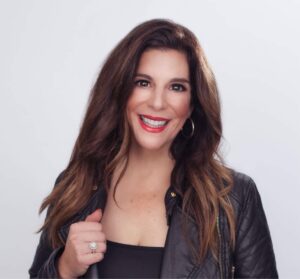
The seventeenth episode (Apple Podcasts link here and Spotify link here) of Strangers on the Internet with co-host and psychologist Michelle Lange features an interview with divorce coach and journalist Amy Polacko. This is the final episode of season 1, with season 2 to pick up in early January 2023.

Amy tells her story of overcoming two divorces and being a happy, successful single mom and entrepreneur. Hear Amy's top advice on how to get over every sort of break-up and leave narcissistic abuse behind. How long should you wait to date again after a divorce or break-up? If you're a parent, what is the right time to introduce a significant other to your child? Is there still a stigma against dating people who have been previously divorced, and are they actually likely to make more or less committed partners? Pull up a chair for some life advice from the heart of Connecticut!

Amy Polacko
More