

The Volokh Conspiracy
Mostly law professors | Sometimes contrarian | Often libertarian | Always independent
Thoughts on the Potential Broader Significance of the Supreme Court's Tariff Decision
Only time will tell how great the impact of the ruling will really be. But, at this point, it seems like a very significant decision.
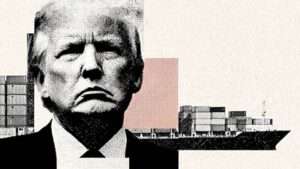
How significant is the Supreme Court's decision striking down Trump's massive IEEPA tariffs in Learning Resources v. Trump? Only time will truly tell. It's often hard to fully appreciate the importance (or lack thereof) of a decision until we have some historical perspective on it, and see how it impacts future cases. But there is good reason to believe it will have at least some substantial impact, perhaps in multiple ways.
Certainly, a good many prominent observers seem to think so. Conservative New York Times columnist David French (who is also a well-known lawyer and legal commentator) wrote that the ruling "may prove to be the most important Supreme Court decision this century" and that "it may have saved the republic." Harvard law Prof. Jack Goldsmith - a former high-ranking Bush Administration official and leading expert on executive power and foreign affairs issues - describes it as "a massive defeat for the president" and a "blockbuster on many levels." After initially downplaying its significance, my co-blogger Josh Blackman now says the decision is "the Worst Judicial Defeat in Presidential History." He adds that "I think we are already seeing that Trump's efforts to use alternative statutory authorities will not work."
I rarely agree with Josh, in recent years. But I hope he turns out to be right about these two points. And I certainly believe the effort to use "alternative statutory authorities" deserves to be rejected by courts. See my recent article about why Trump's new Section 122 tariffs are illegal.
For my part, I think it is hard to make definitive judgments about the ruling's significance at this point. And it is particularly hard for me to be objective about it; I was one of the attorneys on the case, and it had its origins in a blog post I wrote at this very website. An impartial observer of this case I am not.
That said, I doubt that it is either the most important decision of the century, or the biggest judicial defeat a president has ever experienced. Those are very high bars! In addition, it is difficult to compare the impact of decisions in very different fields of law. But I do think the ruling is likely to prove significant in various ways.
First, the Court rejected Trump's effort to use the International Emergency Economic Powers Act (IEEPA) to claim virtually unlimited presidential authority to impose tariffs - what Chief Justice John Roberts, in his majority opinion, called the power to "impose tariffs on imports from any country, of any product, at any rate, for any amount of time." That's significant even if it has little or no broader doctrinal impact. The consequences of a decision the other way would have been devastating to the American economy and the rule of law. Ditto for the consequences of simply letting the IEEPA tariffs stand without challenging them.
Moreover, as discussed in my Atlantic article about the decision, all six justices in the majority - in different ways - expressed general skepticism of the idea that the president could ever wield such sweeping tariff authority. That point goes beyond the specifics of IEEPA and implies a general willingness to rule against future presidential power grabs in this important field.
A second important aspect of the decision is that the three conservative justices in the majority - Roberts, Neil Gorsuch, and Amy Coney Barrett - held that the "major questions doctrine" (which requires Congress to "speak clearly" when authorizing the executive to make "decisions of vast economic and political significance") applies to tariffs and possibly to other delegations of congressional power related to "foreign affairs." That further limits future presidential power grabs. These three justices also signaled their willingness to apply the major questions doctrine to power grabs by Republican presidents, as much as Democratic ones. Many observers previously doubted they would do that.
To be sure, the opinions of three justices are not a binding precedent of the majority of the Court. But, as Jack Goldsmith notes, these three justices are likely to be crucial swing votes in future cases involving executive power, and will have a lot of leverage:
A very significant aspect of the Chief Justice's MQD analysis is that three conservative justices embraced it to rule against President Trump's signature policy. And they did so in the most difficult possible context, with an issue involving national security and foreign affairs. This is a rebuttal to those who have claimed that the Court, or at least those three justices, invoke the doctrine opportunistically and politically to hurt Democratic presidents. And I think it signals more clearly than ever that, going forward, this Court is going to view broad delegations of statutory authority to a president to act, and/or extravagant presidential interpretations of authorizations to act, with skepticism. The three justices firmly committed here to the MQD can (if they wish) ensure that outcome in a case of just about any political configuration.
Finally, the case is a further demonstration of the potential effectiveness of combining litigation and political action as a strategy for resisting abuses of government power. I summarized the advantages (as well as some limitations) of this approach in a May 2025 UnPopulist article, where I built in part on my and others' previous academic work. I think it worked here.
We prevailed in part because we developed strong legal arguments, and because our team had outstanding lawyers like famed Supreme Court litigators Neal Katyal and Michael McConnell, and Jeff Schwab of the Liberty Justice Center (all vastly better litigators than me!). But it also helped that we were effective in waging the "war of ideas" in the public arena outside the courtroom, influencing the climate of elite and public opinion. The climate of opinion can matter in high-profile litigation.
The fact that the tariffs became highly unpopular also likely helped at the margin, perhaps making it easier for judges to rule against the president's signature policy initiative. A YouGov poll taken soon after the decision found that 60% of Americans approve of the result, while only 23% disapprove.
I highly doubt that any lower-court judge or Supreme Court justice ruled against the tariffs primarily because of their unpopularity. But, for judges inclined to conclude the tariffs were illegal, that unpopularity may have made it easier for them to stand up to the president on a high-profile issue than might otherwise have been the case. The tariffs' unpopularity was at least in part due to effective political advocacy against them (almost entirely that of people outside our legal team), emphasizing how they were increasing prices. As I explained in a 2024 post, focusing on price increases is a time-honored effective strategy for turning public opinion against protectionism.
Just as I tried to learn from the experience of previous efforts to protect constitutional rights and enforce limits on government power, so future public interest litigators and activists might learn from ours. I may have more to say about the "war of ideas" aspect of the case in future writings. Here, I merely suggest it is a noteworthy part of the story, and one that may be of use in efforts to combat future abuses of government power.

Editor's Note: We invite comments and request that they be civil and on-topic. We do not moderate or assume any responsibility for comments, which are owned by the readers who post them. Comments do not represent the views of Reason.com or Reason Foundation. We reserve the right to delete any comment for any reason at any time. Comments may only be edited within 5 minutes of posting. Report abuses.
Please to post comments
My centuries start when the odometer rolls over. Was the tariff decision more important that Bush v. Gore, which was also important but not useful as precent?
The decision will not have major long term ramifications. The US is returning to the decades long status quo regarding tariffs.
The idea that this ruling somehow marks an end of SCOTUS rubber stamping Trumps fascism is a farce.
At the risk of sounding like a broken record, this case rested on statutory interpretation. SCOTUS held that Congress had not granted the president the power to impose tariffs. Nothing stops Congress from doing so. This would require, of course, the president to engage in traditional power of persuasion, something Trump is poor at and does not like to do.
Moral of the story: you want a policy change, go to the country and convince it and Congress to enact it. That's what presidents have long done.
"Moral of the story: you want a policy change, go to the country and convince it and Congress to enact it. That's what presidents have long done."
Very much this.
And not just for Trump. Proponents of all kinds of causes have developed a habit of getting a slim majority or favorable ruling and adopting a mentality of 'we have out 51% majority and so we don't care what the 49% think'. Which frequently means they become next election's 49%. This is not how to run a garden club, much less a country.
Trump is so poor at the power of persuasion he was elected twice in non-consecutive terms.
Yes, he persuaded the country to vote for him over his opponents, each of which had a lot of baggage.
What has he persuaded the country to do in terms of policy change? Enacting legislation?
Well, he got the ICE fully funded for the next 2 years, which isn't nothing. It seriously advanced his signature policy.
But I agree he did not win by being an incredibly persuasive politician, he won because the Democratic party three times in a role puked up terrible candidates. Even in 2020 the only reason he lost to Biden was the states tanking the economy with Covid shutdowns; If not for that artificial recession he'd have cruised to a second term.
Not because of being a gifted politician, but because the Democratic party currently doesn't seem to be able to nominate competent, sane nominees for President.
Will that change in 2028? I don't know. Newsome, who I think is the probable nominee, at least seems to realize there's a problem. He's getting a lot of pushback as a result, maybe enough that he's no longer the likely nominee.
Not surprising that a Chief Judge who said the Government could Tax you for NOT buying something would say the POTUS couldn’t charge Tariffs even though Congress passed a law saying explicitly he could. (I get it, that whole “Exchange Established by the State” doesn’t mean the “States” you have to look at what Congress meant, not what the law says)
I haven’t bought any Marriage- Juan-A in quite a while, could Congress tax me for THAT??
Frankly
I would like to see a post on this blog analyzing why the Learning Resources majority opinion included the section on the MQD.
On its face, the Chief had six votes striking down the tariffs on straight statutory interpretation. Section II-A-2 only garners three votes in favor of rejecting tariff authority under the MQD. If the Chief excludes that part -- essentially saying "we don't even need to go there because this is obvious enough on its face" -- then I doubt we see any concurrences from Kagan or Barrett. Jackson might still say her piece about legislative history. Gorsuch likely doesn't say anything because the dissenters won't have to mention the MQD at all since they think it doesn't apply. In other words, without Section II-A-2, you have a pretty simple 6-vote majority, a relatively staid 3-vote dissent, maybe yet another Thomas solo dissent, and that's it.
Instead, because of Section II-A-2, the Kagan Three have to explain why they don't join it, Barrett has to explain why she voted for it, and the Kavanaugh Three have to explain why they think the MQD doesn't apply. That tees up Gorsuch to basically (but politely) call them all hypocrites. Now what was a relatively straightforward decision has turned into the justices drawing battle-lines against each other on the issue. Hardly the kind of result that you would expect an institutionalist like the Chief would want.
Knowing that the Chief is a smart guy, I have to think that he's okay with this. (I suppose it is possible the blowup caught him by surprise, but I doubt it did since I'm sure the justices aired all this out in conference. If it did surprise him, I would have expected him to take Section II-A-2 out and tell Gorsuch to stand down. But that didn't happen.) Why? Why force a rancorous argument over an issue that wasn't decisive to the result of the case, where the Kagan Three and the Kavanaugh Three are basically accused of voting based on who is in the White House? The whole notion of judges calling balls and strikes, as the Chief likes to say, has been directly challenged, gauntlets thrown, hackles raised. Not only that, but the Chief let his closest ideological/voting ally, Kavanaugh, get called out for favoritism.
I've been thinking about this for a while. The best I can surmise is this: The Chief wanted this fight to play out in public to send a message to the White House: Three of the "conservatives" are going to hold the line on Trump's fanciful interpretations of statutes, which is more than enough given that Kagan/Sotomayor/Jackson will usually vote against whatever Trump says. He wanted to make sure everyone sees that there is a glaring break between the conservatives on how much leeway will be given in statutory interpretation, and Trump's on the wrong end of it. He was happy to let Gorsuch do the dirty work while the Chief sat back, the only one who emerged unscathed and above the fray.
But I'd like to hear what more attentive Court-watchers think.
"Kagan/Sotomayor/Jackson will usually vote against whatever Trump says.
Using the word "usually" in that sentence is a gross understatement of reality.
Strive for accuracy.
My take is that Chief Justice Whoreberts and Justice Gorsuch want to keep the Major Questions Doctrine as an arrow in the quiver to strike down measures that are yet to be enacted by future Democratic presidents.
Whoreberts's principal loyalty is to the Republican Party, whose interests do not necessarily align with those of Donald Trump. The overreach on tariffs threatened Republicans' continued control of one or both houses of Congress this fall and thereafter, so it had to go even if that harelips the
devilPresident.I stopped reading your comment after "Whoreberts."
I think your conclusion is basically correct, but I would put it more simply: the chief actually believes in the MQD, and he's going to apply its reasoning when appropriate. In many cases, and I think this is one, there is essentially no difference between statutory textualism and MQD. With respect to an explicit constitutional authority like taxation, it should be uncontroversial to require a statute authorizing the president to impose tariffs to specifically mention him authorized to set them in IEEPA, as occurs in other tariff statutes.
I would say that anyone trying to avoid that is doing special pleading because they want an out in the future for their pet cause, except I don't think that's the case with Barrett. Not sure why she feels the need to maintain such a distinction, unless she anticipates the inverse problem: that naming it as a doctrine allows it to be deployed in the future as special pleading.
The chief may not utilize the name legal observers give it, but he is similarly committed to the concept of the unitary executive, given his history of decisions on that subject. As the other reply to yours shows, sometimes people who virulently object to a principle can't recognize someone being true to their principles. They can only perceive it as nefarious or illegtimate. Blackman has this same problem with Roberts.
The problem is that there is some bite to the argument that MQD is a second step of interpretation that you only reach if the statute appears to allow the power. Essentially, if the statute on its face doesn't grant the power, you don't also need to ask whether it is a core power that requires explicit language to be granted. Barrett conflates the two issues into one -- whether a power is core is just part of the interpretation work. So why need a discussion about the MQD when regular statutory interpretation gets you there?
I could see a problem where you have the Roberts Three saying the IEEPA language allows tariffs, but the MQD does not, the Kagan Three saying that the IEEPA language on its face does not include the tariff power, and the Kavanaugh Three saying the language allows tariffs and the MQD does not apply. Trump still loses, but the majority is split 3-3 as to why. In that case, Roberts writes a majority opinion that says we agree with the Kavanaugh Three about the IEEPA's language, but rule based on MQD. The Kagan Three concur in the judgment, Kavanaugh Three dissent. But that did not happen. The Roberts Three agreed with the Kagan Three about the interpretation of the IEEPA, AND then needlessly added in the MQD. Again, why? Because it's Roberts' pet issue? Here it makes it look like there's a huge schism as to how and when to use it. It's better to talk MQD when you have a solid majority behind you. Not like this.
My goodness, how many versions of the same post are Somin (and Blackman) going to author about this?
Both arguing for policy preferences but packaging it as legal analysis. Neither is speaking in good faith. Somin because he doesn't believe in the legitimacy of tariffs or any border restrictions. Blackman, because he doesn't care about legalities, only that Trump gets whatever he wants.
The ruling was so significant that tariff rates went up.
Another swing and miss by Ilya.


