
Supreme Court to Decide Firearms Ban for Marijuana Users
NRA Amicus Brief Argues that Ban Fails Bruen Test

NRA Amicus Brief Argues that Ban Fails Bruen Test
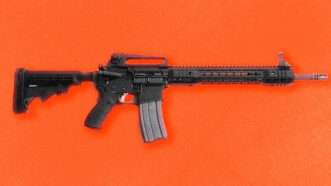
They’re not getting the whole “shall not be infringed” part of the U.S. and Virginia constitutions.
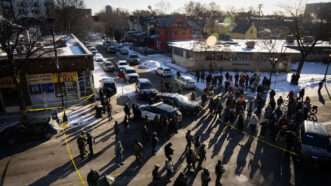
The department now describes the threat as "several civilians" who were "yelling and blowing whistles."
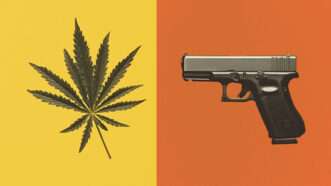
The Liberty Justice Center is urging the Supreme Court to uphold a 5th Circuit decision rejecting the claim that cannabis consumers have no Second Amendment rights.

Federal officials suggested that carrying a firearm is inherently threatening and an invitation to police violence.
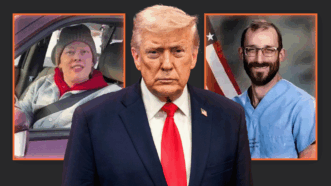
Although the president initially reinforced that plainly inaccurate narrative, his subsequent comments cast doubt on the initial justification for shooting the Minneapolis protester.

"The victims are the Border Patrol agents" who killed Alex Pretti, says one DHS official, who previously claimed Pretti wanted to "massacre law enforcement."

"Carrying a firearm is not a death sentence, it's a Constitutionally protected God-given right," writes Rep. Thomas Massie (R–Ky.).

The right to keep and bear arms is about resisting tyranny.
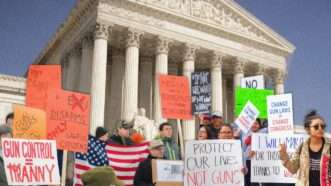
The state requires carry permit holders to obtain advance permission before bringing firearms into businesses.

They are joining the Trump administration in urging the Supreme Court to uphold a federal law that disarms "unlawful" drug consumers.
The Supreme Court’s January docket is packed with big cases.

The ruling, which emphasizes the lack of historical support for such a law, is unlikely to survive en banc review.

The department's lawsuit notes that the prohibited firearms are "in common use" for "lawful purposes," meaning they are covered by the Second Amendment.
Plus: Homeownership myths and realities, discrimination at the theater, career diplomats brought home, and more...

Individuals and communities must take responsibility for their own safety.

The Justice Department's litigation positions are at odds with its avowed intent to protect Second Amendment rights.

It's not surprising that the NRA and other Second Amendment advocates spoke out against a trans firearm ban floated by the Trump administration.
The document remains remarkably resilient, even as Republicans and Democrats keep launching assaults on liberty.
Much of what the federal government does on a daily basis flouts constitutional protections and offends human decency.

Congress justified that National Firearms Act of 1934 as a revenue measure—a rationale undermined by the repeal of taxes on suppressors and short-barreled rifles.
Judge Willett thinks that some federal statutes have been interpreted and applied in ways that conflict with the notion that the federal government only has limited and enumerated powers.

The right to keep and bear arms occupies a curious place in American legal history.

Steven Duarte is one of several petitioners who are asking the justices to address the constitutionality of that absurdly broad gun ban.

Elsid Aliaj says the seizure violated state law and the Second Amendment.

Once we let our rights become privileges, government officials can revoke them on a whim.

His administration is urging the Supreme Court to uphold a prosecution for violating a federal law that bars illegal drug users from owning firearms.

The law applies to millions of Americans who pose no plausible threat to public safety, including cannabis consumers in states that have legalized marijuana.
The cases give the justices a chance to address a constitutionally dubious policy that disarms peaceful Americans.

That strategy, which rejects the possibility of sincere disagreement, is poisonous to rational debate.
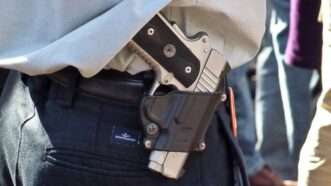
The law is one of several attempts to override the right to bear arms by making it impractical to exercise.

The decision, which hinges on an exception to the Gun-Free School Zones Act, does not say whether that law is consistent with the Second Amendment.

Reason’s Jacob Sullum traces the shared failures of drug prohibition and gun laws, showing how both undermine civil liberties, racial justice, and commonsense safety.

All liberty involves tradeoffs. So does repressing liberty.

A unanimous three-judge panel concluded that "no historical tradition supports" the 1987 law.
Such a gun ban is not authorized by statute or allowed by the Second Amendment.

The NRA says it won't support "any policy proposals that implement sweeping gun bans that arbitrarily strip law-abiding citizens of their Second Amendment rights without due process."
The Justice Department reportedly is considering a regulation aimed at disarming "mentally ill individuals suffering from gender dysphoria."

The Justice Department has proposed a pathway to restore gun rights for millions of Americans.
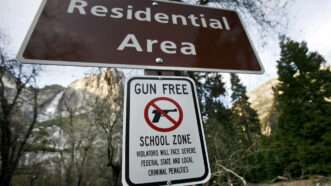
The federal law relies on a risible reading of the Commerce Clause to restrict a constitutional right.
The appeals court rejected most of the arguments in favor of that policy, saying "the government must show non-intoxicated marijuana users pose a risk of future danger."

The appeals court concluded that the government had failed to show that policy is consistent with "this Nation's historical tradition of firearm regulation."
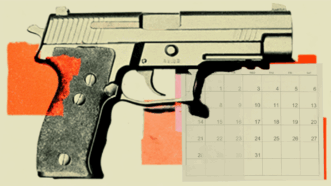
There’s no historical precedent for trying to ration constitutionally protected rights.

Plus: The National Guard deployed to D.C., the Trump-Putin meeting on Ukraine, Texas Democrats flee the state, and a listener question on free speech in the U.K.

DIY firearms aren’t just an end-run around the law; they represent a libertarian political movement.

The same newspaper notes that the killer "obtained a firearm legally," which means he was never "committed" to a mental health institution.
Celebrate your independence with a subscription to Reason magazine, your most trusted source of honest, insightful news and analysis.




