Statements about American Jews as a Group Can't Be Libelous
So holds a federal court, quite correctly; of course, the same is true about any religious group, racial group, or other such large group.

So holds a federal court, quite correctly; of course, the same is true about any religious group, racial group, or other such large group.
An interesting decision in former AP journalist Charles Ganske's lawsuit against former Member of Parliament Louise Mensch, with allegations of Russian bots and Tweeting frenzies thrown in for good measure.
Bonus: We learn that calling a doctor "a real tool" isn't libelous, either.
The legally strange dimension: A claim that the magazine article author sexually harassed the subject of her article, apparently by "seek[ing] inappropriate personal and romantic intimacy with Plaintiff."
The suit was based on an Esquire article about an Iowa farm run by members of Congressman Nunes' family.
Or, Virginia is for lovers, not libel tourists.
Trump's Tweet ("A sketch years later about a nonexistent man. A total con job, playing the Fake News Media for Fools (but they know it)!") was opinion, and thus not actionable.
An interesting decision stemming from a dispute about whether the Spamhaus Project properly placed DatabaseUSA.com on a blocklist.
When can libel plaintiffs, suing over allegedly false claims of sexual misconduct, sue pseudonymously? When can defendants defend pseudonymously?
Defendant, a local mayor and sheriff's deputy, tweeted about Castile's girlfriend (who had gotten a settlement from local government entities), "She needs to come off County and State Aid now that she has some cash. It'll be gone in 6 months on crack cocaine."
So a Second Circuit panel just held.
Noted political publicist Trevor FitzGibbon (who had represented Julian Assange) sued whistleblower lawyer Jesselyn Radack (who had represented Edward Snowden) -- a second time; now there's a second settlement.
The ex-students had accused the professors (at the City University of New York) of sexual assault and other misconduct.
holds the Second Circuit in a case rejecting a libel lawsuit over a blog post headline.
Straka loses on his discrimination, cyberbullying, defamation, and breach of contract claims.
Plaintiff had sufficiently alleged that the defendant didn't just create the list as a platform for others, but herself posted material about him -- though whether plaintiff ultimately prevails will depend on what discovery reveals.
Rep. Devin Nunes can't hold Twitter liable for allegedly defamatory posts by Twitter user:
"Defendant's Yelp post about plaintiff is reasonably and best understood to be, simply, name-calling."
"Even if past [mentally distressing] speech that an offender made to a person ... could be considered ... integral to the criminal conduct of menacing by stalking [and thus unprotected], we do not believe that this principle may be applied categorically to future speech ... directed to others."
An interesting illustration of the qualified privilege that many courts recognize in such cases.
Fortunately, the Michigan Court of Appeals has just reversed that injunction.
"The Court's belief in the veracity of Wright's testimony dwindled while the trial progressed, as evidence of her inconsistent and questionable conduct was revealed piece by piece.... She lied about her advanced degrees. She signed e-mails as Dr. Wright when she is not a doctor. Her testimony and medical records conflicted time and time again ...."
But permanent injunctions after a full trial on the merits might be a different story.
of dissecting each of the sixteen bullet points illustrates the deficiency of plaintiffs’ complaint."
An important First Amendment holding in a factually fascinating case, which involves an alleged breach of contract, a World War II Medal of Honor, a dispute over a history book, and a discussion of anti-libel injunctions.
But other courts in the Ninth Circuit have categorically said that such injunctions are unconstitutional—the law remains quite unclear.
Not a great thing to see in an appellate opinion, if you claimed that reviewing a court order shows that you should win.
"Even the most dedicated patent lawyer would have difficulty mustering 'hatred' for a computer user who inadvertently violated a patent."
The Newsweek article, among other things, quoted a professor who said two young public supporters of Trump "'camouflage' positions of the hard right 'as feel-good sweetness and light, when, in fact, they are defending raw racism and sexual abuse.'"
Today, Judge Judge Timothy M. Witkowiak refused to issue the injunction, partly on prior restraint grounds. The election is scheduled for tomorrow.
Heard's Washington Post op-ed didn't mention Depp, but the judge concludes that in context it would be seen as implying factual assertions about him.
at least under the Illinois "innocent construction" rule, under which "a nondefamatory interpretation must be adopted if it is reasonable"—"a reasonable reading of Lorenz's article is that although Wedgewood communicated with underage girls, he never meant to take things further."
An interesting 1969 case (based on a publication right after the 1968 election), reversed on appeal in 1974; thanks to Jacob Gershman (Wall St. J.) for letting me know about it.
Plus: Judge rejects Gabbard's Google lawsuit, Bloomberg drops out, and more...
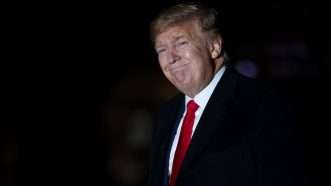
Trump has long complained that libel laws need to be loosened to allow more lawsuits against media outlets.
A clear constitutional violation.
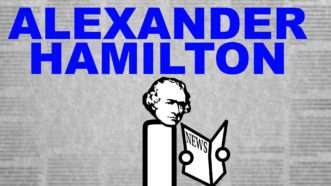
Episode 10 of Free Speech Rules, a video series by UCLA law professor Eugene Volokh
There's also more to the case, which was brought over statements made on a local TV broadcast while Morrissey was unsuccessfully running for Richmond Mayor. (He is now a state senator, elected in November.)
The plaintiff is a former Philadelphia officer, who was charged with (and acquitted of) wrongly threatening people with a gun; she claims the documentary wrongly portrayed her as "dirty and dishonest."

Help Reason push back with more of the fact-based reporting we do best. Your support means more reporters, more investigations, and more coverage.
Make a donation today! No thanks
Every dollar I give helps to fund more journalists, more videos, and more amazing stories that celebrate liberty.
Yes! I want to put my money where your mouth is! Not interested
So much of the media tries telling you what to think. Support journalism that helps you to think for yourself.
I’ll donate to Reason right now! No thanks
Push back against misleading media lies and bad ideas. Support Reason’s journalism today.
My donation today will help Reason push back! Not today
Back journalism committed to transparency, independence, and intellectual honesty.
Yes, I’ll donate to Reason today! No thanks
Support journalism that challenges central planning, big government overreach, and creeping socialism.
Yes, I’ll support Reason today! No thanks
Support journalism that exposes bad economics, failed policies, and threats to open markets.
Yes, I’ll donate to Reason today! No thanks
Back independent media that examines the real-world consequences of socialist policies.
Yes, I’ll donate to Reason today! No thanks
Support journalism that challenges government overreach with rational analysis and clear reasoning.
Yes, I’ll donate to Reason today! No thanks
Support journalism that challenges centralized power and defends individual liberty.
Yes, I’ll donate to Reason today! No thanks
Your support helps expose the real-world costs of socialist policy proposals—and highlight better alternatives.
Yes, I’ll donate to Reason today! No thanks
Donate today to fuel reporting that exposes the real costs of heavy-handed government.
Yes, I’ll donate to Reason today! No thanks