

Graham-Cassidy Promises States More Flexibility; Leaves Washington Fully in Charge of Americans' Health Care
The limited amount of federalism in the Graham-Cassidy bill would come only with the expressed permission of the federal government.
On the same day that 10 governors—a mix of Republicans and Democrats—announced their opposition to a new health care bill being positioned for a vote in the U.S. Senate, one governor's statement of support stood out.
Arizona Gov. Doug Ducey, a Republican, said the Graham-Cassidy health care bill is "the best path forward to repeal and replace Obamacare," in a Facebook post Monday, and called for "Congress and the Administration to give states more flexibility and more options moving forward."
The extent to which the Graham-Cassidy bill—so named because its chief architects are Sen. Lindsay Graham, R-S.C., and Sen. Bill Cassidy, R-La.—increases flexibility for states is a subject of some importance, and much debate, as the Senate mulls the proposal.
Along with other changes to the Affordable Care Act, the bill would abolish Obamacare's Medicaid expansion and would instead block grant more than $1.1 trillion in federal health care spending to the states between 2020 and 2026. It would also allow states to waive Obamacare rules prohibiting charging different insurance rates to women and to people with pre-existing conditions, for example, and rules requiring coverage of certain benefits on the individual market. The bill would grant states significant new flexibility to determine how Obamacare dollars are spent.
That might seem like a welcome sign that, as Ducey put it, Congress and the White House are interested in giving states more flexibility when it comes to health care policy.
"This bill—while imperfect—gives states a real opportunity to re-imagine their healthcare systems," says Naomi Lopez Bauman, director of health care policy for the Arizona-based Goldwater Institute, a free market think tank. "If a state can figure out a way to use the subsidies to provide a direct benefit across the market, they can do it."
That flexibility might only go so far.
While Bauman sees the proposal as a flawed-but-potentially-positive step towards greater state-level control of health care policy, other analysts warn that state control over health care might be counter-productive if the goal is reducing the role of government in health care decisions. Any movement towards federalism in the Graham-Cassidy bill would come only with the expressed permission of the federal government, could be rescinded at any time, and may not even survive next week's expected Senate debate on the bill.
Already, there are movements to limit what states can do with those block grants.
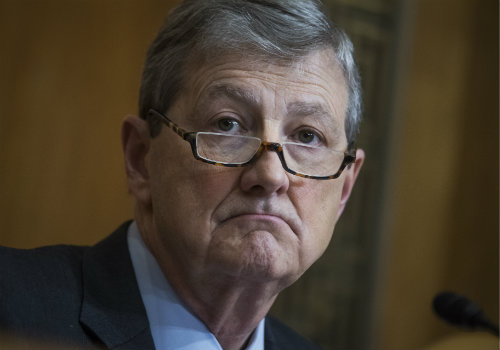
"If you give a big chunk of money to California, they're going to go set up a single-payer system run by the state and then come back and say 'we don't have enough money, we need more,'" Sen. John Kennedy, R-La., told the Washington Examiner on Monday. He's proposed adding language to the Graham-Cassidy bill explicitly forbidding states from using the new block grants towards the establishment of a state-run single-payer system.
On one hand, Kennedy is right to be worried about the cost of single-payer plans set up by California or New York. "Given the renewed enthusiasm on the left for the abolition of private health insurance through single-payer systems, there can be little doubt that this is the direction that blue states will take under Graham-Cassidy," predicts Avik Roy, president of the Foundation for Research on Equal Opportunity, a free market think tank. Those systems are likely to be far more expensive than what would be covered by the Graham-Cassidy block grants—and, once established, could be used as an argument for increasing federal funding to the states.
Allowing states to experiment with health care policy could help policymakers discover what works and what doesn't. A single-payer plan in Vermont collapsed because the state could not pay for it, and efforts in New York, California, or elsewhere are likely to meet the same ends.
"Some states will get it right; others won't," says Lopez Bauman. "But it is far preferable to have fifty laboratories of democracy than to have top-down, Washington edicts dictating to the entire nation."
Graham-Cassidy maintains Washington's strong grip on health care policy even as it takes some tentative steps towards easing regulations. Chris Jacobs, senior health care policy analyst at the Texas Public Policy Foundation, argues that the block grants and state waivers "do not represent a true attempt at federalism."
It remains unclear whether any states would actually seek the waivers from Obamacare's regulations. States that don't would keep the Affordable Care Act as the default health care policy. Future Democratic administrations or federal judges could squeeze the waiver rules in the bill and further limit the supposed flexibility for the states, and since the federal grant program ends in 2027, it's unclear what would happen beyond the next 10 years.
A potentially bigger check on the bill's federalism is the power granted to the federal Secretary of Health and Human Services to change the funding formula for that all-important $1.1 trillion in block grants to be doled out during the 2020s. In a post published Wednesday by The Federalist, Jacobs called that "a trillion-dollar loophole that leaves HHS bureaucrats with the ultimate say over how much money states will receive." The only check on that power is a vague rule saying HHS must develop "legitimate factors" before changing block grant allocations.
The funding formula for the distribution of those dollars is complicated and fraught with politics, with the potential for favoritism and vote-buying, Jacobs notes.
In short, Graham-Cassidy introduces a bit more federalism to American health care policy, but only to the extent that the federal government agrees to keep funding it.
And the whole debate over increased flexibility of states be moot. The Senate Parliamentarian has yet to rule on the Graham-Cassidy proposal and could determine that the non-budgetary aspects of it (including potentially the regulatory changes) are not able to be passed with reconciliation. If so, they would require 60 votes to pass and would almost certainly fall short of that threshold with Democrats in opposition.
Senate Republicans have 10 days to pass the Obamacare repeal/rewrite bill before the opportunity to use the budget reconciliation process expires. After September 30, passing a major health care bill in the Senate would require 60 votes and Democrats would be able to block any such proposal.
Senate Majority Leader Mitch McConnell, R-Ky., said Wednesday there will be a vote on the Graham-Cassidy bill next week.
It's still unclear whether the bill will pass. Sen. Rand Paul, R-Ky., says he will not vote for the Graham-Cassidy bill, which he called "more Obamacare-lite" on Twitter. If two more Republican senators join Paul in opposition, then the bill would fall short of the 50 votes (plus a tie-breaking vote from Vice President Mike Pence) needed to pass. Notably, neither Sen. Lisa Murkowski, R-Alaska, nor Sen. Susan Collins, R-Maine, the two senators who voted with McCain to sink the Senate's so-called "skinny repeal" bill in July, have said they will support the new bill.
With U.S. Sen. John McCain, R-Ariz., seen a crucial swing vote on the Senate's latest attempt to repeal, or at least rewrite, Obamacare, Ducey's public assertion of support could be a small step towards the bill's passage. Graham said Ducey's showing of support made Monday "a great day for federalism, bad day for Obamacare."
That's probably overselling things on both points. The Graham-Cassidy bill represents a modest step towards letting states experiment with health policies, but it's hardly going to get Washington out of Americans' health care.




