

Trump Orders Mosquitoes and Rats Out of the District of Columbia
Time to deploy gene drives to eliminate these disease-carrying pests?
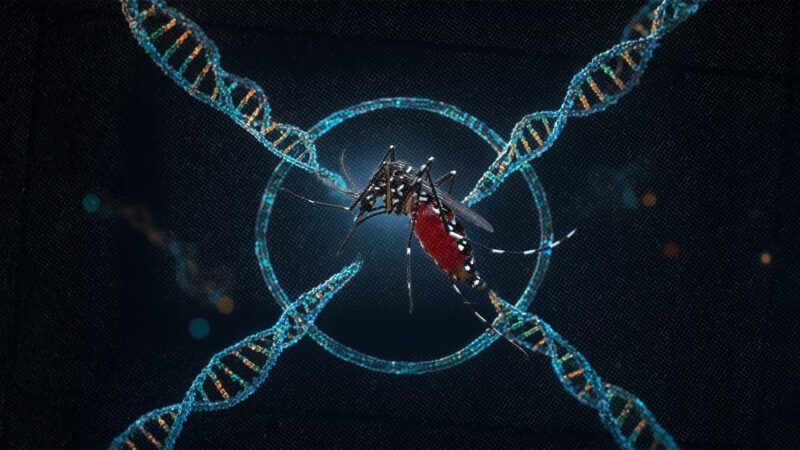
President Donald Trump issued an executive order on Tuesday directing various federal agencies to "develop and implement a campaign" across Washington, D.C., "to, by 2028, reduce the Asian tiger mosquito, Egyptian mosquito, and other invasive mosquito populations, as appropriate, by 90 percent and reduce the tick population by 50 percent, with further reductions as practicable." As a part-time resident of the District, I can only say, "Hooray!"
The order directs agencies to deploy standard techniques for controlling the pests, such as dumping standing water where mosquitoes breed (draining the swamp?) and reducing the tick host populations of rodents and deer. But even better, the agencies are enjoined to "consider sterilization techniques, safe genetic modification, and use of safe, beneficial bacteria" and to "prioritize and expeditiously advance or register novel tick and mosquito control methods or products that the Administrator of the Environmental Protection Agency finds to be both safe and effective."
Releasing sterile and Wolbachia-infected male mosquitoes to breed with wild female mosquitoes has successfully reduced pest populations by as much as 95 percent. An even more effective technology for eliminating the bloodsuckers is gene drives.
Gene drives bias inheritance to pass a specific trait to nearly all offspring instead of the normal 50 percent chance. Researchers can genetically engineer non-biting male mosquitoes so that they pass along to basically all of their offspring a gene that is lethal to female mosquito larva. As fewer and fewer female mosquitoes survive to adulthood, the process would quickly crash disease-carrying pest populations.
Gene drives could also be deployed to crash tick populations, but why not target the ticks' host species? For example, it is possible to break the cycle of infection by releasing mice genetically engineered to resist Lyme and other diseases passed along by ticks and mosquitoes. Gene drives could also target rodent populations directly. If total elimination is deemed too drastic, a team of California researchers has developed a type of gene drive that can be calibrated to suppress the pest population to any desired level.
Let's hope that Trump's order finally jump-starts recalcitrant regulators into quickly approving the deployment of gene drives for pest control.




