

D.C. Rejects Robotaxis To Protect Jobs
Despite evidence suggesting automated vehicles could save lives, D.C. lawmakers voted down their deployment amid concerns from their “friends in labor.”
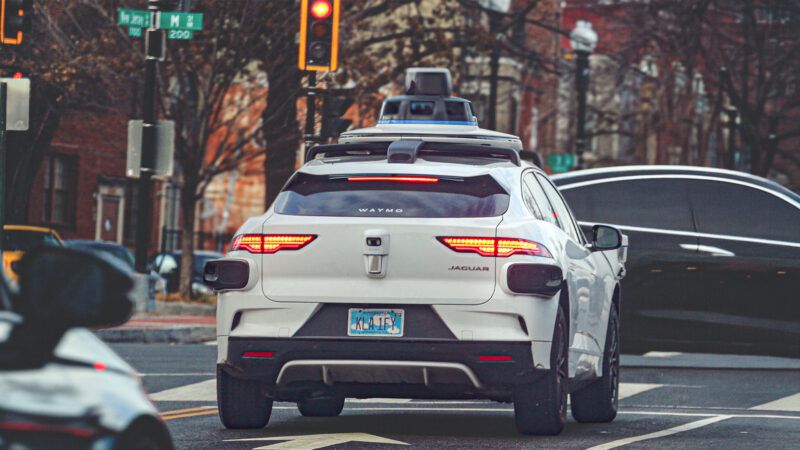
The D.C. Council has rejected a bill that would have allowed autonomous vehicles (A.V.s) to operate in the country's capital.
During a session of the D.C. Council's Committee on Transportation and the Environment on Thursday, the Autonomous Vehicle Deployment Authorization Amendment Act of 2026 was defeated in a 3–3 vote. Councilmember Charles Allen, who introduced the bill, Council Chair Phil Mendelson, and Christina Henderson, voted in favor. Mayor-elect Janeese Lewis George and Councilmembers Zachary Parker and Elissa Silverman voted against.
The legislation would have created the first legal pathway for companies to operate driverless taxis and delivery vehicles in the district, potentially preventing thousands of road accidents in the process. Waymo, an autonomous driving technology company, analyzed more than 271 million miles without a human driver. The results showed autonomous vehicles were involved in 95 percent fewer crashes resulting in serious injuries or fatalities, 93 percent fewer pedestrian injury crashes, and 86 percent fewer cyclist crashes with injuries compared with human drivers travelling comparable distances. In July, the Insurance Institute for Highway Safety published research finding similar results—Waymo's driverless vehicles were involved in 68 percent fewer police-reportable crashes and 81 percent fewer injury crashes per mile than human drivers.
As Allen argued at Thursday's hearing, "A.V.s do not drive while impaired, distracted, or tired. They can be programmed to follow traffic laws that are all too often broken with deadly consequences."
Despite evidence that A.V.s could improve road safety, which was acknowledged, the bill failed primarily due to opposition from lawmakers concerned about the impact of automation on existing workers. "I support bringing autonomous vehicles to the district," said councilmember Parker, who voted against the legislation. "My concerns include impacts on existing jobs, and the degree to which new jobs or other benefits secured in this legislation will help individuals who stand to lose out."
Concessions were already made to lawmakers concerned about job displacement. The original bill would have imposed a costly regulatory framework, including an extraordinarily expensive $6 million three-year permit, $5 million in insurance, and a tax of 15 cents on every mile driven, in part to fund government training programs for rideshare drivers. Prior to Thursday's vote, the bill received a substantial rewrite to make even more concessions, including granting Uber and Lyft drivers collective bargaining rights, extending unionization rights to autonomous vehicle maintenance workers, and limiting the number of driverless vehicles to 200 per operator and 800 citywide. Yet even these concessions failed to win over politicians.
Parker expressed concern that autonomous vehicles would compete with unionized transportation services. "The bill also permits A.V.s with capacity up to 10 passengers," he said, "And I've heard from our friends in labor that they're concerned that that may decimate their union transit operations."
Arguing that automated vehicles, which may save lives, must be prohibited because they would compete with unionized labor is absurd. It also may not be true. A study published in Transportation Research Record found that public transit remained competitive with autonomous ridesharing services where good transit options were available. The researchers concluded that fears of a mass exodus from public transit to driverless vehicles may be limited, at least in the short term.
"My reference class for this kind of problem is infrastructure, where it's super common for people near a new infrastructure to say they don't want it," Lucas Pombo, a research fellow at the Foundation for American Innovation, tells Reason, while people who will benefit won't know that yet.
Technological progress has always disrupted existing industries. That doesn't mean we should try to stop it, particularly when the potential cost of doing so is measured in human lives.



