This Congress Has One Last Chance to Unlock Methadone Treatment
The lame-duck Congress can expand access to a lifesaving treatment while it still has time.
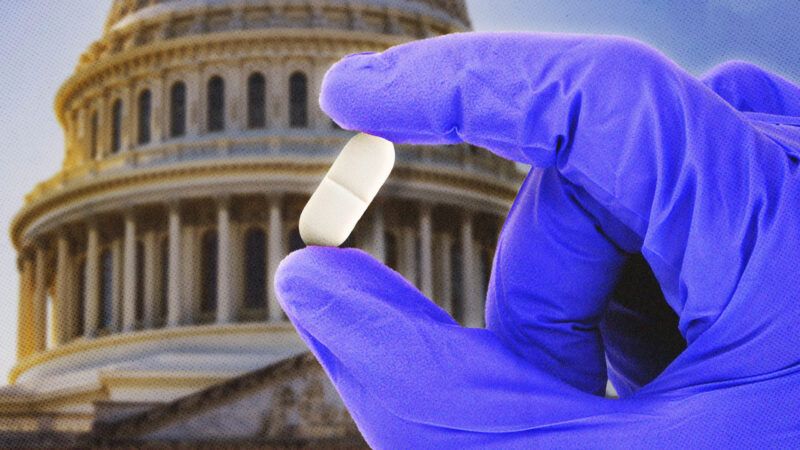
The midterm elections are over, but the 119th Congress still has time to improve its legacy. Before lawmakers leave Washington, they can overhaul part of a regulatory system that keeps one of the most effective treatments for opioid use disorder out of reach.
The bipartisan Modernizing Opioid Treatment Access Act 2.0 (MOTAA 2.0) would allow certain addiction specialists to prescribe methadone for opioid addiction and dependence and let community pharmacies dispense it.
Methadone and buprenorphine are the two most effective treatments for opioid use disorder. A 2020 comparative-effectiveness study followed 40,885 people across six treatment pathways. Only patients treated with methadone or buprenorphine had significantly lower rates of overdose and serious opioid-related acute care than patients who received no treatment. Patients treated with methadone or buprenorphine had a 76 percent lower risk of overdose at three months and a 59 percent lower risk at 12 months. Detoxification, residential treatment, intensive behavioral treatment, and naltrexone did not significantly reduce overdoses during either period.
Both medications suppress withdrawal and cravings, but they work differently. Methadone fully activates the brain's opioid receptors, while buprenorphine activates them only partially and has a ceiling effect. That ceiling reduces buprenorphine's risk of respiratory depression and overdose. But methadone's full-agonist effect may suppress withdrawal and cravings more effectively in people who have developed a high opioid tolerance from regularly using potent illicit fentanyl. Buprenorphine can also precipitate withdrawal when patients begin taking it too soon after using fentanyl or another full opioid agonist.
Those differences may help explain why methadone often keeps patients in treatment longer. A 2024 population-based study found that people beginning methadone remained in treatment for a median of 66 days, compared with 30 days for those beginning buprenorphine. After adjustment, buprenorphine recipients faced a 58 percent greater risk of discontinuing treatment. A comprehensive 2023 systematic review and meta-analysis likewise found better retention with methadone after the first month, including at six months in both randomized trials and observational studies. More recently, a 2025 JAMA Network Open analysis estimated that buprenorphine's lower mortality risk during treatment did not offset its higher discontinuation rate. The authors concluded that treatment guidelines should not automatically favor buprenorphine over methadone. Clinicians should individualize the choice based on each patient's opioid tolerance, treatment history, preferences, and ability to remain in treatment.
Yet federal law generally confines methadone treatment for opioid use disorder to government-certified opioid treatment programs, or OTPs—commonly called methadone clinics. Doctors may prescribe methadone for pain, and pharmacies may fill those prescriptions. But if the same doctor prescribes the same medication to treat addiction, the doctor can face criminal penalties. Patients must instead obtain it from an opioid treatment program, often appearing in person repeatedly for observed dosing.
That separate system leaves millions without effective treatment. According to the 2025 National Survey on Drug Use and Health, approximately 4 million Americans aged 12 or older had opioid use disorder during the previous year. Only 15.7 percent, about 623,000 people, reported receiving medication for it.
The country has only 2,110 federally certified opioid treatment programs, compared with roughly 60,000 retail pharmacies. Approximately 80 percent of U.S. counties have no opioid treatment program.
Distance tells only part of the story. Daily or near-daily clinic visits disrupt work, child care, school, and family responsibilities. Public transportation can turn a nominally manageable distance into hours of travel. Researchers found that patients living more than 10 miles from an OTP were 29 percent more likely to miss a dose than those living within five miles. A study of five states with high opioid-overdose death rates found that residents of the most rural counties faced an average 49-minute drive to the nearest methadone clinic, compared with 17 minutes to a federally qualified health center.
MOTAA 2.0 would create another pathway. It would allow physicians board-certified in addiction medicine or addiction psychiatry to obtain a separate Drug Enforcement Administration (DEA) registration to prescribe methadone for opioid use disorder. Patients could fill those prescriptions at pharmacies. The Department of Health and Human Services could later authorize additional licensed prescribers who meet the agency's established standards.
The bill's sponsors revised the original MOTAA to address concerns raised by law enforcement and treatment providers. The earlier bill, approved by the Senate Health, Education, Labor, and Pensions Committee in December 2023, permitted pharmacy-dispensed methadone for unsupervised use and generally limited prescriptions to a 30-day supply.
MOTAA 2.0 permits either supervised or unsupervised pharmacy dosing, depending on clinical judgment. It limits pharmacy-dispensed methadone for opioid use disorder to liquid or dispersible tablets, excluding the conventional tablets associated with much of the earlier wave of pain-prescribing deaths. It preserves federal and state authority to limit dispensing quantities, it requires electronic prescriptions, it keeps state licensing rules intact, and it lets a state stop the program within its borders. It also requires annual DEA reports on participating prescribers, disciplinary actions, state opt-outs, and pharmacies ordering eligible methadone formulations. The law would take effect 180 days after enactment.
Those safeguards have not satisfied everyone. The group Advocates for Opioid Addiction Treatment calls MOTAA dangerous and warns that it could increase diversion and recreate the "pill mill" conditions of the early 2000s. The American Association for the Treatment of Opioid Dependence and the National Association for Behavioral Healthcare also oppose it. Law enforcement opponents have included the National Sheriffs' Association, Major County Sheriffs of America, the National Police Association, and the National Alliance of State Drug Enforcement Agencies.
Methadone can cause respiratory depression and death, particularly during dose initiation or when combined with other depressants. Concerns about induction, accidental ingestion, and diversion warrant serious attention. But opponents often portray MOTAA 2.0 as permitting unrestricted prescribing by clinicians without addiction training. The bill does no such thing.
The diversion evidence is considerably less alarming than opponents suggest. When the COVID-19 pandemic struck, the Substance Abuse and Mental Health Services Administration allowed clinically stable OTP patients to take home up to a 28-day methadone supply. Less stable patients could receive 14 days.
If greater take-home access were a significant driver of diversion and death, the change should have produced a discernible increase in methadone-related mortality. It did not. A study by the National Institute on Drug Abuse and the Centers for Disease Control and Prevention found that monthly methadone-involved overdose deaths remained stable after the reform, even as overdoses involving other drugs continued to rise. Methadone's share of overdose deaths declined. A subsequent state comparison likewise found that expanded take-home privileges did not increase methadone-involved mortality.
The Substance Abuse and Mental Health Services Administration concluded that diversion remained low enough to make the reforms permanent in 2024. The agency reports that misuse and diversion are more likely when doctors prescribe methadone for pain than when programs dispense it for opioid use disorder.
That distinction matters because opponents repeatedly cite the surge in methadone deaths in the early 2000s. A Government Accountability Office investigation linked much of that increase to rapidly expanding methadone prescribing for pain. According to the report, annual methadone prescriptions for pain rose from about 531,000 in 1998 to 4.1 million in 2006—roughly a sevenfold increase. But that seems beside the point when it comes to MOTAA 2.0, which does not replicate early-2000s pain prescribing. It provides carefully monitored treatment for a diagnosed opioid use disorder under a separate DEA registration.
Research also challenges the assumption that people generally seek diverted methadone for recreational use. The National Institute on Drug Abuse reports that diversion is primarily associated with methadone prescribed for pain, not with methadone dispensed to treat opioid use disorder. Among people who obtained methadone illicitly, the most commonly reported reason was missing a scheduled medication pickup. In another survey, 80 percent of people who diverted methadone said they did so to help someone else who used drugs.
A Baltimore study found that people with opioid addiction primarily used diverted methadone and buprenorphine to self-treat withdrawal and attempt detoxification rather than to get high. Participants described using diverted medication as a bridge into treatment, after leaving treatment, or when clinic rules and waiting lists made formal treatment inaccessible. A 2026 review of 29 studies from seven countries similarly found that people most commonly diverted methadone to help friends or partners experiencing withdrawal, while recipients generally used it to prevent withdrawal or avoid illicit opioids. The review found no support for the claim that systems relying exclusively on specialty clinics necessarily result in less diversion or fewer overdoses.
Expanding legal access to treatment may more effectively shrink the illicit methadone market than forcing patients to travel farther and comply with burdensome clinic rules.
OTP operators also have a clear financial interest in preserving their exclusive position. Advocates for Opioid Addiction Treatment describes itself as a coalition representing more than 700 OTP and office-based treatment facilities. The American Association for the Treatment of Opioid Dependence says it represents more than 1,400 OTPs. Their policy arguments should receive a fair hearing, but Congress should recognize that MOTAA would give patients alternatives to the facilities those organizations represent.
MOTAA 2.0 still does not go far enough. As of 2024, roughly 4,600 physicians are certified in addiction medicine and 1,500 in addiction psychiatry. Even if every one of them sought the new registration and accepted new patients, they could not meet the needs of 4 million people with opioid use disorder. Many practice in the same metropolitan areas that already have OTPs.
Ideally, any appropriately licensed clinician who wishes to treat opioid use disorder should be able to prescribe methadone, just as clinicians may now prescribe buprenorphine without the former federal X-waiver. Before federal restrictions took effect in 1972, American doctors treated patients with methadone in ordinary medical practices. Clinicians in Canada, Britain, and Australia have prescribed methadone in community settings, working with pharmacists, for decades.
MOTAA 2.0 also leaves too much authority with the DEA, relies on a scarce group of specialists, and does nothing for patients in states that block the reform. But it would crack the federal OTP monopoly and begin treating opioid use disorder like other medical conditions.
The Senate bill, S. 4941, remains before the Senate HELP Committee. Its House companion, H.R. 9790, remains before the Energy and Commerce and Judiciary committees. None has held a hearing or markup on the current bill.
Senate HELP Chairman Bill Cassidy (R–LA), House Energy and Commerce Chairman Brett Guthrie (R–Ky.), and House Judiciary Chairman Jim Jordan (R–OH) can still move it. Congress could also attach it to an appropriate year-end package, as the American Society of Addiction Medicine and nearly 150 supporting organizations have urged.
Voters delivered Republicans a stinging rebuke in the midterm elections, handing Democrats control of both chambers after two years of unified Republican rule. The outgoing congressional majorities now have a brief window to show they can still remove a harmful government barrier and accomplish something worthwhile.