Supreme Court Lets Trump End Temporary Protected Status for Haitian and Syrian Nationals Residing in U.S.
Understanding the 6–3 decision in Mullin v. Doe.
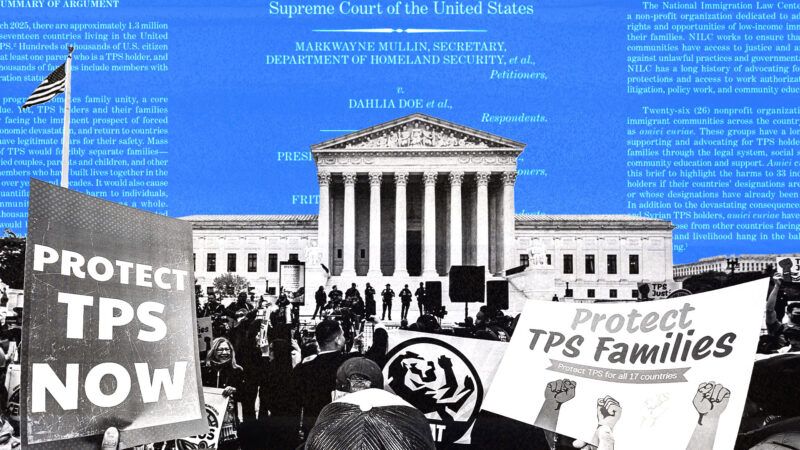
The U.S. Supreme Court ruled 6–3 Thursday in favor of the Trump administration's decision to strip Haitian and Syrian nationals of a legal protection that had allowed them to lawfully remain in the United States because it was too risky for them to be deported to their home countries.
The case is Mullin v. Doe. It centers on the temporary protected status (TPS) program, in which executive branch officials are authorized to designate qualifying countries based on the existence of certain conditions that make those countries especially dangerous, such as military conflicts or natural disasters. Once designated, foreign nationals from such countries may remain lawfully in the United States without fear of deportation since the U.S. government has determined that it would be too dangerous for them to return.
Thursday's decision by the Supreme Court affirms the Trump administration's authority to end TPS protections for Haitian and Syrian nationals.
Under the TPS statute, "there is no judicial review of any determination…with respect to the designation, or termination or extension of a designation." According to the majority opinion of Justice Samuel Alito, that language was sufficient to dispose of most of the case, as it "squarely bars all of respondents' non-constitutional claims."
Turning then to the constitutional claims, Alito dismissed them as well. "Citing statements made by President Trump and former Secretary of Homeland Security Kristi Noem," Alito wrote, "one set of respondents advances an equal protection claim that Haiti's TPS designation was terminated because of the racial makeup of that country's population." But that argument failed, according to Alito, because, "ironically, one of respondents' other arguments undermines the equal protection claim by offering a strong, race-neutral explanation for Haiti's termination: namely, that the current administration, which has terminated every TPS designation that has come up for renewal, simply opposes the TPS program, at least as it has been implemented in the past."
Writing in dissent, Justice Elena Kagan, joined by Justices Sonia Sotomayor and Ketanji Brown Jackson, maintained that the TPS statute actually does allow "judicial review of whether the Secretary adhered to the procedures it mandates—which is what the plaintiffs dispute here." And Kagan likewise rejected the majority's claim that race likely did not motivate the government's actions. "The evidence [the Haitian plaintiffs] have offered includes statements by the President so repellent and racially inflected," Kagan wrote, "that the majority declines to put them in print."
The upshot of this decision is that hundreds of thousands of people who have been residing lawfully in the United States have now lost a key legal protection against deportation while the executive's control over the immigration system has been strengthened.
The Supreme Court's decision in Mullin v. Doe is available here.