
Trump's Responses to Kimmel and Comey Highlight His Contempt for Freedom of Speech
The president is not shy about using government power to punish people for saying things that offend him.
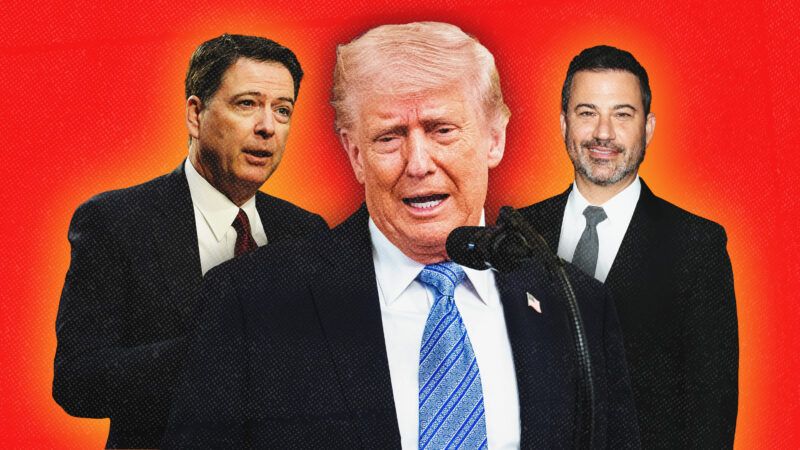
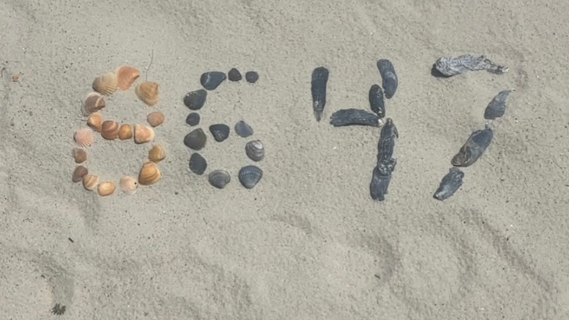
Last week, President Donald Trump said late-night comedian Jimmy Kimmel "should be immediately fired" for making a "really shocking" joke about him. The next day, the Justice Department charged another prominent Trump critic, former FBI Director James Comey, with committing two federal felonies by posting a photograph of seashells arranged in the sand to form the message "86 47"—a ubiquitous statement of opposition to the current president.
Those back-to-back expressions of presidential wrath underlined a striking difference between Trump and most of his predecessors. Although presidents have never enjoyed criticism, Trump is unusual in routinely and openly using the influence and power of his office to retaliate against people who say things that offend him—a habit that blatantly contradicts his avowed commitment to freedom of speech.
Trump argued that both Kimmel and Comey had threatened his life by inciting violence against him. But those claims are hard to take seriously.
During a sketch on the April 23 broadcast of his ABC show, Kimmel pretended he was hosting the White House Correspondents' Dinner. "Our first lady, Melania, is here," he said. "So beautiful. Mrs. Trump, you have a glow like an expectant widow."
The joke suggested that Trump is old and that his wife is unhappily married. However you rate the humor or tastefulness of that jibe, it indisputably qualifies as constitutionally protected speech.
Trump implied otherwise, averring that Kimmel's gag was a "despicable call to violence." That obviously is not true, and the fact that a would-be assassin tried to attack the actual White House Correspondents' Dinner two days later does not change the meaning of Kimmel's words in their original context.
Given the federal government's power to regulate broadcasters, the president's demand that ABC take Kimmel off the air cannot be lightly ignored. That much was clear last year, when Federal Communications Commission (FCC) Chairman Brendan Carr threatened TV stations with fines and license revocation unless they punished Kimmel for his ill-informed comments about the man who murdered conservative activist Charlie Kirk.
The network and its affiliate stations immediately fell in line by suspending Kimmel's show—precisely the penalty that Carr had recommended. And the day after Trump complained about Kimmel's "expectant widow" joke, the FCC reminded ABC about the potential consequences of annoying the president by announcing an early review of the network's broadcast licenses, ostensibly based on concerns about "unlawful discrimination."
In Comey's case, the Justice Department is trying to imprison someone for reiterating a phrase that appears on T-shirts and bumper stickers available from major online retailers—a slogan that Acting Attorney General Todd Blanche concedes "is posted constantly" without triggering federal charges. The case, which hinges on the claim that 86 means kill, defies the typical slang usage of that term and nearly 60 years of Supreme Court rulings on the "true threat" exception to the First Amendment.
Trump's reactions to Kimmel and Comey are part of a pattern. Whether he is trying to deport a foreign student for writing an op-ed piece, threatening to yank the broadcast licenses of news outlets he views as biased against him, claiming that journalism he does not like qualifies as actionable consumer fraud, suing CNN for calling his stolen-election fantasy "the Big Lie," retaliating against law firms that represent clients and causes he deplores, or attempting to imprison legislators for reminding military personnel of their well-established duty to resist unlawful orders, Trump is not shy about using government power to punish speech that irks him.
On the first day of his second term, Trump issued an executive order aimed at "restoring freedom of speech and ending federal censorship." The following month, Vice President J.D. Vance reiterated that commitment. "Under Donald Trump's leadership," Vance declared, "we may disagree with your views, but we will fight to defend your right to offer them in the public square."
Those words sure sound nice. It would be even nicer if Trump's actions matched them.
© Copyright 2026 by Creators Syndicate Inc.