
Energy Department Moves To Fast-Track Advanced Nuclear Reactor Approvals
The Trump administration excludes advanced nuclear power reactors from excessive National Environmental Policy Act requirements.
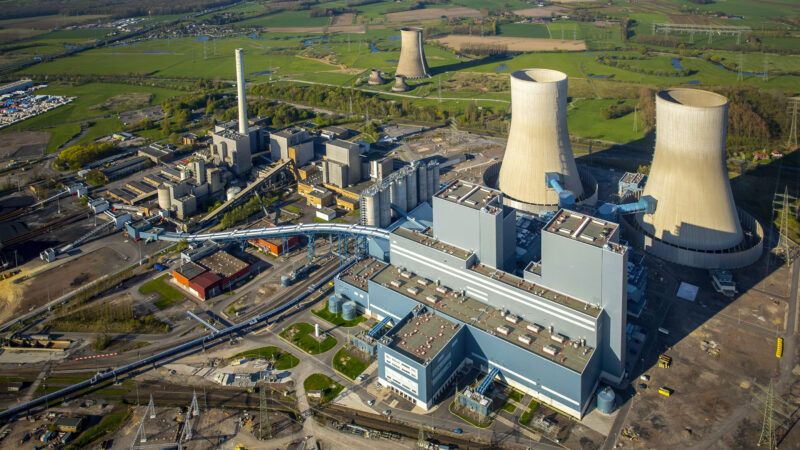
The U.S. Department of Energy (DOE) aims to jumpstart the development and deployment of new advanced reactors this year by bypassing onerous and largely useless environmental assessments. In a May 2025 executive order, President Donald Trump directed the DOE to "utilize all available legal authorities to site, approve, and authorize the design, construction, and operation of privately funded advanced nuclear reactor technologies at Department of Energy-owned or controlled sites." Importantly, the agency was also instructed work on "establishing new categorical exclusions" with the "goal of operating an advanced nuclear reactor at the first site no later than 30 months from the date of this order."
Categorical exclusions mean that no National Environmental Policy Act (NEPA) environmental impact statement or environmental assessment is required before a project may be approved. This saves a lot of time and bureaucratic effort since compiling an environmental impact statement takes nearly three years on average to complete.
The May executive order adopts many of the recommendations on how to improve nuclear power licensing outlined in an April 2025 report by researchers associated with the Idaho National Laboratory (INL). Among other items, the report suggests clarifying that the DOE does not need Nuclear Regulatory Commission (NRC) approval to "authorize any non-commercial demonstration nuclear reactor projects with no exceptions."
Now, the DOE is issuing a notice for a new categorical exclusion that would apply to new advanced nuclear reactors sited on federal facilities and land. In support of this determination, the DOE finds that "advanced nuclear reactors have key attributes such as safety features, fuel type, and fission product inventory that limit adverse consequences from releases of radioactive or hazardous material from construction, operation, and decommissioning."
The exclusions would apply to several advanced reactor projects, including the 300 megawatts thermal Versatile Test Reactor to be constructed at either the Idaho National Laboratory and two 35 megawatts thermal Kairos Hermes 2 test reactors at the Oak Ridge National Laboratory. (Megawatts thermal is a measure of the raw heat energy produced by a reactor vs. megawatts electrical, which is the amount of electrical power actually delivered to the grid.)
The DOE has set an ambitious goal for its advanced nuclear reactor deployment efforts of having "at least three reactors reaching criticality outside of the national laboratories by July 4, 2026."
In an NPR program, the CEO of the nuclear microreactor startup Antares, Jordan Bramble, said, "We believe that licensing through a DOE pathway is absolutely the best way to build prototype reactors, and you absolutely have to build prototype reactors before you build commercial reactors."
A 2025 Columbia University report noted that no NRC environmental reviews conducted between 2000 and 2020 found that any of the reactor projects were expected to create what the agency deems "large adverse" environmental impacts. Citing Columbia's findings, the April INL report concluded:
Given this precedent and the low likelihood of any significant impacts from new reactor construction and operation, combined with the need for energy expansion and energy security provided by new nuclear reactors, Congress should exclude new nuclear projects from the requirements of NEPA.
Excellent advice. Congress should, however, repeal NEPA entirely; but let's set that argument aside until another time.
