
Trump Claims He's Turning America Around. He's Really Doubling Down on Executive Overreach.
From immigration crackdowns to trade policy, the Trump administration is increasingly centralizing power in Washington, D.C.
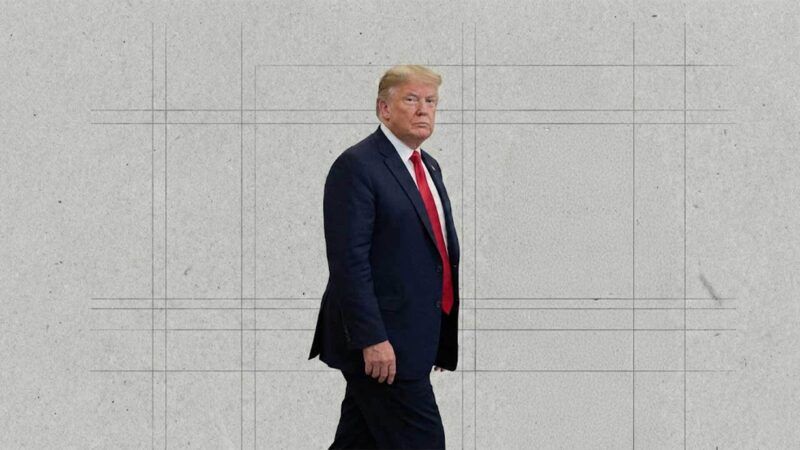
In Wednesday night's address, President Donald Trump framed the first 11 months in his second term as a miraculous turnaround: order on our border, decreased costs of living, peace in the Middle East, and an economic comeback from the "brink of ruin." But beneath the boasting and exaggerated list of statistics lies a pattern that's common in Washington—expanding executive power and government-led "wins" that come with long-term tradeoffs citizens will ultimately pay for.
Trump's speech was a clear attempt at reclaiming momentum after his approval rating dropped to 39 percent this week, possibly worsened because of escalation with Venezuela. The tensions are causing widespread unease among Americans about another foreign conflict—especially after Trump's campaign promise that he would not bring the U.S. into any new wars. Presidents naturally turn to bold claims of "order" and "strength" when public confidence falls.
Though border crossings have decreased and Americans are generally less concerned about the Biden administration's dysfunction, the methods to get to this point are concerning: increased executive control, hiring more border agents, and a general disregard for due process. Order that's achieved through unilateral decisions is fragile. Reliance on emergency powers during every national crisis presents a tradeoff of short-term political wins while sacrificing constitutional balance.
Trump boasted about reducing the cost of living, saying, "The price of eggs is down 82 percent since March, and everything else is falling rapidly, and it's not done yet." Though egg prices have indeed fallen, the spike was caused by a bird flu outbreak that's since subsided. As for "everything else," government data released Thursday showed persistent inflation of 2.7 percent over the last year. Trump also marketed government meddling in the form of subsidies and tariffs as "relief," conveniently leaving out the fact that his policies have raised prices across the board for consumers and have been illegally implemented without congressional approval. This brings us back to business as usual—Washington politicians promising better quality of life through central power, typically leaving out the cost of these programs to consumers later.
The contrast of declaring "peace in the Middle East" while battling negative press on his tensions with Venezuelan dictator Nicolás Maduro paints one of the most inconsistent moments of Trump's second presidency thus far. While promising peace, Trump's Department of Defense has bombed 27 drug boats killing 99 people, managed a build-up of US military warships and planes around Venezuela, and blockaded sanctioned oil tankers going in and out of the country.
Unfortunately, this type of foreign policy is now so common that Americans have become almost desensitized to its frequency. Wars now start without congressional debate, and national security is turned into a buzzword through televised (and tweeted) announcements. A personalized "peace" maintained by one president's individual decisions is not a lasting peace, but rather a pause until the next administration is elected and unravels it.
The speech closed with a powerful reference to the upcoming 250th anniversary of the signing of the Declaration of Independence, ironically contrasted with a year full of decisions made without the consent of the governed and a blatant expansion of state powers. Rather than applauding embellished rhetoric, Americans need to ask: Are we freer than we were 11 months ago, or are we simply getting used to an increasingly authoritarian executive branch?
