

Reason.com - Free Minds and Free Markets
Reason logo Reason logo
  • Latest
  • Magazine
    • Current Issue
    • Archives
    • Subscribe
    • Crossword
  • Video
    • Reason TV
    • The Reason Roundtable
    • Just Asking Questions
    • Free Media
    • The Reason Interview
  • Podcasts
    • All Shows
    • The Reason Roundtable
    • The Reason Interview With Nick Gillespie
    • The Soho Forum Debates
    • Just Asking Questions
  • Volokh
  • Newsletters
  • Donate
    • Donate Online
    • Donate Crypto
    • Ways To Give To Reason Foundation
    • Torchbearer Society
    • Planned Giving
  • Subscribe
    • Reason Plus Subscription
    • Gift Subscriptions
    • Print Subscription
    • Subscriber Support

Login Form

Create new account
Forgot password
Reason logo

Reason's Annual Webathon is underway! Donate today to see your name here.

Reason is supported by:
Ken Slater

Donate

Politics

Europe's Selective Liberalism

In Europe, social tolerance has tight limits.
Matthew Feeney | 4.30.2013 4:30 PM

Share on FacebookShare on XShare on RedditShare by emailPrint friendly versionCopy page URL Add Reason to Google
Media Contact & Reprint Requests
Large image on homepages | NASA
(NASA)

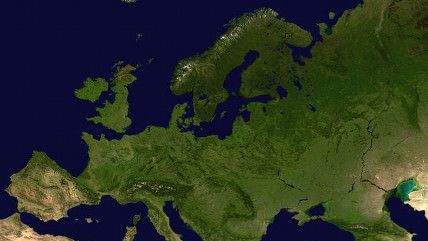
Earlier this month, the French General Assembly voted to make France the ninth European nation to recognize same-sex marriages. Many Americans will take this, along with the more tolerant treatment of drugs and prostitution, as further evidence of Europe's social liberalism. But European liberalism has its limits. The continent's tolerance is highly selective, and it often excludes particular demographics, unpopular or distasteful opinions, and certain preferences in education.

Since April 2011, for example, France has banned clothing that covers the face, restraining the rights of the women who want to wear either a niqab or a burqa. Belgium has a similar law on the books. These laws were largely motivated by a growing Muslim population, a demographic change that has fueled the growth of movements to limit immigration from predominantly Islamic countries.

In a 2009 referendum Swiss voters approved a constitutional ban on new minarets being built. The ban was supported by just over 57 percent of voters. Elsewhere in Europe, Muslims are viewed with suspicion. A poll from last January shows that 74 percent of French citizens believe that "Islam is incompatible with French society," while in the U.K. less than 25 percent of people believe that Islam is compatible with British society. In Hungary, a discriminatory 2011 law has made it harder for a congregation to register as a religious organization: Of the 362 religious organizations previously recognized, only 14 still have the same standing. The others are no longer eligible for state funding and—more troubling from a libertarian point of view—their schools are no longer officially accredited. Not just Muslims but Methodists, Pentecostalists, Jews, Buddhists, and Hindus have been affected by the change. The law was struck down by Hungary's Constitutional Court but was later integrated into a controversial amendment to the constitution.

In the continent where the Holocaust took place it is perhaps not surprising that there are infringements of free speech for those who deny, trivialize, or glorify Hitler's genocide against the Jews. Austria, Belgium, Germany, and Poland, among other nations, have laws restricting speech that denies, trivializes, or glorifies the Holocaust, and in some instances other atrocities, such as those committed by the Soviet Union in Lithuania and Poland. But as offensive and historically illiterate as such speech is, it is hardly tolerant to restrict it.

Germany, one of the countries where Holocaust denial is illegal, also limits the freedom of parents to teach their children as they see fit. Homeschooling is illegal in Germany, prompting one family, the Romeikes, to flee to Tennessee seeking asylum. Germany isn't alone: Homeschooling is outlawed or severely restricted in several Eastern European and Balkan countries.

Perhaps the most recent and noticeable attack on free speech in Europe has been in the U.K. After a phone hacking scandal hit some British newspapers, the Leveson Inquiry was established to examine journalistic ethics in the U.K. and to make recommendations. Thankfully, the British government will not be implementing the body's suggestions that a new independent press regulator be introduced and underpinned by statute. Yet all three major British political parties supported an alternative plan for a press regulator last month that would introduce a code of "standards" and a new regulatory body. Whatever the outcome of the Leveson Inquiry, the press can look forward to a more restricted future, all thanks to hysteria generated by outrage over practices that were already illegal under British law.

Meanwhile, British citizens can get in trouble for saying the wrong thing on social media. Last year an unpleasant university student was sentenced to 56 days in jail for a racist tweet directed at a soccer player. Another student was spared a jail sentence for a similar offense after pleading guilty.

Even where European countries are socially liberal, public opinion isn't as uniform as American stereotypes suggest. The French legalization of same-sex marriage was met with violent protests in Paris, and before the vote the hashtag #IlFautTuerLesHomosexuels ("Homosexuals Must Be Killed") was trending on Twitter in France.

So yes, there are many ways that Europe is freer than the U.S. The Portuguese drug policy would be a vast improvement over America's, and we could learn a lot from the Dutch laws on prostitution too. But when it comes to free speech and school choice—and, in France and Belgium, the freedom to choose your clothes—Americans have it better. Even on drugs and gay marriage, recent polling data indicates that Americans are catching up to European attitudes. As those changing attitudes become changing laws, Europe may lose its reputation as the land of tolerance.

Start your day with Reason. Get a daily brief of the most important stories and trends every weekday morning when you subscribe to Reason Roundup.

This field is for validation purposes and should be left unchanged.

NEXT: Ladies' Gun Nights Prove Popular at Shooting Ranges

Matthew Feeney is a policy analyst at the Cato Institute.

PoliticsEuropeWorldCultureEconomicsPolicySocial ConservatismLiberalismLibertarianism
Share on FacebookShare on XShare on RedditShare by emailPrint friendly versionCopy page URL Add Reason to Google
Media Contact & Reprint Requests

Show Comments (88)

Webathon 2025: Dec. 2 - Dec. 9 Thanks to 507 donors, we've reached $306,275 of our $400,000 goal!

Reason Webathon 2023

All Donations NOW Being Matched! Donate Now

Latest

New Car Prices Hit $49,766 in October. Rolling Back Fuel Economy Regulations Could Bring Relief.

Jeff Luse | 12.4.2025 5:51 PM

Boat Attack Commander Says He Had To Kill 2 Survivors Because They Were Still Trying To Smuggle Cocaine

Jacob Sullum | 12.4.2025 3:15 PM

Hillary Clinton Is Still Blaming TikTok

Robby Soave | 12.4.2025 2:50 PM

The Cyberselfish Revival Shows Libertarianism Continues To Be Misunderstood

Brian Doherty | 12.4.2025 2:00 PM

A Deadly Attack Sparks Broad Punishment for Innocent Afghans

Beth Bailey | 12.4.2025 1:30 PM

Recommended

  • About
  • Browse Topics
  • Events
  • Staff
  • Jobs
  • Donate
  • Advertise
  • Subscribe
  • Contact
  • Media
  • Shop
  • Amazon
Reason Facebook@reason on XReason InstagramReason TikTokReason YoutubeApple PodcastsReason on FlipboardReason RSS Add Reason to Google

© 2025 Reason Foundation | Accessibility | Privacy Policy | Terms Of Use

This site is protected by reCAPTCHA and the Google Privacy Policy and Terms of Service apply.

r

HELP EXPAND REASON’S JOURNALISM

Reason is an independent, audience-supported media organization. Your investment helps us reach millions of people every month.

Yes, I’ll invest in Reason’s growth! No thanks
r

I WANT TO FUND FREE MINDS AND FREE MARKETS

Every dollar I give helps to fund more journalists, more videos, and more amazing stories that celebrate liberty.

Yes! I want to put my money where your mouth is! Not interested
r

SUPPORT HONEST JOURNALISM

So much of the media tries telling you what to think. Support journalism that helps you to think for yourself.

I’ll donate to Reason right now! No thanks
r

PUSH BACK

Push back against misleading media lies and bad ideas. Support Reason’s journalism today.

My donation today will help Reason push back! Not today
r

HELP KEEP MEDIA FREE & FEARLESS

Back journalism committed to transparency, independence, and intellectual honesty.

Yes, I’ll donate to Reason today! No thanks
r

STAND FOR FREE MINDS

Support journalism that challenges central planning, big government overreach, and creeping socialism.

Yes, I’ll support Reason today! No thanks
r

PUSH BACK AGAINST SOCIALIST IDEAS

Support journalism that exposes bad economics, failed policies, and threats to open markets.

Yes, I’ll donate to Reason today! No thanks
r

FIGHT BAD IDEAS WITH FACTS

Back independent media that examines the real-world consequences of socialist policies.

Yes, I’ll donate to Reason today! No thanks
r

BAD ECONOMIC IDEAS ARE EVERYWHERE. LET’S FIGHT BACK.

Support journalism that challenges government overreach with rational analysis and clear reasoning.

Yes, I’ll donate to Reason today! No thanks
r

JOIN THE FIGHT FOR FREEDOM

Support journalism that challenges centralized power and defends individual liberty.

Yes, I’ll donate to Reason today! No thanks
r

BACK JOURNALISM THAT PUSHES BACK AGAINST SOCIALISM

Your support helps expose the real-world costs of socialist policy proposals—and highlight better alternatives.

Yes, I’ll donate to Reason today! No thanks
r

STAND FOR FREEDOM

Your donation supports the journalism that questions big-government promises and exposes failed ideas.

Yes, I’ll donate to Reason today! No thanks
r

FIGHT BACK AGAINST BAD ECONOMICS.

Donate today to fuel reporting that exposes the real costs of heavy-handed government.

Yes, I’ll donate to Reason today! No thanks


