Attorney General Merick Garland is proposing new ATF regulations that would expand definitions in the Gun Control Act to require ever-more gun owners to obtain federal dealer licenses. This follows a new regulation redefining "frame or receiver" and another one reclassifying pistols with braces as "short-barreled rifles." As I've posted previously,
those regulations have run smack into the Fifth Circuit's brick wall, The Fifth Circuit preliminarily enjoined enforcement of the pistol brace rule. It allowed a vacatur of the frame or receiver rule to remain in place, although the Supreme Court stayed the vacatur of that rule pending disposition of the case in that Court.
These three new, expansive regulatory schemes are unprecedented since passage of the Gun Control Act of 1968 (GCA). This third proposed rule reminds one of dinosaur Rex's scream in Toy Story: "He's at it again!"
Ordinary gun owners are not required to obtain any kind of license from ATF. To exercise the Second Amendment right to keep and bear arms, a person must be able to obtain firearms, and is free to dispose of firearms without a license as long as the person is not in the gun business. The proposed regulation purports to require many such persons to obtain a firearm dealer's license.
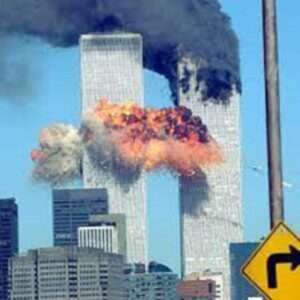
Today is the anniversary of the 9/11 attack. I have written about my memories of and reflections on that event and its aftermath before. I will not recapitulate all of that in this post. But here is a link to my piece on that subject, written on the twentieth anniversary of the attack. A brief excerpt:
On the day of 9/11, I was clerking for a federal judge in Houston, Texas. I first heard about the attacks listening to the radio on my way to work that morning. The dial was tuned to a "top 40" station that almost never had any news. So when they interrupted the usual programming to say that a plane had crashed into the World Trade Center, I assumed it must be some sort of hoax. I had read about the 1938 "War of the Worlds" radio program scare (some listeners were convinced there was an actual alien invasion). I thought this might be the same sort of thing.
When I got to the office and turned on my computer, I could not load the CNN website; too many other people were trying to access it. That's when I knew the attack was real.
Business in our judge's chambers went on more or less normally for most of the day. But I did call some people I knew in the New York area to see about their safety. The longest of these conversations was with the brother of a Muslim friend who worked near the Twin Towers. By the time we spoke (it was late morning), we already knew the attack was likely the work of radical Islamist terrorists. We discussed the implications for US foreign policy, and also the possibility of an upsurge of anti-Muslim bigotry at home. We both thought there would be a strong military response, and also both were in favor of the idea; I still think it was necessary, though many in retrospect disagree.
With respect to the other issue, I said historical precedent…. suggested such a backlash could well happen. But I also thought there would be more resistance to it than in earlier eras….
To an extent, I turned out to be right; but only to an extent…..
We do have at least one piece of unfinished business left over from 9/11 and the resulting twenty-year war in Afghanistan: giving permanent refuge to the Afghans who fled here in the aftermath of the Taliban's return to power, including many who had previously assisted US forces or promoted human rights in their country.
In the aftermath of the fall, the US took in thousands of Afghans fleeing the brutal new government, including many who had fought on the side of the US or worked to promote human rights. Unfortunately, to this day, the US government still has not granted permanent residency to Afghans who entered the US based on executive "parole." As a result, most of the Afghans remain in legal limbo, making it difficult for them to fully integrate into American society. That's bad for both them and the US economy….
In an August 2021 post, I went over the many reasons why the US should grant refuge to Afghans fleeing the Taliban. They include general moral considerations against barring refugees fleeing violence and oppression, the unusually heinous nature of the oppression Afghans face under Taliban rule (worse than most "ordinary" dictatorships), national security interests, and the US government's significant share of responsibility for the Taliban's return to power (both the Trump and Biden administrations deserve hefty shares of blame).
I won't go over these points again here. I will merely note that all of them justify granting permanent, not just temporary refuge. The oppression the parolees face if forced to return is just as bad now as two years ago. And granting permanent refuge will serve US national security and foreign policy interests better than a mere temporary reprieve. People who aid US forces in war and help promote human rights in alliance with us should know that we will give them permanent refuge, if needed, not just a brief stay of execution.
On this anniversary, we should remember those lost on 9/11. And we should also do right by the Afghan victims of the Taliban and our failures in the war against it.
Every generation has a defining moment. For my generation, it was 9/11/2001.
Here are my memories of 9/11/2001. It was a Tuesday.
I was a Senior at Staten Island Technical High School, which is about 20 miles from ground zero. We were about 1 week into the school year. I was sitting in Ms. Endriss's 2nd Period A.P. Political Science class. We were going over some NYC Public School discipline policy, and discussing what kinds of weapons were forbidden in schools (brass knuckles were a no-no). A student walked into the classroom late. He had heard a rumor that a Cessna airplane had hit the World Trade Center. A girl in my class exclaimed that her father worked in the World Trade Center. I could see the look of fear in her eyes, even though none of us had any clue what was going on. She wanted to call her dad. I was the only student in the class with a cell phone, which I promptly gave her. The call did not go through–he worked on one of the upper floors of the tower, and passed away.
We finished second period, apprehensively. I logged onto a computer, and attempted to check the news. I recall one friend told me to check MTV.com for news. At that point, the reports were unclear, and no one knew what was going on. We proceeded to 3rd period A.P. Calculus with Mr. Curry. At that point, someone told us that it was not a Cessna, but in fact a passenger jet. We were all getting nervous, and didn't quite know what was going on. Later in class, a student came into the class and said a second plane had crashed into the other tower. We also heard that there was an explosion at the Pentagon. At that point, we knew it was not an accident.
I remember leaving the class (something I never did) and walked up to the library where I knew there was a T.V. Just as I arrived in the library, I saw the first tower collapse. I watched it live. I was stunned and could not believe what was happening before my eyes. I grabbed my cellphone to call home, and almost immediately after the tower collapsed, I lost all service. I was not able to call my mom in Staten Island, though I could call my dad who was working in Long Island. Long distance calls seemed to work, but local calls were not working. I remember my dad told me that this was a life-changing event, and he had no idea what would happen. I heard some rumors on TV that there were 15 planes that were hijacked, and unaccounted for in the skies.
By lunch time, the school guidance counselor set up a conference room where students could go to talk. I remember seeing student after student who had a family member or friend who worked in the World Trade Center or in Manhattan. A large number of firefighters and police officers reside in Staten Island. Tragically, many of the emergency responders who perished were from Staten Island. What could we even tell those students?
After that, the day become a blur. I remember hearing that the second tower had collapsed, though I did not see it. I remember watching the entire United States Congress sing God Bless America on the steps of the Capitol. I had never been so afraid in my life. Later that night, I took a bus home. The New York City public buses were still running, and I remember the driver was not collecting fares. On the bus, people were talking about the imminent war (against whom, no one knew) and the imminent draft. Some were saying that students were exempt from the draft.
The next morning, September 12, 2001, I woke up and smelled this horrible smell. The air had this pungent odor, that reminded me of burned flesh at a BBQ. I went to school that morning, and attendance was low. In all of my classes, we were talking about war. I asked whether the US would need to use nuclear weapons. My teacher explained that carpet bombing–a phrase I had never heard of–could wreak plenty of damage in Afghanistan. Later that week students began making sandwiches for the relief workers, and collecting goods to donate to the relief effort.
From Staten Island, I could see the smoldering Ground Zero. It was surreal. The skyline looked so very empty. To this day, whenever I look at the Skyline, a sight I had seen thousands of times, I have the most bizarre feeling. Additionally, whenever we saw an airplane fly overhead, we all freaked out. This lasted for months.
For days, weeks, and months after 9/11, people in Staten Island were waiting for their loved ones to come home. Many patients were alive, but were so badly burned that they could not be identified. People prayed that these unnamed patients would soon come home. One woman whose husband was a firefighter waited outside her home every single night for months. She eventually put a candle in her window every night. Later, she put a memorial lamp in her window. He never came home. Others were simply waiting for remains of their loved ones to be returned. Many were never identified.
I ordered a gas mask from eBay, which I kept in my car, fearing a biological weapon attack on New York City. I remember I tried it on once and I almost suffocated. I wanted to order some Cipro for an anthrax attack, but I could not locate any.
It is hard to encapsulate what a New Yorker went through on 9/11. Thinking back on that day, when I was just 17 years old, I realized that I had to grow up awfully quick. It was a new world we were living in.
The Fifth Circuit was right to rule it was illegal for the federal government to coerce social media firms, but wrong to uphold a Texas law requiring those firms to post material they prefer to keep out.
On Friday, in Missouri v. Biden, the US Court of Appeals for the Fifth Circuit ruled that the the White House and several other federal government agencies violated the First Amendment by coercing social media firms such as Facebook and Twitter to take down material the government deemed to be "misinformation" or otherwise harmful. I think the court largely got this case right. But the same court (albeit with a different panel of judges) was badly wrong last year when, in NetChoice v. Paxton, it upheld a Texas law requiring many of those same firms to post material they disapprove of. If the First Amendment bars government coercion to take down speech from your website, it also bars the use of coercion forcing you to put it up.
The ideological valence of the two cases is different. Broadly speaking, many on the left were sympathetic to the coercive government policies at issue in Missouri v. Biden, but hostile to those in NetChoice. Many conservatives hold the opposite views. But the principle at stake in the two cases is the same. Government coercion is inimical to freedom of speech, whether imposed by the right or the left, and whether it forces people to take down speech against their will or put it up.
In Missouri v. Biden, the Fifth Circuit concluded that the White House, the Surgeon General and the FBI coerced social media firms to take down material these agencies objected to:
On multiple occasions, the officials coerced the platforms into direct action via urgent, uncompromising demands to moderate content. Privately, the officials were not shy in their requests—they asked the platforms to remove posts "ASAP" and accounts "immediately," and to "slow[] down" or "demote[]" content. In doing so, the officials were persistent and angry. When the platforms did not comply, officials followed up by asking why posts were "still up," stating (1) "how does something like [this] happen," (2) "what good is" flagging if it did not result in content moderation, (3) "I don't know why you guys can't figure this out," and (4) "you are hiding the ball," while demanding "assurances" that posts were being taken down.
And, more importantly, the officials threatened—both expressly and implicitly—to retaliate against inaction. Officials threw out the prospect of legal reforms and enforcement actions while subtly insinuating it would be in the platforms' best interests to comply. As one official put it, "removing bad information" is "one of the easy, low-bar things you guys [can] do to make people like me"—that is, White House officials—"think you're taking action."
It's noteworthy that the record analyzed by the court doesn't seem to include any examples of direct, unequivocal threats, such as "If you don't take down X, I will inflict punishment Y." But as the court recognizes, context matters. If a representative of a Mafia boss tells a business owner to pay protection money, because "that's one of the easy, low-bar things you can do to make people like me and the Don happy," the context strongly suggests a threat of coercion. The same thing is true if a representative of a government agency with regulatory authority over Twitter or Facebook uses similar language to pressure those firms to take down material.
I am less persuaded by the court's holding that "significant encouragement" defined as "a governmental actor exercis[ing] active, meaningful control over the private party's decision" also qualifies as a violation of free speech rights. If the private party voluntarily allowed government officials to exercise such "meaningful control," I see no violation of the Constitution. Indeed, owners of private media have a right to delegate publication and editorial decisions to whoever they want, including government officials.
There is a long history of partisan media outlets - including such current entities as Fox News - coordinating programming with leaders of their preferred political party, including government officials. Such coordination may be bad journalistic ethics. But it's still protected speech.
Obviously, in some cases it may be hard to tell whether the "significant encouragement" is voluntary or coerced. But only in the latter case should it be deemed a violation of the First Amendment. In the former, it is itself an exercise of a First Amendment right.
That said, it seems to me that the Fifth Circuit was right to find coercion with respect to at least some of these government efforts, and right to issue an injunction against it.
The injunction itself is narrowly drawn in such a way as to allow both government officials and social media firms to speak freely, so long as there is no coercion or "significant encouragement" (relatively narrowly defined):
Defendants, and their employees and agents, shall take no actions, formal or informal, directly or indirectly, to coerce or significantly encourage social-media companies to remove, delete, suppress, or reduce, including through altering their algorithms, posted social-media content containing protected free speech. That includes, but is not limited to, compelling the platforms to act, such as by intimating that some form of punishment will follow a failure to comply with any request, or supervising, directing, or otherwise meaningfully controlling the social-media companies' decision-making processes.
Unlike the vastly broader injunction ordered by conservative district court Terry Doughty (which the Fifth Circuit reversed on this point), this one doesn't bar the White House and other agencies from speaking out about social media content-moderation policies or contacting the firms about them - so long as the contact falls short of "significant encouragement." That seems right to me. Government agencies - or anyone else - can condemn social media firms' policies and urge them to change. But they must not use coercion to do so.
There is, however, a tension between ruling in Missouri v. Biden and that in NetChoice v. Paxton. If the coercion in the former case must be inferred from context, that in the latter is much more blatant and obvious: Texas's law openly states that major social media firms may not refuse to post a vast range of material based on objections to its content. If they don't comply, the state will force them to do so. If that isn't government coercion of speech, I don't know what is!
Some try to distinguish the two cases by arguing that forcing firms to host speech is not like forcing them to take it down. But freedom of speech includes the right to refuse to provide a platform for views you disapprove of. For example, it would clearly violate the First Amendment if the government forced Fox News to air left-wing views its owners did not wish to broadcast. Elsewhere, I have criticized arguments (adopted by the Fifth Circuit majority and others) to the effect that social media firms can be forced to platform views because they are "common carriers" (businesses required to serve all comers under the common law). These firms are not and never have been common carriers, and the standard rationales for common carrier status do not apply to them. They apply even less in an era where new alternatives to the currently most popular social media sites pop up on a regular basis, such as Mastodon or Threads.
I will only add that these points apply no less to Twitter (or X) under the Elon Musk regime than to that of the previous owners. Musk differs from previous management in what he chooses to take down. But he nonetheless bars some types of speech, and bars or suspends some accounts.
I didn't much like the policies of previous Twitter management, and I like Musk's even less. But both have free speech rights that should not depend on my approval - or that of the government. If Musk wants to bar my account from his site because he doesn't like my views, or even just because he doesn't like people whose last names start with the letter "S," he should be free to do so.
A possible explanation for the discrepancy between the two Fifth Circuit decisions is that the panels that heard them had different judges. I strongly suspect that if the panel that heard Missouri v. Biden had also considered NetChoice v. Paxton, they would have reached a different decision in the latter case, one that looks more like Judge Leslie Southwick's dissent in NetChoice, or the Eleventh Circuit's ruling striking down a similar Florida law (written by conservative Trump appointee Judge Kevin Newsom). This is particularly likely in the case of Judge Don Willett, a member of the Missouri v. Biden panel who is one of the most libertarian-leaning judges in the entire federal judiciary.
Judges Edith Clement and Jennifer Elrod, the other two judges on the Missouri panel, also strike me as having more civil libertarian leanings than Andrew Oldham and Edith Jones, the two more socially conservative judges in the NetChoice majority. While all six judges involved (including NetChoice dissenter Judge Southwick) are GOP appointees, this is an area where right-of-center judges disagree among themselves.
Whatever the explanation for the discrepancy between the two Fifth Circuit rulings, I hope the Supreme Court ultimately resolves the issue in favor of a clear rule banning government coercion of social media speech across the board.
NOTE: I am a former Fifth Circuit law clerk. But I did not clerk for any of the judges on the panels in these two cases.
From the motion for a temporary restraining order in Nat'l Ass'n for Gun Rights v. Grisham, filed yesterday in New Mexico federal court (paragraph numbering removed).
Governor Grisham issued Executive Order 2023-130 (the "Executive Order") on September 7, 2023…. In the Executive Order Governor Grisham declared that a state of emergency exists in in New Mexico due to gun violence.
Based on the Executive Order, [N.M. Secretary of the Department of Health Patrick Allen issued "Public Health Emergency Order Imposing Temporary Firearm Restrictions, Drug Monitoring and Other Public Safety Measures" dated September 8, 2023 (the "PHE Order")[:] …
[1] No person, other than a law enforcement officer or licensed security officer, shall possess a firearm … either openly or concealed, within cities or counties averaging 1,000 or more violent crimes per 100,000 residents per year since 2021 according to Federal Bureau of Investigation's Uniform Crime Reporting Program AND more than 90 firearm-related emergency department visits per 100,000 residents from July 2022 to June 2023 according to the New Mexico Department of Public Health [which, according to news accounts, includes only Bernalillo County, where Albuquerque is located -EV], except:
Last week, a public interest organization (CREW) filed a lawsuit in Colorado state court seeking to have former President Donald Trump removed from the ballot on the ground that he is disqualified by Section Three of the Fourteenth Amendment. On Friday, Trump filed a notice of removal to put the case in federal court, under the theory that the case turns on a federal constitutional issue -- the interpretation and application of the Fourteenth Amendment.
As with the fights to remove the criminal prosecutions in Fulton County, Georgia, what is at stake in a fight over removal is the forum that will hear the case -- in principle, the substance will not change. But of course, litigants frequently care about the forum for both substantive and practical reasons. So here are a few thoughts on whether the motion will succeed:
First, this has happened before. In October 2021, a state court in New Mexico removed a state official, Couy Griffin, from office for his participation in the January 6 insurrection. Griffin, too, had tried to remove that case to federal court, and the federal court concluded that he could not do so and remanded the case. Whether Trump's attempt to remove will face the same fate will turn on two legal issues -- Article III, and 28 U.S.C. 1331.
From yesterday's statement by Justice Alito in Moore v. U.S., responding to a letter from Sen. Durbin that's available here:
Senator Durbin's letter expressed the view that recusal is necessary because I participated in two interviews that resulted in two articles about my work that appeared in the Wall Street Journal. The interviews were jointly conducted, and the resulting articles were jointly written, by James Taranto and David B. Rivkin, Jr…. Senator Durbin argues … that Mr. Rivkin's participation requires me to recuse because Mr. Rivkin, who is both a much-published opinion-journalist and a practicing attorney, is one of the attorneys in this case.
This argument is unsound. When Mr. Rivkin participated in the interviews and co-authored the articles, he did so as a journalist, not an advocate. The case in which he is involved was never mentioned; nor did we discuss any issue in that case either directly or indirectly. His involvement in the case was disclosed in the second article, and therefore readers could take that into account.
There was nothing out of the ordinary about the interviews in question. Over the years, many Justices [citing Justices Breyer, Sotomayor, and Gorsuch and Chief Justice Roberts] have participated in interviews with representatives of media entities that have frequently been parties in cases before the Court, including NPR, the New York Times, CBS, Fox News, National Review, and ABC. Similarly, many of my colleagues have been interviewed by attorneys who have also practiced in this Court {[f]or instance, Bryan Garner has interviewed several Justices, and he argued a case three Terms ago}, and some have co-authored books with such attorneys [citing Justices Ginsburg and Gorsuch]. Those interviews did not result in or require recusal.
In yesterday's decision in Missouri v. Biden, the Fifth Circuit (Judges Edith Clement, Jennifer Elrod, and Don Willett) held that the federal government violated the First Amendment by causing social media platforms to block posts on various topics (including "the COVID-19 lab-leak theory, pandemic lockdowns, vaccine side-effects, election fraud, and the Hunter Biden laptop story").
The court acknowledged that the First Amendment doesn't bar social media platforms from acting on their own to restrict user speech, since the First Amendment applies only to the government and not to private parties (including large corporations). But the court concluded that the First Amendment may be violated "when a private party is coerced or significantly encouraged by the government to such a degree that its 'choice'—which if made by the government would be unconstitutional—'must in law be deemed to be that of the State.' This is known as the close nexus test."
As to what constitutes "significant[] encouragement by the government" to restrict speech, the court held:
For encouragement, we read the law to require that a governmental actor exercise active, meaningful control over the private party's decision in order to constitute a state action. That reveals itself in (1) entanglement in a party's independent decision-making or (2) direct involvement in carrying out the decision itself. In any of those scenarios, the state has such a "close nexus" with the private party that the government actor is practically "responsible" for the decision, because it has necessarily encouraged the private party to act and, in turn, commandeered its independent judgment.
As to what constitutes "coerc[ion]," the court held:
Please enjoy the latest edition of Short Circuit, a weekly feature written by a bunch of people at the Institute for Justice.
More and more governments are demanding that "professionals," rather than mere volunteers, help people, whether feeding those in need or trimming a neighbor's trees. But that crowds out civil society and frays the bonds between us. Is it therefore time to recognize a "right to volunteer"? Director of the Center for Judicial Engagement Anthony Sanders volunteers his thoughts in this new piece at Discourse Magazine.
I recently did three relatively detailed interviews about the criminal cases against Donald Trump and his potential disqualification from the presidential election under Section 3 of the Fourteenth Amendment.
One is an interview for Reason TV, conducted by Zach Weissmuller and Liz Wolfe, who asked many interesting questions:
Another was for the Washington Post, which included several comments of mine in a video feature on Trump and Section 3 of the Fourteenth Amendment. If nothing else, it features a nice view of one of our classrooms at George Mason university! The video also features commentary by Jeffrey Rosen, President of the National Constitution Center.
Finally, I did a detailed Russian-language interview covering both the indictments and Section 3 for Radio Free Europe/Radio Liberty. The transcript and audio are available here. I recognize that only a few of our readers at this site know Russian. But for those who do, the RFE/RL interview may be of interest. It covers a good deal of ground.
I recently published an article on Section 3 disqualification for Lawfare. Here are links to pieces I have written about the criminal cases against him:
This final post tackles the biggest question raised by the discourse surrounding 303 Creative v. Elenis: Is there reason to suspect that a standing realignment might already be underway? Here's the key discussion from my paper:
Begin with 303 Creative itself, which could easily be cited as evidence against the idea that legal culture is undergoing a standing realignment. Again, left-of-center jurists on both the court of appeals and the Supreme Court either supported standing or else left it unchallenged. Yet the discourse surrounding the case suggests that other trend-setters on the legal left are eager to push jurisdictional arguments in cases and contexts where liberal justices, so far, are not.
Moreover, other cases evidence a standing realignment. In the student loan case, for instance, Justice Kagan's dissent for the three liberal justices (herself included) emphasized standing as well as the merits. The key question was whether a particular loan service entity created by a state should count as part of the state specifically for standing purposes. Ascertaining the exact boundaries of state governments is an infamously murky undertaking, sometimes yielding different answers under different doctrines. Yet Kagan's dissent hit hard on this issue. So perhaps the left-leaning justices are ready to cry foul whenever standing is a close or open question under existing case law, and many left commentators are now ready to do so even when it isn't.
Other recent cases, too, have featured left justices enforcing standing restrictions, even when some conservative justices haven't. This pattern has become increasingly noticeable since Justice Kennedy retired in 2018, generating a clear conservative majority on the Court. Besides the student loan case, take United States v. Texas, which ruled for the Biden Administration on standing, yielding a solo dissent by Justice Alito. Or California v. Texas, where only Justices Alito and Gorsuch would have found standing. Related areas of justiciability are also at play. Take New York State Rifle and Pistol Association v. City of New York, where six justices rejected a Second Amendment claim as moot, with Justices Alito, Thomas, and Gorsuch dissenting. Additional examples of bipartisan standing denials include the failed efforts to challenge President Biden's victory in the 2020 election. These cases can be viewed as liberal wins, even without liberal rulings on the merits. All in all, standing (and some related doctrines) have emerged as a vital way for left justices to snatch victories from the jaws of a conservative Court….
In my first few posts, I've argued that the legal and factual criticisms leveled against 303 Creative v. Elenis are basically misplaced, or at least greatly overblown. That conclusion raises an important question: why did procedural criticism regarding the case take off? In my paper, I suggest four potential answers.
First, procedure matters. Jurisdiction isn't just something that you study in Civil Procedure or Federal Courts. True, the "she worries" meme may have been especially popular among the fairly large number of lawyers at large in American society. But general media attention and other evidence suggests that at least some significant number of lay people also understand that courts have limited authority to rule. And those people can become incensed when they believe that that authority is being abused. The discourse on 303 Creative thus shows that the judiciary's descriptive legitimacy is, to some significant degree, tethered to its observance of jurisdictional principles.
Second, soundbites matter. The idea that the Supreme Court decided a "fake case" or "made up case" has a kind of popular resonance that sophisticated legal ideas don't, especially when coupled with a larger discourse suggesting shady happenings at the Court. Further, the unfounded "she worries" meme probably couldn't have happened without real-time, bite-sized mass communication. Commentators and audiences alike were ready to believe and repeat that the justices were simply ignoring obvious legal principles, based on true but misleading snippets of information. The fact that these extreme criticisms can't survive scrutiny didn't undermine their transmissibility. For instance, the "she worries" meme garnered quick uptake in a district court order—thereby proving that at least some chambers are attentively listening.