
The Volokh Conspiracy
Mostly law professors | Sometimes contrarian | Often libertarian | Always independent
Today in Supreme Court History: March 8, 1841
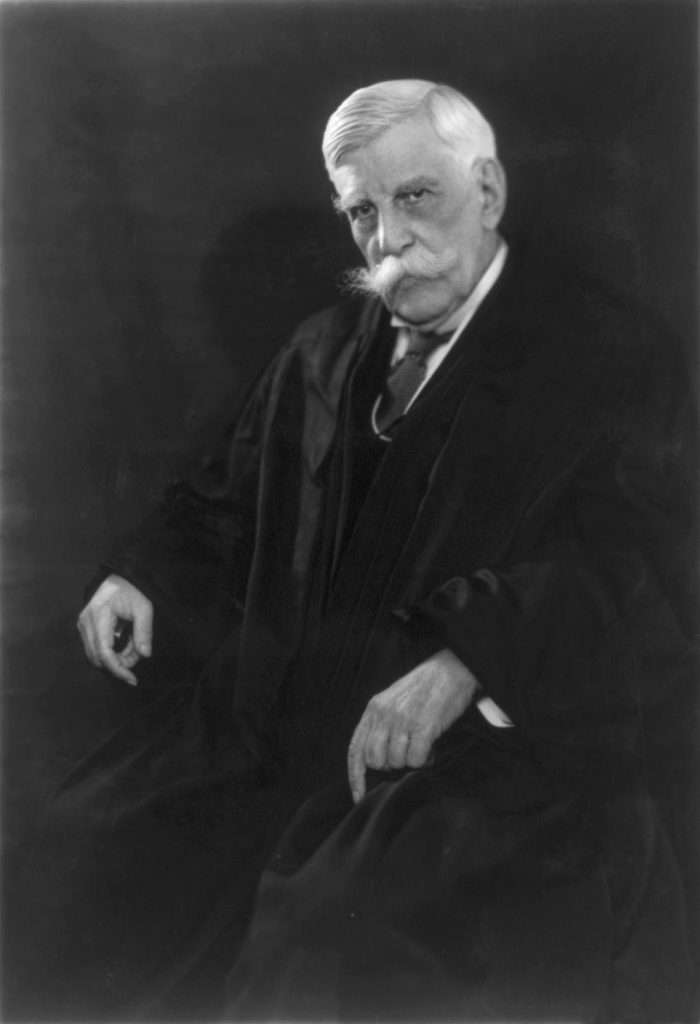
3/8/1841: Justice Oliver Wendell Holmes's birthday.

Editor's Note: We invite comments and request that they be civil and on-topic. We do not moderate or assume any responsibility for comments, which are owned by the readers who post them. Comments do not represent the views of Reason.com or Reason Foundation. We reserve the right to delete any comment for any reason at any time. Comments may only be edited within 5 minutes of posting. Report abuses.
Please to post comments
Some notable opinions were decided on this day.
Griggs v. Duke Power Co., 401 U.S. 424 (decided March 8, 1971), a Burger opinion, broadly applied rules of "disparate impact."
Crawford v. United States, 541 U.S. 36 (decided March 8, 2004) was a landmark regarding the Confrontation Clause.
Pierce v. United States, 252 U.S. 239 (decided March 8, 1920) is a less well-known free speech case with the now well-known separate team of Brandeis and Holmes.
https://www.captcrisis.com/post/today-in-supreme-court-history-march-8-1
Brandeis "delivered the following opinion," which is not labeled a dissent. It includes a long passage that prints the text of a Socialist promotional pamphlet, citing in colorful language the horrors of World War I and not joining the socialist movement.
His "opinion" (which is a dissent) ends this way:
The fundamental right of free men to strive for better conditions through new legislation and new institutions will not be preserved if efforts to secure it by argument to fellow citizens may be construed as criminal incitement to disobey the existing law -- merely because the argument presented seems to those exercising judicial power to be unfair in its portrayal of existing evils, mistaken in its assumptions, unsound in reasoning, or intemperate in language. No objections more serious than these can, in my opinion, reasonably be made to the arguments presented in "The Price We Pay."
Non-citizens were involved in the discussion and distribution of the materials. This was typical and arose in other First Amendment cases of the day. It was not suggested that non-citizens did not have First Amendment rights.
The majority upheld the conviction as arising from material that had the purpose "to hamper the government in the prosecution of the war." Brandeis argued that this was largely based on arguments made in Congress and other such places.
https://www.casemine.com/commentary/us/pamphlet-distribution-and-espionage-act:-pierce-v.-united-states-(1920)/view
We are now in a state of war. And some arguments notwithstanding, criticism, even in harsh terms, is not criminal. Neither legally nor morally.
The Justia link doesn't say "dissenting," but the copy in the U.S. Reports does say: "MR. JUSTICE BRANDEIS, dissenting, delivered the following opinion in which MR. JUSTICE HOLMES concurred."
Oh well.



