
The Volokh Conspiracy
Mostly law professors | Sometimes contrarian | Often libertarian | Always independent
Thoughts on the Capture of Maduro and Trump's Attack on Venezuela
Maduro is a brutal dictator who is getting what he deserves. But Trump's actions are still illegal, because lacking proper congressional authorization. Whether they result in a beneficial regime change in Venezuela remains to be seen.
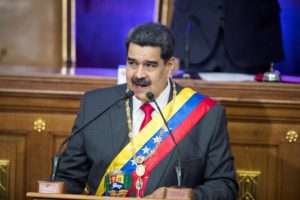
Last night, US forces launched strikes on Venezuela and seized that country's dictator Nicolas Maduro, bringing him back to the US to face charges for drug smuggling. Maduro is getting what he deserves, even if for the wrong reasons. But the US attack is illegal, and it is far from clear whether it will really lead to a beneficial regime change in Venezuela.
I shed no tears for Maduro, who is a brutally oppressive dictator and not the legitimate ruler of his country (given his falsification of the 2024 election results). His real crime is not drug smuggling or "narco-terrorism" but repression and murder on a massive scale, creating the biggest refugee crisis in the history of the Western Hemisphere. The recent history of Venezuela is an abject lesson in the perils of "democratic socialism." That sort of regime leads to poverty and massive human rights violations - and doesn't stay democratic for long.
If Maduro ends up spending the rest of his life in a US prison, it will be just punishment for his many crimes, though drug smuggling is not what he really deserves to be punished for. The US War on Drugs is itself deeply unjust and turning it into a real war makes it worse.
But, the evils of Maduro notwithstanding, the US attack is still illegal, because lacking proper congressional authorization. I have long argued (most recently here) that the initiation of any large-scale military action requires congressional authorization, and this case surely fits the bill. Extensive air strikes combined with insertion of ground forces to seize a national leader is more than just some minor action that the president can take on his own authority. That's even more true if Trump really plans to have the US "run" Venezuela until a new government can be established. Doing that would likely require a much larger US military intervention.
Defenders of the legality of Trump's actions cite the 1989 invasion of Panama, which was undertaken in large part for the purpose of apprehending Panamian dictator Manuel Noriega; like Maduro, Noriega was charged with smuggling illegal drugs into the US. But the 1989 Panama precedent does not actually justify Trump's actions. On December 15, 1989 (five days before the US invasion), Noriega foolishly announced that Panama and the US were in a "state of war," thereby creating conflict between the two countries that did not exist in the Venezuela case. In addition, Panamanian forces had killed or wounded two US military personnel in the Panama Canal area, and detained other American citizens. Unlike Noriega in 1989, the Venezuelan regime did not declare war on the US or otherwise initiate a military conflict. Thus, congressional authorization is needed to make any US military intervention constitutional.
Jack Goldsmith notes that Trump's action could also be defended by analogy to various other US military actions undertaken without congressional authorization. I would argue that these previous actions were either undertaken in response to actual attacks or declarations of war (as with Panama in 1989), were too small-scale to qualify as wars (as with, e.g., various quick air strikes), or were themselves illegal. Past illegal actions don't justify future ones. And, for those keeping score, I said much the same thing about various illegal unauthorized uses of force under Democratic presidents, as with Barack Obama's 2011 Libya intervention. Goldsmith himself recognizes that such precedents don't actually make Trump's actions legal; they only make it likely he will get away with the illegality.
Trump is also still not justified in invoking the Alien Enemies Act to detain and deport Venezuelans without due process. There is still is no declared war, or "invasion" or "predatory incursion" on US territory (prerequisites for invoking the act). For a detailed discussion of why illegal migration and drug smuggling do not qualify as "invasion," see my article "Immigration is Not Invasion." I will soon post an updated version that takes account of recent events.
Similarly, Trump's strikes against supposed drug boats in the Carribean are also still illegal and criminal. Don't just take my word on the reasons for their illegality. Take that of John Yoo, prominent conservative legal scholar, and leading advocate of sweeping executive power over national security issues. It is perversely ironic that Trump decided to apprehend Maduro and give him due process, even as he just simply murders supposed low-level drug runners out of hand.
Whether the attack will result in a beneficial regime change in Venezuela remains to be seen. So far, the socialist dictatorship remains in power, led by Maduro's vice president and other minions. At least for the moment, they still control the military and security services. Whether Trump is willing to launch the kind of ground invasion needed to remove them remains to be seen. But perhaps the regime will yet collapse of its own accord (e.g. - maybe the military will fracture). We shall see.
Ideally, the US should help the Venezuelan opposition - led by Edmundo Gonzalez (the real winner of the 2024 election) and Nobel Prize winner Maria Corina Machado - take power. But it is far from clear that Trump has any intention of doing that. He seems to have already ruled out Machado.
If Trump's actions here do ultimately result in beneficial regime change, it will be a rare of case of one of his illegal actions accomplishing a great good. But it could easily end up being an illegal action that leaves Venezuela and the world no better off than before, with the arguable exception of giving Maduro his just deserts for the wrong reasons.
UPDATE: The fact that the US and many other nations (rightly) do not recognize Maduro as the legitimate president of Venezuela may affect whether he is entitled to any kind of legal immunity as a head of state. I think he should not have immunity, and I believe head of state immunity is, in any event, unjust, much like sovereign immunity more generally. At the very least, mass-murdering dictators like Maduro and Vladimir Putin should not have any kind of immunity. But even if Maduro isn't entitled to immunity, that still does not mean that Trump's military intervention is legal. The problem with it is not violation of head-of-state immunity, but violation of the US Constitution's separation of powers.
