

The Volokh Conspiracy
Mostly law professors | Sometimes contrarian | Often libertarian | Always independent
Reflections on Lecturing in Mexico
My first-ever visit to Mexico gave me some perspective on America's crucial southern neighbor.
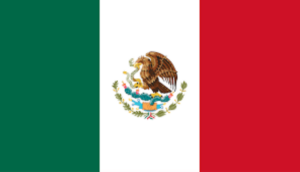
During the first week of December, I spent several days doing speaking engagements in Mexico. Although I have previously visited several Latin American nations, and even twice served as a visiting professor in Argentina, this was my first-ever visit to our southern neighbor. I spoke on a panel on "Migration in the 21st Century" at the FIL Guadalajara International Book Fair (one of the largest book fairs in the Spanish-speaking world), and gave two talks on democracy and political ignorance at the Monterrey Institute of Technology and Higher Education (Tec de Monterrey), one of the country's leading universities. The experience gave me some interesting new perspective on our vitally important neighbor to the south.
Before continuing, I should emphasize I am not an expert on Mexico, and I speak little Spanish (though my wife, who came with me on the trip, is fluent in the language). In addition, I obviously did not encounter anything like a statistically representative sample of Mexicans. This post, therefore, can provide only very modest insight. But that modest insight might still have some value.
At least when it comes to Guadalajara and Monterrey, Mexico seems a much more affluent nation than many Americans might assume. My family and I saw little, if any of the grinding poverty that is commonplace in many poor countries I have been to, such as China, Russia, El Salvador, and Uruguay. For example, we saw almost no homeless people or beggars.
Guadalajara and Monterrey are two of Mexico's wealthiest cities; thus not representative. But, in many poor countries, poverty is evident in relatively affluent areas. Mexico's economic progress is also evident from per capita GDP statistics, which show rapid gains in recent years. The country is no longer the cesspool of poverty some in the US imagine it to be.
This progress was, also, in some ways, in evidence at the FIL Guadaljara book fair, when I spoke there. Not surprisingly, the other panelists and most audience members were sympathetic to my pro-immigration and anti-restrictionist perspective. But one of the panelists - prominent Mexican political consultant and former diplomat Gabriel Guerra - noted that Mexico itself has been facing an influx of migrants in recent years, and the government's treatment of them has sometimes been unjust and indefensible. Mexico has gone from being the biggest source of migrants to the US, to itself being a magnet for migrants from Central America and Venezuela. The Mexican government's flawed policies do not justify those of the US (and vice versa). But these issues do throw a wrench in the traditional view of the US-Mexican relationship, when it comes to migration. The changing migration patterns, obviously, reflect Mexico's increasing relative affluence.
Not all is rosy in Mexico, by any means. Mexican academics and policy experts I spoke to are deeply concerned about the state of the US-Mexican relationship, given Donald Trump's unleashing of massive new tariffs, and harsh immigration policies. After the Guadalajara panel, I spoke at length with Guerra and others, including Arturo Sarukhan, former Mexican ambassador to the US. They noted that Trump's policies have not yet generated a "nationalist backlash" in Mexico (their term, not mine), but that such a backlash was likely to develop. They explained that many Mexicans have friends and relatives among Mexican immigrants in the US, who are feeling the effects of the new administration's policies of racial profiling and expanded detention and deportation. That, along with the trade war, is bound to cause anger and poison relations between the two countries.
I pointed out that Trump will not be in power forever (or perhaps even for very long), and a future administration might well revoke his policies. My Mexican interlocutors were not mollified. They emphasized that much damage has already been done to the US-Mexican relationship, and that it will be difficult to reverse.
I do not know to what extent they are right about this. But, regardless, alienating our most populous neighbor and biggest trading partner isn't Making American Great Again. Exactly the opposite, in fact. The more we damage relationships with neighbors and allies, the harder it will be to counter adversaries like Russia and China.
The general sense of progress and rising affluence was also partly offset by the - in Guadalajara - ubiquitous posters depicting "desaparecidos" - "disappeared" people believed to have been abducted by drug cartels (or, in some cases, to have joined them voluntarily).

Sadly, the cartels are indeed a significant presence in Mexican society, even in relatively affluent cities. One prominent Mexican academic recounted a story of how he had been "mugged" by cartel operatives who searched him "like professional security guards." He was, he said, relieved they "only" took his smartphone, and nothing else. The government estimates there are over 130,000 "disappeared" people in Mexico, as of July 2025, many of them believed to be taken by the cartels and other organized crime groups.
These revelations do not shake my opposition to the War on Drugs. In both Mexico and elsewhere, criminal cartels have the power they do because prohibitionist policies have created a vast black market for them to exploit. Legalization would undermine the cartels, and eliminate most of the violence associated with their operations, just as the end of Prohibition largely eliminated the role of organized crime in the sale of alcoholic beverages. But, whatever the policy lessons, the impact of the drug cartels on Mexican society is a significant one.
After Guadalajara, we went to Monterrey, where I gave two talks at the Tec de Monterrey, and also met with law and social science students and faculty. These events were organized by my graduate school classmate Gabriel Aguilera, who is now the Dean of the School of Social Sciences and Government there.
I offered a range of different lecture topics within my areas of expertise, such as issues related to migration rights, federalism, property rights, constitutional theory, and more. But Gabriel and his colleagues chose to have me do both talks on issues related to political ignorance. In recent years, I see growing interest in this topic around the world. One might say it has been "made great again." But, in truth, it goes beyond any one one nation or political movement, and has long been a major challenge for democracy.
When I first started writing about political ignorance over 25 years ago, many scholars and others argued that voter knowledge levels are not a significant problem, because voters who know very little about government and public policy can still do a good job thanks to information shortcuts, the "miracle of aggregation," and other workarounds.
Such optimism is far less prevalent today. In Mexico, as in recent talks I have given about political ignorance elsewhere, virtually all the questioners presumed that voter ignorance is indeed a serious problem, though some took issue with my proposals for mitigating it. That happens despite the fact that I always make a point of including shortcuts and related issues in my presentations about ignorance.
Voter ignorance is, in fact, a serious problem in democracies around the world. But at least there is growing cross-national recognition of its significance. In Mexico, concerns about this topic have recently been heightened by the government's erosion of judicial independence, which has weakened a significant check on demagogic populist leaders and political majorities.
My time at Tec de Monterrey also gave me some new perspective on Mexican academia. A number of the law and social science faculty I met are not from Mexico or elsewhere in Latin America, but from countries around the world, including some from east Asian nations, such as China and South Korea. I asked Gabriel if these non-Hispanic academics already spoke Spanish before being hired, or were required to learn after taking up their positions. He noted that many of them actually teach and write in English, which is the language in which many social science courses at Tec are taught. If this is any indication, Mexican academia is becoming more cosmopolitan, and is a competitor for hiring talent from around the world. Gabriel himself came to the US as a poor immigrant, held a number of academic positions at American universities, and returned to Mexico to take up his current high-level post.
On a less academic/intellectual note, I don't think I've ever seen a university anywhere in the world that has as many peacocks and deer on campus as Tec does:





UPDATE: There are, perhaps, interesting parallels between some of the points made here and those covered in my 2024 post on "Reflections on Lecturing on Immigration Policy in Switzerland."




