
The Rights and Wrongs of Electoral Interference
Russia's interference in the 2016 election was wrong. But the reasons why are harder to pin down than you might think. Not all foreign interference in elections is unjustified. Far from it, in fact.

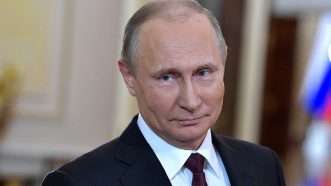
Russia's interference in the 2016 election was wrong. But the reasons why are harder to pin down than you might think. Not all foreign interference in elections is unjustified. Far from it, in fact.
Political theorist Jacob Levy reminds us that the arc of history doesn't always bend towards justice. Moral retrogression has happened before, and could well occur again.

The awful ideology of the perpetrator of the recent terrorist attack in New Zealand is one of many examples of how far-right nationalists and far-left socialists have more in common than we often think. Both worldviews rest on the dangerous assumption that we are locked in a zero-sum game in which some groups can only succeed and prosper at the expense of others.
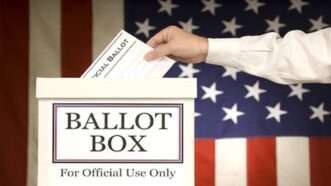
A new symposium outlines several ideas for improving our democratic system. All are worth considering. But none are likely to be as good as expanding opportunities for people to "vote with their feet."
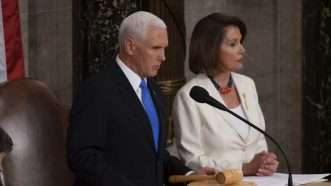
An Atlantic article makes the case that some very privileged people don't want to hear from the other side.
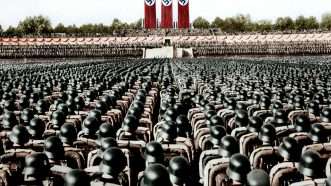
If its recent record is any indication, Winston Churchill might have been wrong about democracy.
Canadian columnist Andrew Coyne explains why efforts to combat fake news by cutting off supply are barking up the wrong tree.
The result is consistent with lots of other evidence of widespread ignorance and bias influencing public opinion on political and scientific issues.
The Introduction to the revised second edition summarizes the rest of the book, and is available for free.
Few will agree with Cambridge political scientist David Runciman's proposal to lower the voting age to 6. But standard reasons for rejecting the idea raise serious questions about many adult voters, too.
Bush lost because voters punished him for the recession of the early 1990s - an event he did not cause. This is just one example of a broader phenomenon of voters rewarding and punishing politicians for things they do not control.
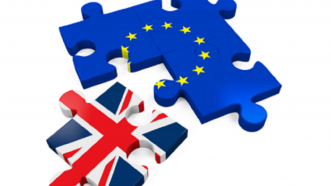
If referenda are a legitimate mechanism for making political decisions, then it is also legitimate for them to be overruled by new referenda. Those who live by the referendum sword risk dying by it.
Democracy is clearly superior to despotism. But libertarians are still right to worry about voter ignorance and advocate tighter constraints on government power.
Values are important. But so is factual knowledge about public policy. In some ways, the significance of values actually makes the problem of voter ignorance more pressing, not less so.
It is not yet clear who will win. But widespread political ignorance already ensures many of us will be losers.
Niskanen Center President Jerry Taylor argues that we should reject libertarianism and other ideologies in favor of "moderation." But, in truth, we cannot and should not abjure ideology. Trying to do so is likely to increase bias, not curb it.
Contrary to the fears of some pundits, the U.S. is not on the brink of civil war. But the explanation for that is far from entirely reassuring.
The debate over the sexual assault accusations against Brett Kavanaugh is a striking example of partisan bias at work.
Legal scholar and National Constitution Center President Jeffrey Rosen explains how many of the Constitution's safeguards against "mob rule" have frayed. His description of the problem is compelling, though he is less strong on possible solutions.
Efforts on both right and left to make the democracy-promotion the key focus of constitutional law should be rejected.
Canadian columnist Marcus Gee has an excellent article on how political ignorance exacerbates the challenges of voting for a lesser evil. But the problem is in some ways even worse than he suggests. At the same time, there is much we can do to improve the quality of our decisions.
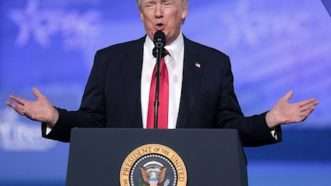
Economist Dambisa Moyo is right to worry about the dangers of political ignorance. But her proposed solution for the problem falls short.
The BU Law Review Online has a symposium on this important new book, with contributions by Richard Epstein, Dan Markovits, K. Sabeel Rahman, David B. Lyons, and myself.

A new book raises fundamental questions about the value of education spending.
Recent events such as the student walkout to promote gun control raise the issue of how much credibility we should give to the political views of the young, and victims of crime. At least as a general rule, there is no reason to give those views any special credence.
The symposium focuses on Brink Lindsey and Steve Teles' important new book describing how several forms of government regulation slow economic growth, increase inequality, and reduce opportunities for the poor.
Fear of GMO foods is an example of the broader problem of political and scientific ignorance.
A recent Virginia election decided by one vote has given new life to the mantra that "every vote counts." But the chance of a single vote making a difference remains extraordinarily low, and this reality incentivizes voters to be ignorant and biased.
Another day of cartoonish outrage in Washington.
Economics 101 indicates that toll roads can help solve the problem of traffic congestion. But public ignorance often prevents government from acting on this basic insight.
Celebrate your independence with a subscription to Reason magazine, your most trusted source of honest, insightful news and analysis.




