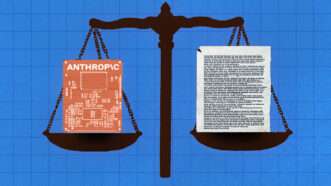
A First Amendment Right Not To Use AI for Evil?
Anthropic sues the federal government—and kicks off a debate about free speech for artificial intelligence systems.

Anthropic sues the federal government—and kicks off a debate about free speech for artificial intelligence systems.
The nonexistent cases were first introduced by opposing counsel, but the appellant's lawyer didn't spot the error at the trial court, and submitted a proposed order to the trial court that cited those cases. That, the appeals court held, meant that appellant forfeited the right to challenge the decision.
"Because Claude is not an attorney, that alone disposes of Heppner's claim of privilege."
A magistrate judge recommends a $10K sanction for a lawyer's repeated incorrect citations, and has some things to say about the pattern he has been seeing in his own court.
"which, even if it were true, is simply unacceptable by any measure of candor to any court."
The "filings have led to the Court completely losing trust in" the lawyers involved.
The claim is "iffy" partly because part of the plaintiff's argument is that ... ChatGPT said the award was likely AI-generated.
The firm, has "more than 1,600 attorneys in over 80 offices nationwide."
Don't assume your firm is safe.
An intern and a law clerk used generative AI, and the judges didn't catch the hallucinations.
Lawyers at firms of all size, don't let this happen to you.
"Whether a case cite is obtained from a law review article, a hornbook, or through independent legal research, the duty to ensure that any case cited to a court is "good law" is nearly as old as the practice of law."
for "citing to fabricated, AI-generated cases without verifying the accuracy, or even the existence, of the cases" and "misrepresenting to the Court the origin of the AI-generated cases."
Plus, "He claims that, going forward, he will undertake certain 'remedial efforts,' including, inter alia, 'establish[ing] ... database reconciliation procedures involving resolution of discrepancies through direct consultation of archival legal resources and substitution of alternative, verifiable authorities where necessary.' Most lawyers simply call this 'conducting legal research.'"
Celebrate your independence with a subscription to Reason magazine, your most trusted source of honest, insightful news and analysis.