

95% of Hemp Products Could Soon Be Illegal. Florida's Small Businesses Are Feeling the Fallout.
Congress legalized hemp in 2018, but next month a new ban is set to take effect.
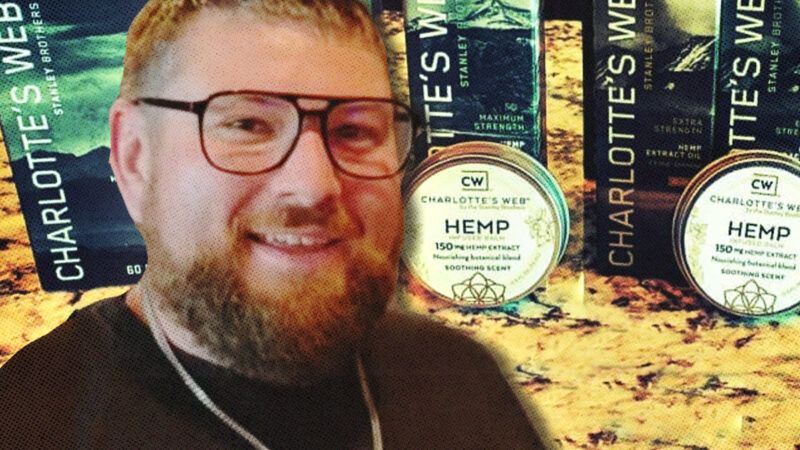
Affluent Wellness and Vapor Lounge in Tampa sells kratom, hemp, and other botanical products that many of its customers use as an alternative to pharmaceuticals for pain.
Owner Tom Mueller knows that pain firsthand. Ever since breaking his back years ago, he has dedicated his life to helping others find pain relief. Some of his bestselling products are hemp-derived THC gummies. "I've been selling these products ever since [President Donald] Trump signed the Farm Bill back in 2018," he says. But the federal government is about to take some of his bestselling products off the shelves.
On December 11, a small provision tucked into last November's federal spending bill will take effect. It caps finished hemp products at 0.4 milligrams of total THC per container. Anything stronger is designated as marijuana under federal law. A single 5-milligram gummy is more than 12 times the limit. Roughly 95 percent of the hemp-derived products sold today will become federally illegal, according to estimates from the U.S. Hemp Roundtable.
Smoke shops sell nicotine, tobacco, kratom, pipes and, of course, hemp products. The smoke shop owners I spoke with estimate that hemp accounts for about 20 percent of their revenue. Losing it both cuts into sales and makes their businesses—their career livelihoods—harder to sell.
The ban was originally set to start on November 12, but the stopgap spending bill passed by Congress in September pushed most of the ban back one month. The delay didn't cover fully synthetic cannabinoids, compounds the cannabis plant can't produce on its own, which all just lost their legal status on Thursday.
The 2018 Farm Bill legalized hemp, defined as cannabis with no more than 0.3 percent delta-9 THC by dry weight. Entrepreneurs read the law and built an industry around it: gummies, THC drinks, smokable flower, and other products that sat on the shelves of gas stations, smoke shops, and specialty stores. Florida legalized hemp in 2019.
Florida lawmakers later tried to rein in intoxicating hemp. In 2024, Republican Gov. Ron DeSantis vetoed that bill, citing the burden on small businesses. Then Congress did it anyway, through a must-pass budget bill where most lawmakers were simply voting to reopen the government.
For small businesses, the pain started before the ban did. In July, shop owner Michael Smith told Florida Phoenix that about 80 percent of sales at his two Herban Flow stores in St. Petersburg come from hemp-derived THC products. Up the supply chain, Treadwell Farms in Umatilla had sold to just six farmers by midyear, compared with roughly 20 in a normal year. "Farmers are not putting plants in this season," Jammie Treadwell said in the same Florida Phoenix article.
Several other Florida hemp business owners I spoke with are worried about the ban but wouldn't go on the record because they fear being targeted by health inspectors. "I don't want to do anything that sparks retaliation," one owner told me.
Faraz Alam, a Tampa real estate investor and serial entrepreneur, was about to buy an existing smoke shop when the hemp ban changed his mind. "The numbers made sense when I started. By the time I finished my research, they didn't," Alam says. "The hemp ban takes out close to 20 percent of that store's sales, and if kratom gets restricted, that's another 10 percent on top.…I couldn't justify paying for earnings that were about to evaporate."
Once hemp is designated as marijuana under federal law, the tax code bars these businesses from deducting ordinary business expenses, according to Insurance Journal.
Some lawmakers are pushing back. The Lawful Hemp Protection Act, from Reps. Andy Barr (R–Ky.) and Angie Craig (D–Minn.), would replace the ban with federal rules for testing, labeling, manufacturing, and age limits. (Barr just won election to the Senate, while Craig lost in a Senate primary and will leave Congress at the end of the year.)
Even the White House has signaled concern: Trump asked Congress to revise the ban for full-spectrum CBD products, and his budget director urged House Speaker Mike Johnson to change the rules.
Instead, Congress has given the industry a one-month extension and a deadline. For shop owners like Tom Mueller, that deadline is now just weeks away.



