

The 'Strange Death' of Libertarianism Is Greatly Exaggerated
On some of the key policy questions of the second Trump administration, libertarians are clearly punching above their weight.
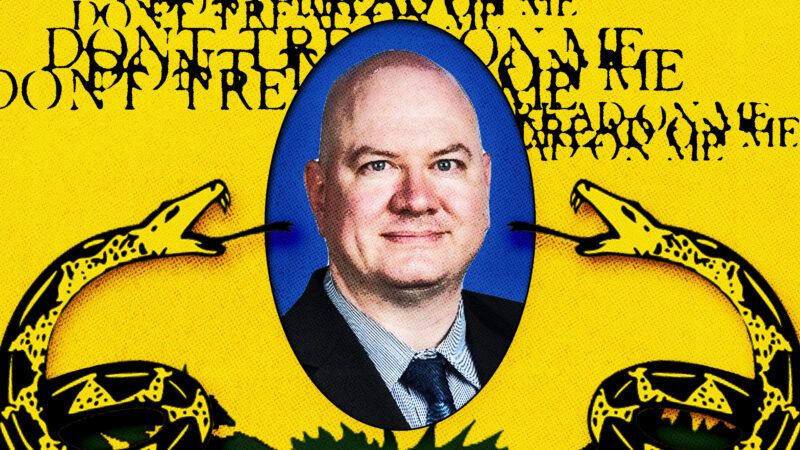
Is libertarianism effectively dead? Daniel McCarthy, a fellow at the Heritage Foundation and former editor of The American Conservative, certainly thinks so.
"Libertarians have disappeared, just as the national debt has blown past $40 trillion," he writes in an incendiary column for The Spectator that is part lamentation and part triumphalist sneer. "Today the ideas seem exhausted, and there's no libertarian who provokes or inspires to anything like the degree Milton Friedman, Friedrich Hayek or Murray Rothbard once did. Libertarian think tanks and magazines are running on fumes; they're richly endowed but irrelevant."
As a writer for a libertarian magazine, I obviously disagree! Libertarianism is clearly alive and well, and is impacting economists, policymakers, and tech CEOs at high levels of influence, which is why Americans arguably enjoy more freedom now than at any other point in human history. In his column, McCarthy does not even particularly disagree that this is the case, conceding over and over again that on everything from the rise of the internet to the spread of gambling to the legalization of gay marriage, the U.S. has become freer; his actual contention is merely that this is bad, rather than good. Indeed, the column is mostly just a screed against libertarianism—which McCarthy views as insufficient for satisfying the yearnings of man's soul—rather than an argument about libertarianism's allegedly diminishing impact.
To be absolutely clear, there are valid points to be made about whether dedicated adherents of a libertarian framework are making or losing ground in the context of electoral politics. But this involves separating libertarians and libertarianism, two things the column repeatedly conflates. Again, the headline is framed around the demise of "libertarianism," but McCarthy mostly notes that libertarianism is in fact more present than ever in Americans' daily lives: We enjoy more choice and control over what we put in our bodies, how we spend our money, where we live, and who we sleep with, etc. What's really up for debate is whether libertarians are dying off as a political movement.
On that front, McCarthy does not delve into the most compelling example of libertarian movement diminishment, which is that the Libertarian Party itself is on life support following a disastrous period of mismanagement in which party leadership sabotaged its own candidate. He is correct to point out that one of the most prominent libertarian-identifying members of Congress, Rep. Thomas Massie (R–Ky.), lost reelection due to disagreements with President Donald Trump; this has little to do with libertarianism and more to do with Massie's decision to invest "all his political capital in anti-Zionism and the Epstein files," as McCarthy himself notes.
Now I certainly think it's fair to look at the trajectory of American politics, in particular the trajectory of the Republican Party since 2010, and say that libertarians have not grown as an especially powerful faction over that time period. And yes, this would come as something of a disappointment to libertarians of the Ron Paul and Tea Party era, when it seemed as if the GOP might reorient itself in a direction that was pro–free market, socially tolerant, and somewhat more skeptical of foreign entanglements—and that the Republican standard bearer of the future would be Sen. Rand Paul (R–Ky.) or someone much like him. Sixteen years later, having a Paul for a congressional representative is still mostly the exception, not the rule. More's the pity.
But the clear implication of McCarthy's piece is that libertarians are losing and the adherents of some other movement are succeeding in their place. What is the evidence of this? McCarthy is himself clearly more sympathetic to the populists impulses of Vice President J.D. Vance, and yet this movement is flailing badly. On social issues, libertarianism has prevailed, as it seems unlikely that either the Trump administration or the Republican Party as whole will do much to constrain the sorts of vices McCarthy and other populists are so exercised about. On foreign policy, the populists are themselves hopelessly divided, with some voices in full support of Trump's questionable and unpopular decision to launch a new war with Iran; other populists—including many of the most prominent rightwing media personalities (Tucker Carlson, Candace Owens, Megyn Kelly, etc.) have descended into full mania over Israel's alleged influence on Trump and U.S. foreign policy, and are now largely working to sabotage the conservative movement. And on economic policy, it's a mixed bag for all: Trump loves tariffs, a profoundly non-libertarian policy, but is wildly laissez faire when it comes to artificial intelligence and the infrastructure necessary to support it (data centers).
If one is being fair about all this, the conclusion is really just that Trump is not a particularly ideological figure: He is certainly not a libertarian, and has indeed shifted the conservative consensus away from libertarians on some key issues, like support for free trade. No argument there! At the same time, Trump is also not particularly anti-libertarian: He has zero desire to outlaw porn or gambling or marijuana. And on tech and AI—arguably the defining issue of his second term given its outsized importance for the economy and for global stability—Trump has taken a radically libertarian stance that is perfectly in-keeping with these supposedly out-of-fashion Republican icons (Reagan, Hayek, Rothbard, etc.).
So while I'm happy to concede that libertarians have failed to achieve significant success at the ballot box, it does not look to me as if libertarianism itself is suffering a strange death. And since McCarthy takes a gratuitous shot at libertarian organizations ("running on fumes," "irrelevant"), maybe he will forgive me one of my own. There is a conservative organization that recently lost a dozen staff members, including most of its legal and economic departments, following board resignations over leadership's failure to denounce white nationalism; that organization is McCarthy's employer, the Heritage Foundation. Talk about a strange death for a once influential policy shop!




