

CRISPR Genome Editing and the Future of Down Syndrome Treatment
The ethics of using safe gene therapies to improve the health and cognition of Down syndrome children and adults.
Deaf children can now hear thanks to a new treatment that repairs a defective gene. Researchers associated with the biotech company Regeneron Pharmaceuticals unveiled the successful gene therapy last week. One patient, who was treated at 18 months old, Travis Smith, can now hear. Overall, 80 percent of participants (aged 10 months to 16), saw significant improvement in hearing, and 42 percent achieved normal hearing, including the ability to hear whispers. The Food and Drug Administration (FDA) has already approved the treatment.
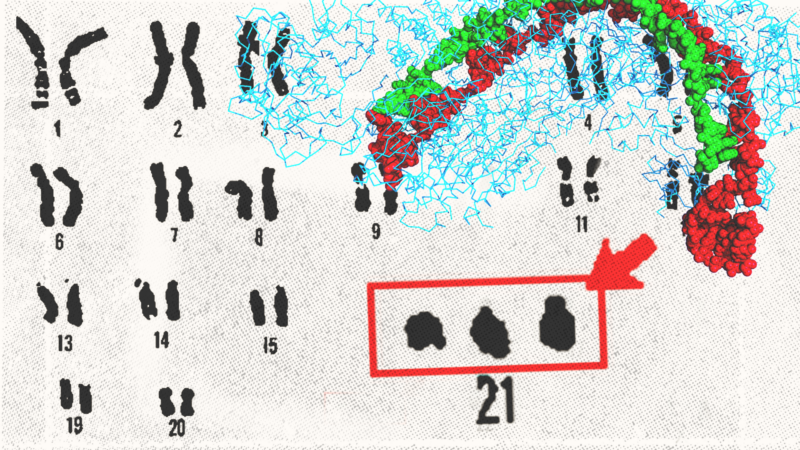
Medical research on ameliorating physical and intellectual maladies continues apace. For example, researchers at Harvard Medical School reported earlier this month that they have made progress in silencing the extra chromosome that causes Down syndrome using the genome editing technique CRISPR.
Down syndrome is a genetic condition in which a person has an extra copy of chromosome 21. While its severity varies, people with the condition experience lifelong intellectual disability and developmental delays, along with heart and digestive system problems and a significantly higher risk of Alzheimer's disease.
CRISPR techniques have recently been successfully applied to treating other genetic conditions, including sickle cell anemia and a rare inborn error of metabolism of the urea cycle, which causes life-threatening accumulation of ammonia in the bloodstream.
Keeping in mind that the new Harvard study is a very preliminary cell-based experiment, the researchers believe their work "paves a road for therapeutic treatment for DS [Down syndrome]." It's likely to be a long road, but the development of a way to successfully correct this genetic error raises some interesting ethical issues.
Currently, about 67 percent of women in the United States who receive a positive prenatal test for Down syndrome choose to terminate the pregnancy. These decisions might have been changed if the extra chromosome could be safely silenced in fetuses before birth.
But what about offering the CRISPR treatment to children and adults with Down syndrome?
University of Warwick bioethicist Felicity Boardman has suggested that the development of genetic treatments for various conditions, such as deafness, dwarfism, and blindness, would "convey and perpetuate negative views about the particular disabling conditions they are targeted towards, and, by extension, people who currently live with those conditions." The fact of disability does not diminish the inherent moral worth of any individual. And thanks in large part to their activism, many barriers that once prevented disabled folks from more fully participating in society have been lowered and ameliorated.
As the success of the Regeneron treatment for deafness, however, shows, many people with specific disabilities (and their guardians) already seek out corrective treatments when they become available. For example, some 315,000 deaf Americans have chosen to use cochlear implants to enable them to hear. Genetic treatments for blindness are also being developed. Adult deaf and blind people can give their informed consent to the corrective measures. Of course, in the case of the deaf infants and minor children treated using the Regeneron gene therapy, their parents did.
Already treatments are recommended to mend infirmities that often accompany Down syndrome, such as surgery to repair heart defects. Silencing the extra chromosome in children and adults to treat heart and digestive maladies, or even Alzheimer's disease risks associated with Down syndrome, does not seem especially problematic ethically.
But who can ethically make decisions that affect intellectual disabilities? After all, the effects of safely delivering effective chromosome silencing to the brains of a child or an adult with Down syndrome would be even more profound than restoring hearing or sight. People with Down syndrome, whose extra chromosome was silenced in their brain cells, might undergo a change in cognition, something like what Charlie Gordon experiences in the sci-fi story Flowers for Algernon, but in this case, the change would be permanent.
There are now reams of studies and reports on how researchers and clinicians should go about obtaining informed consent from people with intellectual disabilities. Most often, the ultimate decision to treat or not rests with the parent or legal guardian of the patient. Various surveys find that some parents of children with Down syndrome would be interested in genetic interventions that improve their child's cognitive ability. In Flowers for Algernon, Gordon's estranged sister provided the consent for the experimental treatment that (albeit temporarily) boosts his IQ from 68 to over 185.
Since Down syndrome is implicated in their very identity, successfully treated folks would in some very real sense no longer be the persons that they were. Perhaps one fruitful way to think about the ethical implications of using chromosome silencing is to ask yourself if you would accept a safe treatment that would significantly boost your IQ or improve your memory? (I, for one, would happily accept a cure for my aphantasia.)
In Flowers for Algernon, Gordon writes in his initial entry of his progress report diary, "I hope they use me. Miss Kinnian says maybe they can make me smart. I want to be smart." Becoming smarter did not ultimately make Gordon happier; he did not have time to adjust to his changed mental and emotional states. Assuming chromosome silencing improves cognition, treated Down syndrome folks, unlike Gordon, would have that time. And research suggests that higher intelligence correlates with greater happiness.
"Should we be using CRISPR for diseases or syndromes that are compatible with life, like Down syndrome?" asked Harvard physician Neal Baer at a symposium last year. "Who is going to make those decisions?" The ethical answer is yes, and we should trust parents— and no one else—to make those decisions.




