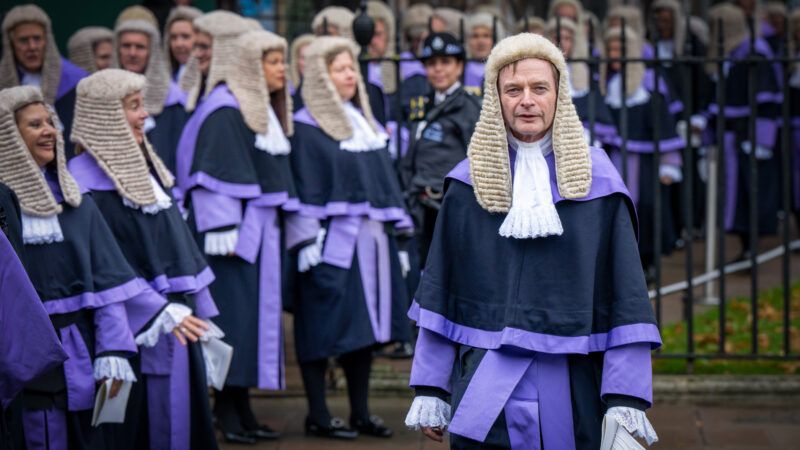
Brickbat: Justice Is Blind, and Slow
Criminal courts in England and Wales face a huge backlog of more than 79,600 cases waiting to be tried. That number is expected to reach 100,000 by 2028, according to government figures. This means people charged with serious crimes today might not go to trial until after 2030, leaving victims, witnesses, and suspects waiting years for justice. The problem started growing in 2010 after budget cuts reduced funding, closed many courts, and limited judges' working days, leaving courtrooms empty. The COVID-19 pandemic made the problem worse by shutting courts for months and forcing social distancing rules that slowed trials when they reopened.

Editor's Note: As of February 29, 2024, commenting privileges on reason.com posts are limited to Reason Plus subscribers. Past commenters are grandfathered in for a temporary period. Subscribe here to preserve your ability to comment. Your Reason Plus subscription also gives you an ad-free version of reason.com, along with full access to the digital edition and archives of Reason magazine. We request that comments be civil and on-topic. We do not moderate or assume any responsibility for comments, which are owned by the readers who post them. Comments do not represent the views of reason.com or Reason Foundation. We reserve the right to delete any comment and ban commenters for any reason at any time. Comments may only be edited within 5 minutes of posting. Report abuses.
Please to post comments
Just imagine the bottleneck if they start trying migrants.
No mention of the Labour government proposing to eliminate jury trials for most types of crimes as a way to relieve this problem?
This is also what happens when the financial needs of the welfare state start eating up all the resources required for the actual base functions of government.