
Congress Is Aiming To Avoid Another Shutdown by Spending More on Almost Everything
The bill includes $1 million for new elevators at New York City's Metropolitan Opera, among other wasteful earmarks.
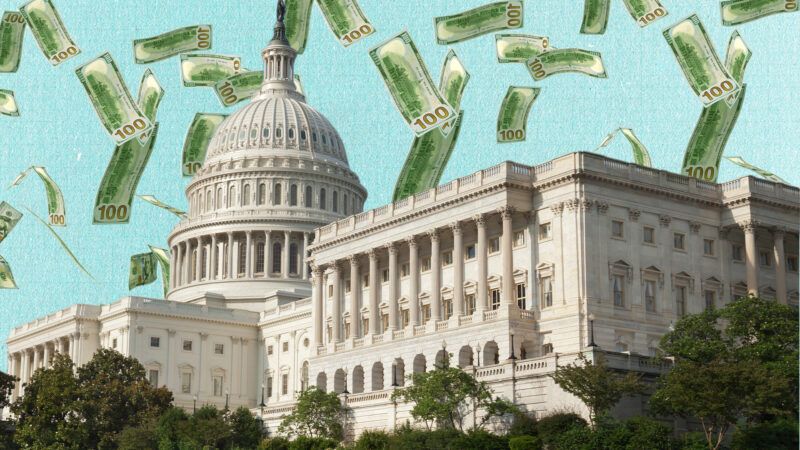
With the possibility of another government shutdown looming before the end of the month, Congress appears likely to take the easy way out: spend more money on everything.
The House of Representatives passed a set of spending bills on Thursday afternoon that would keep the government open through the end of the fiscal year in September. If those bills make it through the Senate and become law (a process that could be complicated by a major winter storm that is approaching Washington, D.C.), they would hike total discretionary spending to $1.7 trillion this year. That would be a $24 billion increase from a year ago.
The spending package includes several wasteful earmarks, including $1 million for new elevators at the Metropolitan Opera Association in New York City, which has an annual operating budget of over $330 million and access to lots of deep-pocketed donors.
The new spending levels will exceed by about $50 billion the nonbinding "targets" set by the Fiscal Responsibility Act in 2023, notes Dominik Lett, a fiscal policy analyst at the Cato Institute.
Mostly, the package represents a missed opportunity, Lett argues, as it leaves out proposed anti-fraud reforms (which are desperately needed), and does not impose any binding spending limits. In other words, despite full Republican control of government, the bill does nothing to improve or ensure long-term fiscal responsibility in Washington.
However, there are a few spending cuts in the package, including a $115 million reduction in funding for Immigration and Customs Enforcement (ICE) and a $1.8 billion cut in funding for the Border Patrol, both of which were included to secure enough Democratic votes to pass the funding bill for the Department of Homeland Security. That bill passed on a thin 220–207 vote, with seven Democrats supporting the measure and Rep. Thomas Massie (R–Ky.) as the lone Republican opposed to it.
About the best thing that can be said of the House's passage of these discretionary spending bills is that it makes this year one of the rare instances where all 12 spending bills have made it through Congress. That's a positive sign, but one that ultimately means little if the bills themselves don't cut spending or set strong parameters for future budgets.
Discretionary spending represents less than one-third of all federal spending these days, but it is the portion of the budget that is the easiest to cut—particularly since Congress has no interest in addressing the so-called "mandatory spending" on entitlements like Social Security and Medicare. The fact that spending continues to rise, even with Republican majorities in both chambers, is a bad sign for anyone who favors fiscal responsibility.
