
Inspector General Report Finds Serious Failures Led to an Inmate Wasting Away From Treatable Cancer
Frederick Bardell died from treatable colon cancer after waiting six months for a colonoscopy.
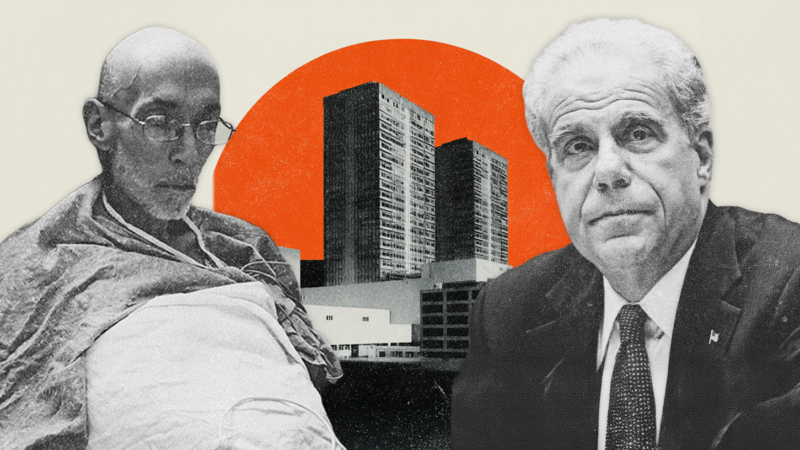
In a case of fatal medical neglect that led a disgusted federal judge to hold the Bureau of Prisons (BOP) in contempt, government investigators confirmed that prison officials allowed an incarcerated man to waste away from highly treatable cancer and misrepresented key facts about his health care to a court.
A report by the Office of the Inspector General (OIG) for the Justice Department released today concluded that serious failures by multiple levels of staff at Federal Correctional Institution (FCI) Seagoville, a low-security prison in Texas, led to the death of Frederick Bardell from colon cancer in 2021.
The OIG found that severe understaffing led to six months of delays in scheduling a colonoscopy for Bardell, despite symptoms, tests, and scans showing that he likely had advanced colon cancer. As his condition worsened, staff denied his requests for a compassionate release without fully reviewing his medical records, and then misrepresented the adequacy of treatment he was receiving to a federal judge. And when that judge finally ordered Bardell to be freed, BOP officials violated the court's order to wait until a release plan had been approved, instead dumping Bardell, who was emaciated and incontinent, on the curb outside an airport. Bardell died in a hospital bed nine days after his release.
The OIG found that the problems with Bardell's release occurred "because at least nine BOP employees failed to read or fully read the Court's order."
Kimberly Copeland, Bardell's former attorney, says in response to the report that the government's failure to acknowledge her client's rapidly deteriorating health "turned a term of imprisonment into a de facto death sentence."
"This was not just a breakdown—it was an avoidable human tragedy," Copeland says.
The OIG investigation came at the request of U.S. District Judge Roy B. Dalton Jr. for the Middle District of Florida, who presided over Bardell's case. Dalton wrote in a seething civil contempt order in 2022 that the BOP should be "deeply ashamed" of how it treated Bardell. Its actions, he said, were "inconsistent with the moral values of a civilized society and unworthy of the Department of Justice of the United States of America." In addition to holding the BOP and Kristi Zook, the former warden of FCI Seagoville, in contempt, Dalton ordered the BOP to pay Bardell's parents nearly $500 to reimburse them for the airline ticket they purchased to get their dying son home.
The OIG report's findings are largely the same as those of a special master appointed by Dalton as part of the contempt proceedings against the BOP.
Bardell was convicted in 2012 of downloading child pornography from a peer-to-peer file-sharing website and sentenced to 151 months in federal prison. As Reason wrote in 2022, he "was not sentenced to death by medical neglect, and he was ostensibly protected by the Eighth Amendment's prohibition on cruel and unusual punishment, as are all incarcerated people, no matter how heinous their crimes. That includes the right to basic health care behind bars."
But medical neglect is appallingly common in American prisons and jails, and incarcerated people often find themselves waiting months for treatment and outside consultations, even in cases of life-threatening illness.
Bardell first reported blood in his stool to a nurse practitioner at Seagoville in July 2020. The nurse practitioner ordered a battery of lab tests and an urgent precolonoscopy consultation with a gastroenterologist.
Bardell's lab work wouldn't come back until September, and it showed an additional indicator for colon cancer. A regional BOP physician who reviewed the results ordered a C.T. scan and, again, an urgent precolonoscopy consultation.
The C.T. scan was performed in September, and the results again suggested cancer. The C.T. scan report noted multiple liver lesions "HIGHLY SUSPICIOUS FOR METASTATIC DISEASE AND SHOULD BE CONSIDERED AS SUCH UNTIL PROVEN OTHERWISE."
Although the regional physician sent several emails to FCI Seagoville staff noting the dire test results, Bardell would wait until January 2021 for an actual colonoscopy, the results of which would eventually confirm he had stage IV colon cancer.
The regional BOP physician told OIG investigators that Bardell's medical case "wasn't handled correctly." Bardell should have had a colonoscopy, a biopsy, and started cancer treatment as soon as possible following the C.T. scan in September.
The OIG report notes that the physician "attributed the delay in Bardell's case to a lack of adequate healthcare personnel at FCI Seagoville, which he stated was not unusual at BOP institutions and getting worse."
These gaps in screenings and treatment are in fact widespread in the federal prison system. A separate OIG report released last May, spurred in part by Bardell's death, found that the BOP failed to adequately screen thousands of older inmates for colorectal cancer. And it took an average of eight months for a colonoscopy following a positive screening test for colorectal cancer.
The Marshall Project published an investigation last December into several deaths at a federal women's prison in Texas due to poor and unsanitary dialysis treatment.
Reason reported in 2020 on allegations of fatal medical neglect inside FCI Aliceville, a federal women's prison in Alabama. Numerous current and former inmates, as well as their families, said in interviews, desperate letters, and lawsuits that women inside FCI Aliceville faced disastrous delays in health care. Records eventually obtained through the Freedom of Information Act showed that staff at Aliceville ignored one incarcerated woman's pleas for help for eight months while she steadily lost the ability to walk. Staff advised her to take Motrin for excruciating pain and delayed and denied a C.T. scan that would have revealed the source of her torment: bone cancer. She died in a prison transport van on the way to a local hospital to see an oncologist.
Hoping to avoid such a fate, Bardell filed an emergency motion for compassionate release—a process through which terminally ill inmates can be afforded the comfort of returning home for their last days—in November 2020, arguing that he likely had advanced colon cancer. An affidavit from a doctor accompanying his motion said he had "a high likelihood of having cancer of the colon with likely metastasis to the liver."
The BOP and federal prosecutors, in their opposition to Bardell's motion, argued that while Bardell had liver lesions, he hadn't been conclusively diagnosed with a life-threatening illness, and there was "no indication" that he was receiving inadequate care in BOP custody.
Bardell filed a second motion for compassionate release in February 2021, after his colonoscopy but before the results came back. His petition included an affidavit from an oncologist. The oncologist wrote that the long delay in getting Bardell a colonoscopy had allowed a stage III tumor with an average cure rate of 71 percent to progress to a terminal disease. That delay, the doctor stated, would, "more likely than not, cost Mr. Bardell his life in a matter of weeks to months."
The government again opposed Bardell's motion, arguing, as Dalton summarized it in his opinion, "that it was not even definitive that Mr. Bardell had cancer—let alone terminal cancer."
The OIG investigation concluded that government lawyers for the U.S. Attorney's Office relied on the medical records provided to them by the BOP, and they did not intentionally misrepresent Bardell's condition. However, the report noted that the inexcusable and unexplainable delays in Bardell's treatment "were inconsistent with representations made by the government to the Court that the BOP was actively addressing Bardell's medical issues and that there was no indication that Bardell could not receive adequate care in custody."
In response to Bardell's second motion for compassionate release, Dalton ordered the BOP on February 5, 2021, to free Bardell as soon as the U.S. Probation Office crafted a proper release plan for him. But the BOP ignored Dalton's order and instead immediately released Bardell. The prison directed Bardell's parents to pay nearly $500 for an airline ticket to fly their dying son back home on a commercial flight.
A BOP van dropped Bardell off on a curb outside Dallas Fort Worth International Airport without a wheelchair and left him there. Although he was weak, as well as bleeding and soiling himself, Bardell managed to navigate the airports, layovers, and connecting flights through the help of good Samaritans. When he arrived back in Florida to meet his parents, "his father had to take off his own shirt and put it on the seat of [Bardell's lawyer's] car to absorb the blood and feces," Dalton's opinion said.
Bardell was taken to a hospital, where he died nine days after his release. According to a status report filed in court after his release, Bardell had lost nearly 60 pounds. Photos accompanying Dalton's contempt order showed Bardell emaciated.
OIG investigators spoke with "numerous BOP employees who were involved with Bardell's release, and they all told us that they either did not read Judge Dalton's release order or did not fully read or understand it."
The OIG report recommends several measures for the BOP to improve its medical services, such as developing formal procedures for scheduling, tracking, and following up on medical appointments for inmates.
The OIG report also recommends such remedial education as "ensur[ing] that BOP employees understand the importance of carefully reading court orders and seeking guidance when they do not understand them."
In its response to the report, the BOP concurred with the recommendations.
