
The Haters Are Wrong. Netflix's Glut of Christmas Movies Is Good, Actually.
The existence of options you don't personally enjoy is not a cultural failure; it's a luxury.
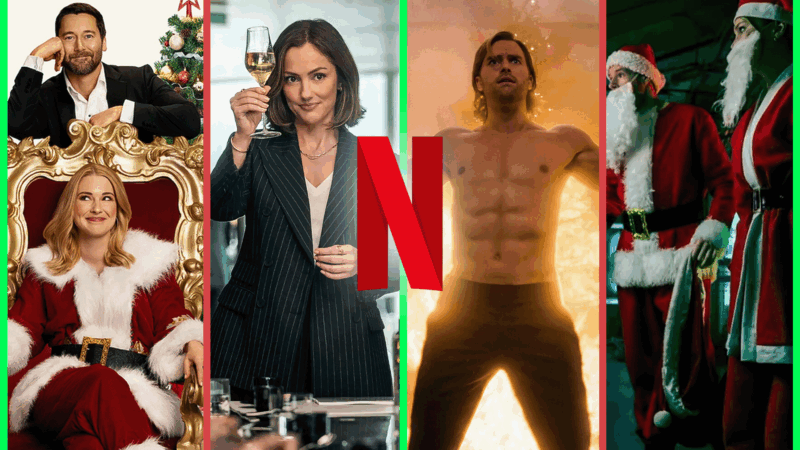
I'm not afraid to admit it: I love Christmas movies. The cheesy ones, the sentimental ones, the ones where the girl from the big city goes home for the holidays, rediscovers the true meaning of something vaguely defined, and somehow ends up owning a toy factory or small vineyard. I even love the bad ones (ahem, Hot Frosty)—because part of the joy of Christmas movies is that there truly is one for everyone.
Now knowing my affinity for this genre, it won't surprise you to know that my mom grew up on a Christmas tree farm. And for the first six winters of my life, Christmas revolved around trees: planting them, trimming them, selling them to families convinced that this evergreen or that Douglas fir was the one that would make their holiday perfect. Everyone wanted something a little different, and everyone was sure they'd know it when they saw it.
Sadly, my family sold the farm after my Grammy passed away, which is probably why I'm not currently living in a Christmas movie…but the lesson stuck. There's no single, correct version of the holidays—just a lot of people chasing their own ideal. Christmas movies work the same way, and Netflix has figured out how to deliver that abundance at scale.
This year alone, Netflix released five new original holiday movies—My Secret Santa, Jingle Bell Heist, A Merry Little Ex-Mas, Champagne Problems (my personal favorite), and The Night My Dad Saved Christmas 2. And the streamer is currently pushing 31 holiday films in total on its platform. To achieve this level of output year after year, their production budgets sit well below those of blockbuster Christmas staples like Elf ($33 million), The Polar Express ($165 million), or A Christmas Carol ($200 million).
Netflix has learned that Christmas cheer sells even with modest-to-low production value. During their debut weeks this year, Jingle Bell Heist drew 19.3 million views, My Secret Santa reached 18.1 million, and Champagne Problems logged roughly 14.4 million. Those figures aren't as jaw-dropping as the 59.6 million viewers who tuned in for the premiere of the final season of Stranger Things, but they're far from insignificant.
These "slop" movies have plenty of critics, but they aren't trying to be Oscar-worthy. And complaining that there are too many of them is akin to complaining that the grocery store has too many deodorants. No one is forcing you to buy the Dove Go Fresh Cucumber & Green Tea spray or Augustinus Bader's $48 stick. The existence of options you don't personally enjoy is not a cultural failure; it's a luxury. In a world where entertainment used to be bottlenecked by studio gatekeepers and limited airtime, the ability to overserve niche tastes is something to cherish.
Christmas movies aren't about spectacle or cutting-edge effects. They're about familiarity, tone, and hitting the right emotional notes. Netflix has figured out that the audience doesn't need a nine-figure budget to deliver a movie people are happy to put on while wrapping presents, and that's a good thing! They found a hole in the market and are delivering on it year after year, just like the man in the big red suit.
